
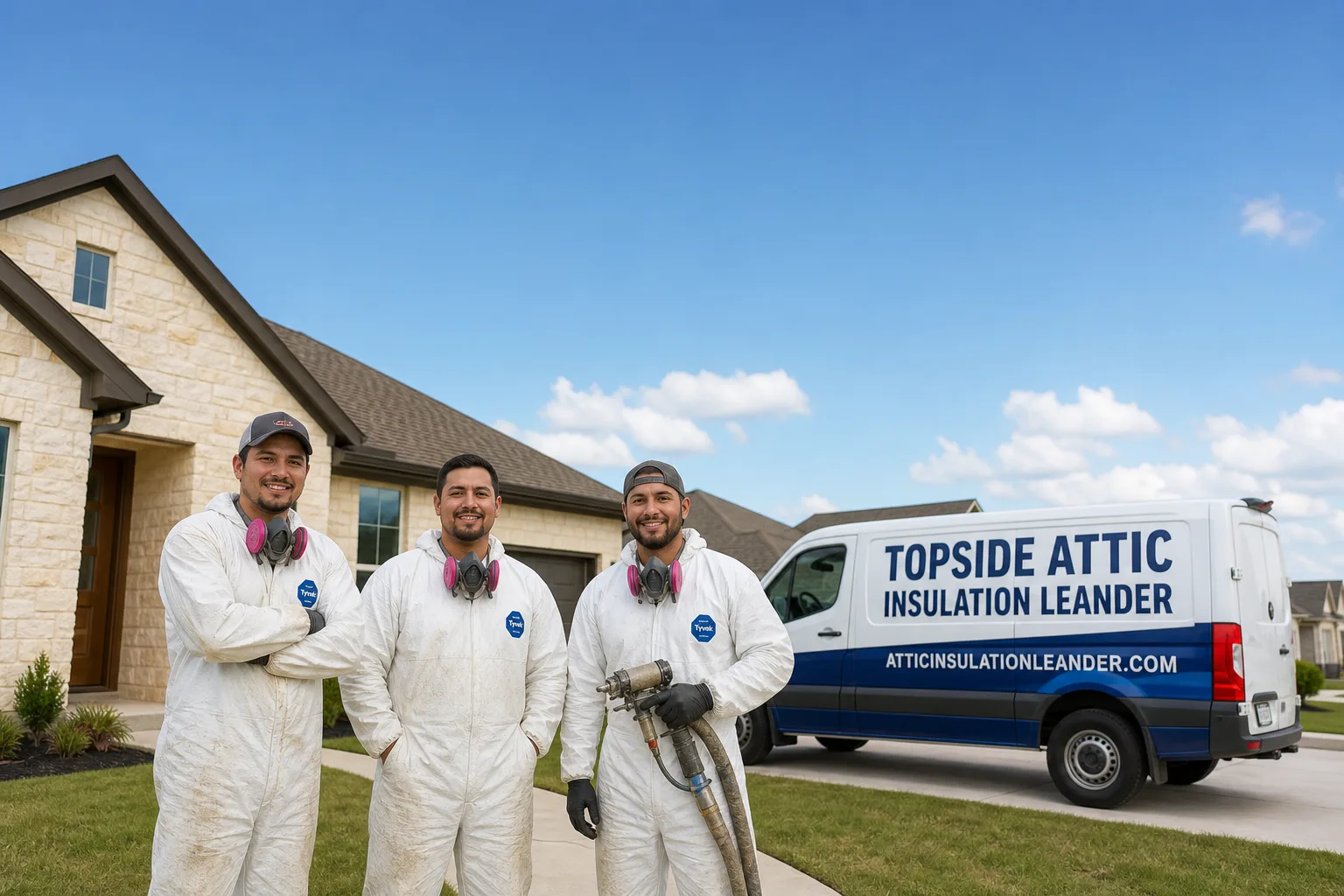
Fast, Reliable Blown-In Insulation Across Round Rock
Most blown-in insulation jobs in Round Rock run $1,800-$4,200 for a typical 1,800-2,400 square foot attic, and our crews usually complete them in a single day. We dispatch from our Austin office and carry enough GreenFiber cellulose, Owens Corning fiberglass, and dense-pack equipment to handle both your main attic and that detached workshop in one trip - no return visits, no half-finished jobs. Call (737) 252-7159 and a live person will pick up, 24/7.
We’ve worked in enough Round Rock attics to know the pattern: homes built during the Dell boom, neighborhoods like Eagle Ridge and Fern Bluff, original R-30 fiberglass batts compressed to nothing, no radiant barrier on the west-facing deck, and a homeowner who’s tired of the upstairs bedrooms running six degrees hotter than the thermostat setting. Our Blown-In Insulation team treats air sealing as mandatory, not optional - we seal first, then insulate, in that order, every time.
Why Topside Attic Insulation Leander Is Round Rock’s Preferred Blown-In Insulation Company
We’ve sealed and insulated more than 9,000 homes since 2016, and a significant share of those have been in Round Rock’s 78664, 78665, and 78681 ZIP codes. Homeowners in Estates at Settlers Park and Chandler Crossing specifically mention our blower-door documentation in reviews - they like walking away with a number that proves the work.
Response time to Round Rock is typically same-day or next-morning. We’re on North Mopac Expressway regularly, so getting a crew to Fern Bluff or up near The Double File Trail doesn’t involve scheduling gymnastics.
Our local knowledge runs deep: we know which Round Rock subdivisions skipped radiant barriers to hit 1990s price points, which builders used the minimum R-30 loose fill, and how the February 2021 freeze exposed every gap in the thermal envelope. That context changes what we recommend and how we sequence the work.
Under Haven Standard, every job starts with a written price and written scope before anyone lifts a tool. No exceptions. We also offer a Free Second Opinion on any competing written estimate - bring us the paperwork and we’ll read it with you.
Our Blown-In Insulation Services in Round Rock
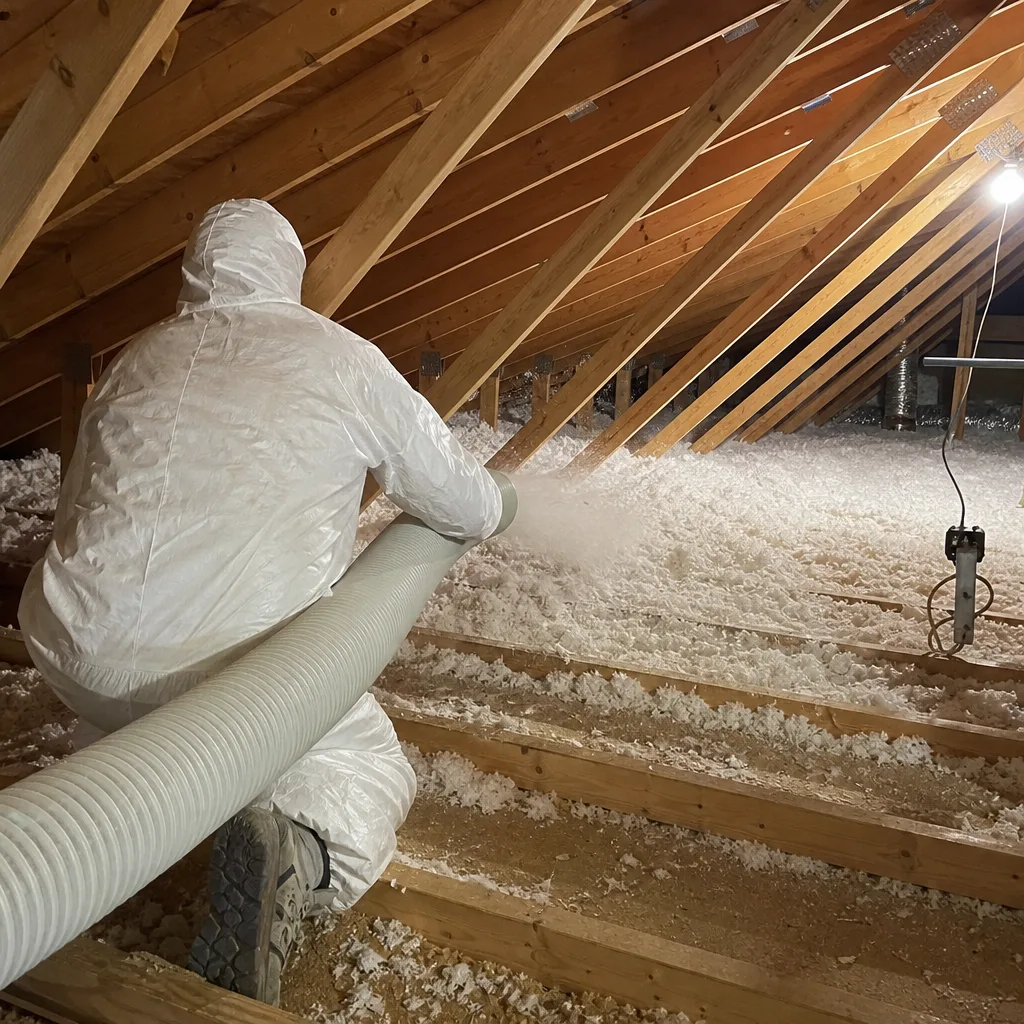
Blown-In Cellulose
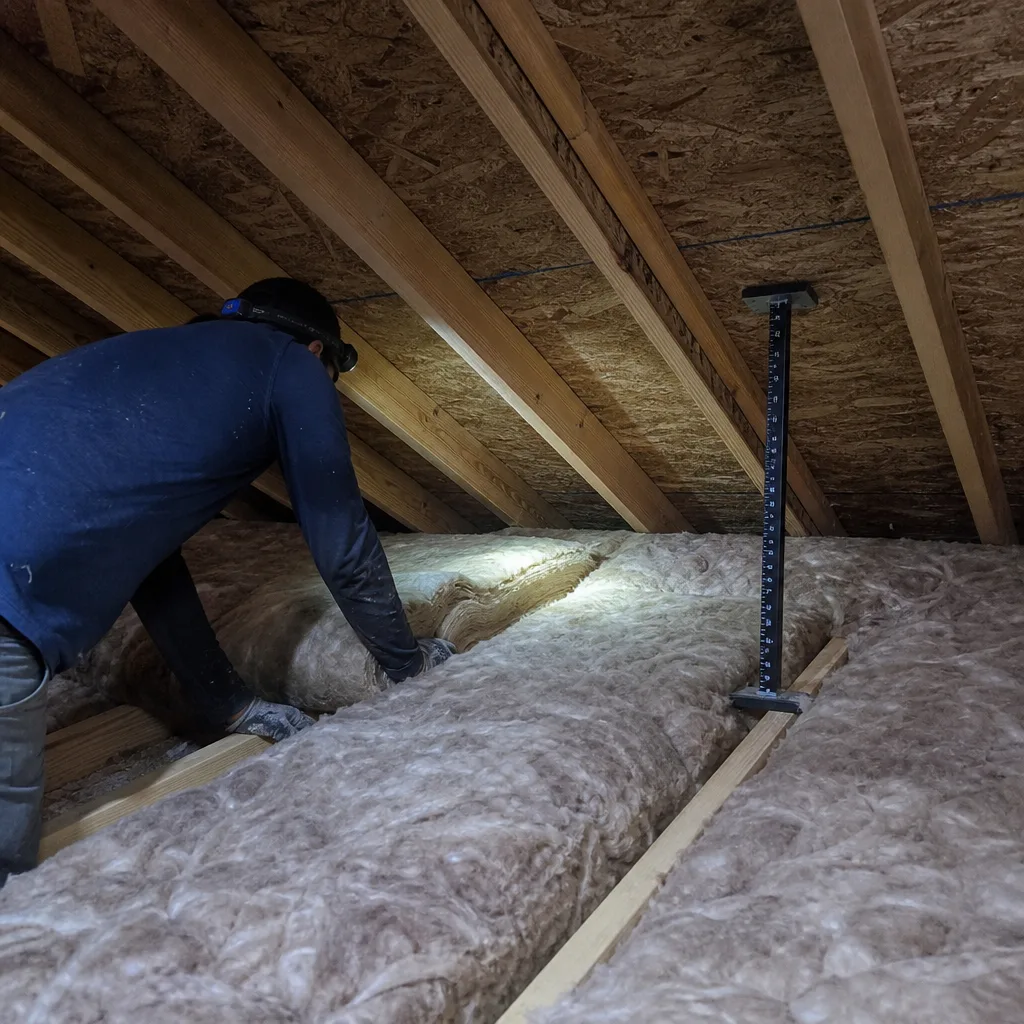
We install GreenFiber cellulose in Round Rock attics at R-38 to R-49 density, depending on the existing structure. Cellulose handles our Central Texas heat cycles well - it doesn’t slump as severely as fiberglass under repeated 150°F+ attic temperatures, and it packs tightly around irregular framing. In Dell-boom homes near FM 685 with no radiant barrier, we often pair dense cellulose with a reflective barrier retrofit to address the 155°F afternoon deck temperatures that bake west-facing bedrooms.
Blown-In Fiberglass
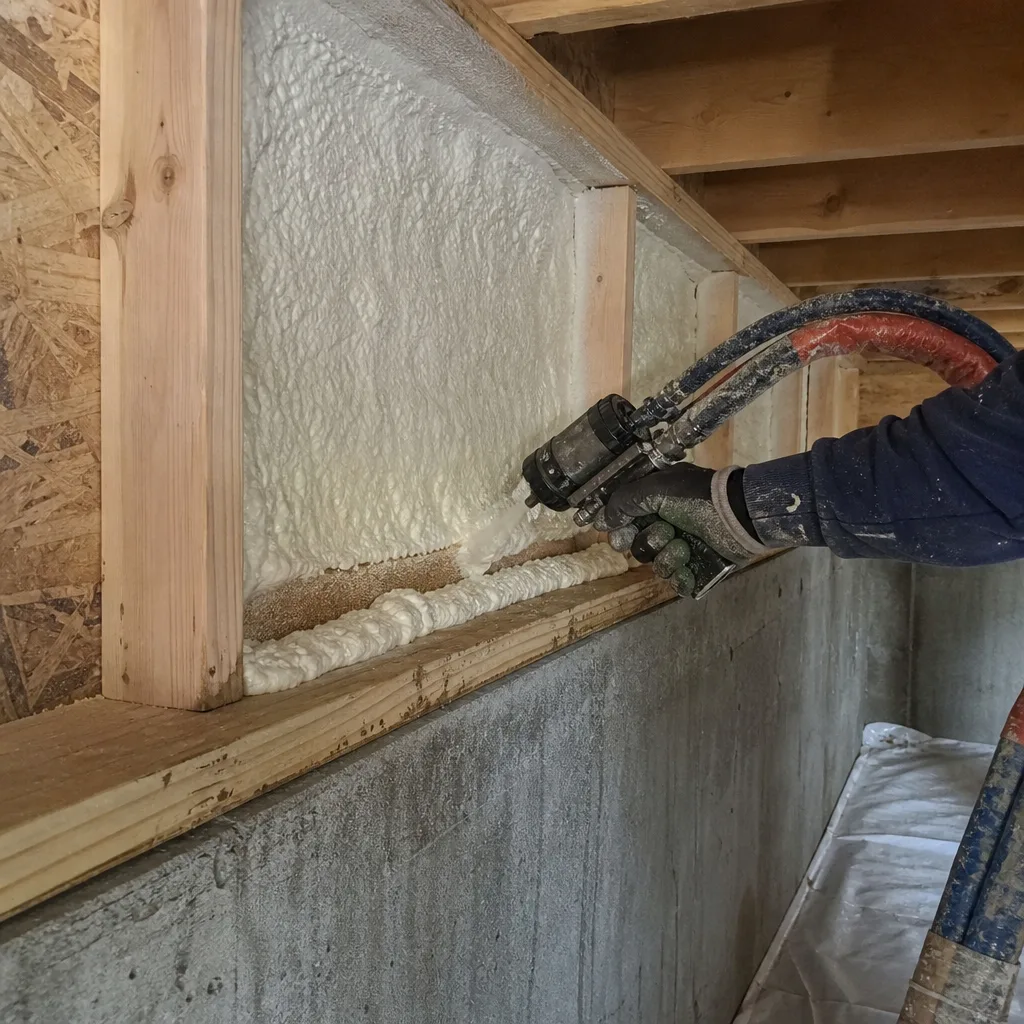
Owens Corning blown fiberglass works well for top-up jobs where the existing insulation is still reasonably distributed but compressed. We see this in newer Round Rock builds near Pickle Parkway, where the original blown fill has settled but hasn’t degraded. We measure what’s there, calculate the gap to target R-value, and blow the make-up depth - but only after we’ve foam-sealed the top plates and can light penetrations. Blown fiberglass without air sealing is just expensive air conditioning for your attic.
Dense-Pack Wall Insulation
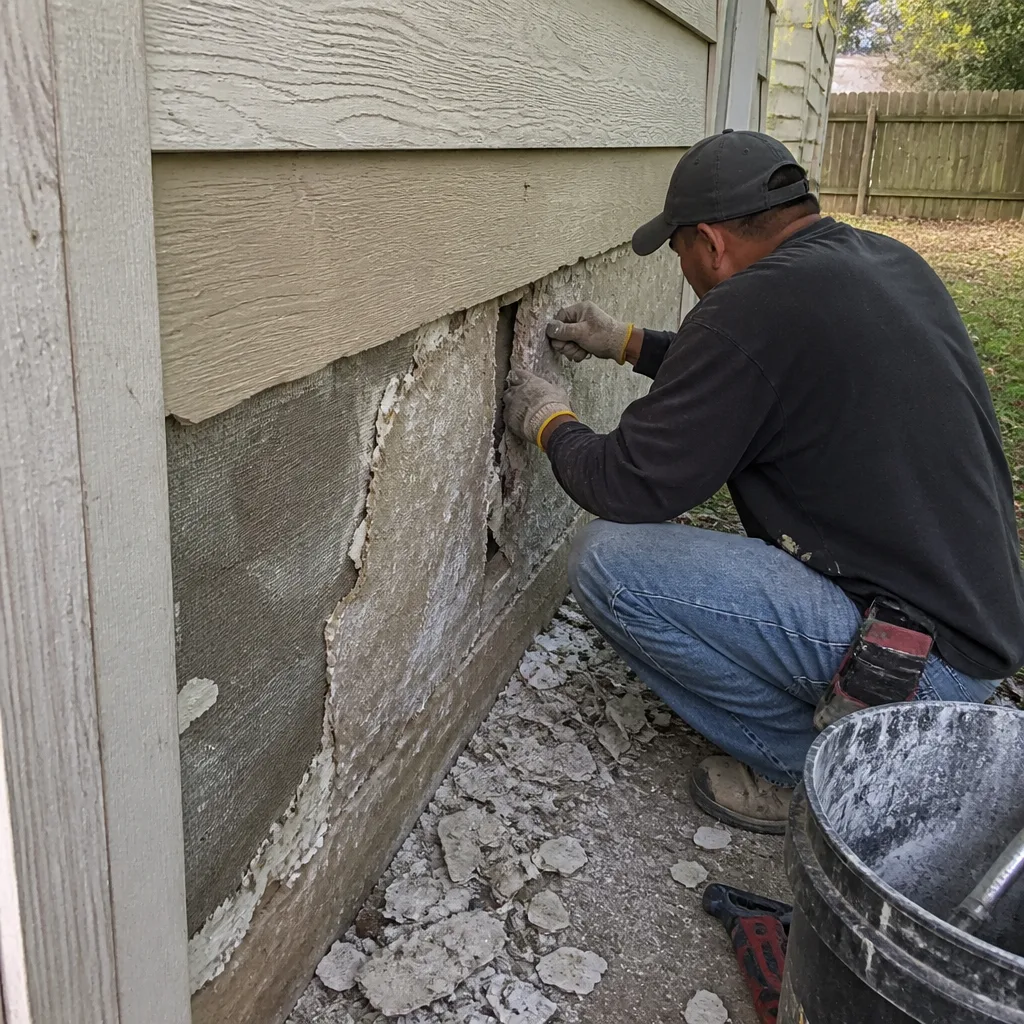
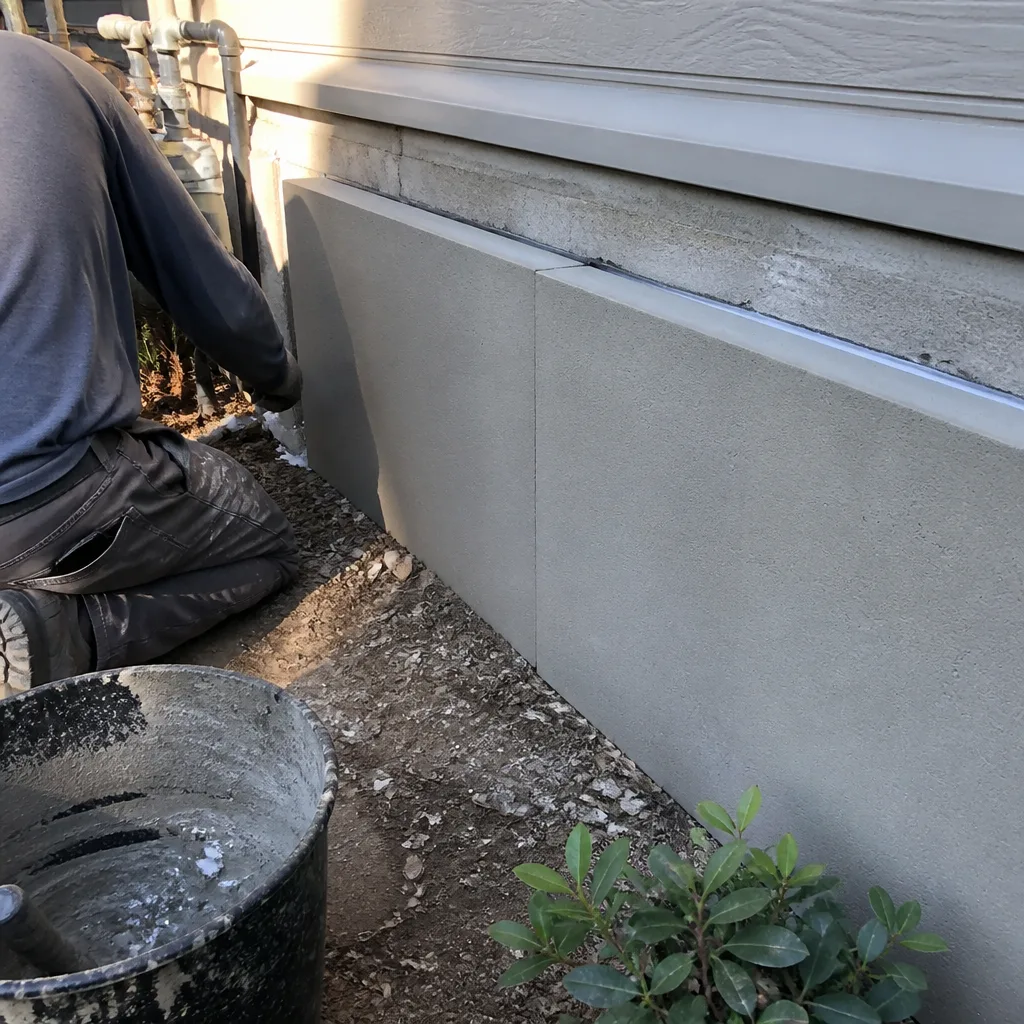
Round Rock’s slab-on-grade construction means no crawl space to treat - the walls carry more of the thermal load than in homes with basements or pier-and-beam foundations. Dense-pack cellulose or fiberglass into exterior wall cavities addresses what blown-in attic work can’t touch. We drill and fill from either interior or exterior, depending on siding type and homeowner preference. This matters particularly on west-facing walls in neighborhoods like Lake Forest, where afternoon solar gain meets uninsulated 2×4 cavities.
Blown-In Top-Up
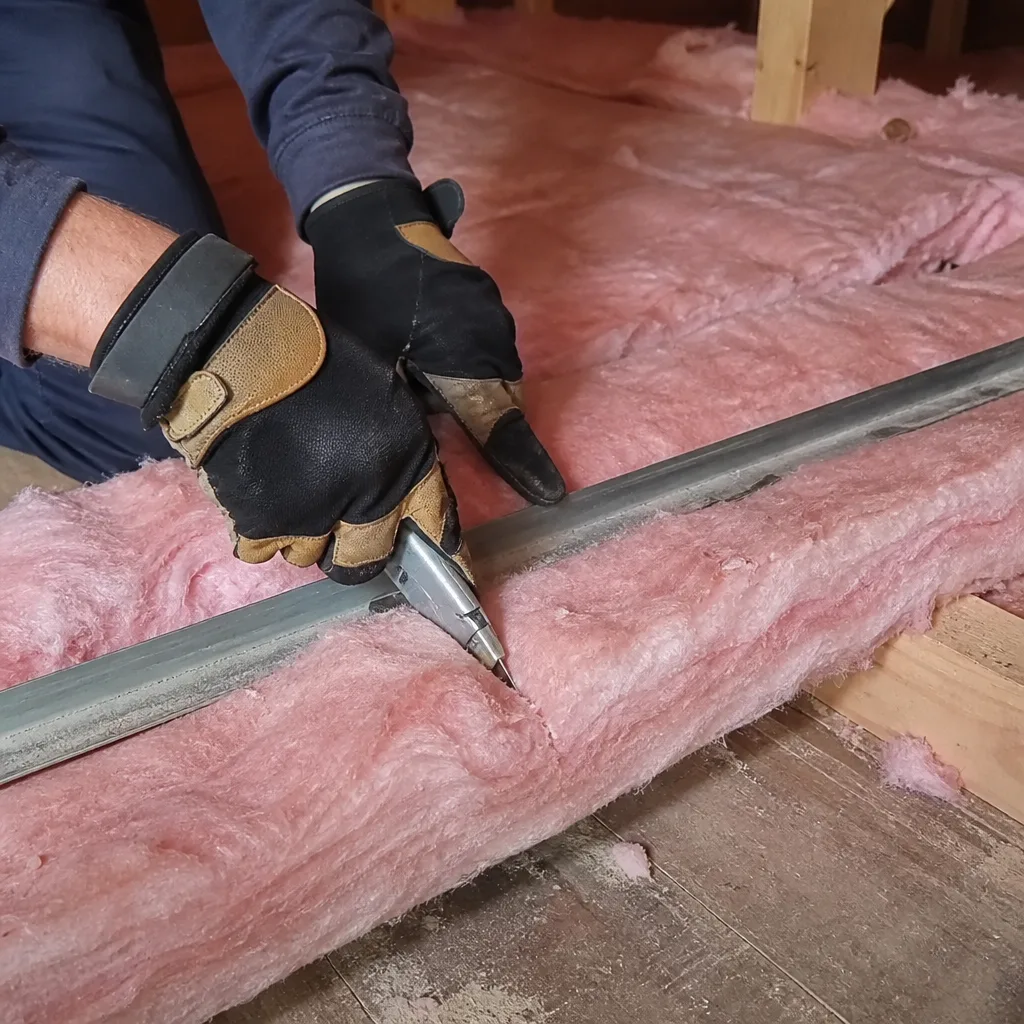
The most common call we get in Round Rock: “The builder put something up there 20 years ago, and it’s not working anymore.” We inspect, measure settled depth, photograph the condition, and quote a top-up to modern R-38 or R-49 - but we won’t blow new material over an unsealed attic floor. The top-up includes air sealing of all accessible penetrations first. For acreage properties with detached workshops, we can top up the main attic and handle the shop in the same visit.
What happens when you call
- 1
A real person answersNo phone trees - you reach a local pro.
- 2
You get an upfront price rangeHonest numbers before anyone is dispatched.
- 3
A background-checked tech heads outLicensed & insured, dispatched right away.
- 4
You approve before work beginsNothing starts until you say go.
 Before
 After
AfterTrusted Brands We Service in Round Rock
We stock GreenFiber cellulose, Owens Corning fiberglass, and Johns Manville blown products on our Round Rock-bound trucks - no ordering delays, no “we’ll come back next week.” We don’t lock you into proprietary products; we specify what performs for your specific attic condition, whether that’s GreenFiber’s density for a Dell-era home with no radiant barrier or Owens Corning for a cleaner top-up on newer construction near North Lamar Boulevard. Every material choice is documented in your written scope before work starts.
Common Blown-In Insulation Problems We See in Round Rock Homes
- Compressed builder-grade fiberglass in 1993-2015 tract homes. The original R-30 batts in Eagle Ridge and Chandler Crossing attics have compressed to three inches or less under two decades of 150°F+ heat cycling. The labeled R-value is meaningless once the material has collapsed.
- Missing radiant barriers on west-facing roof decks. Builders along FM 685 routinely omitted reflective barriers to hit price points. Those attics hit 155°F regularly, accelerating insulation degradation and cooking the rooms below. We document this with photos and temperature readings.
- Unsealed top plates and can lights bleeding conditioned air. Round Rock’s slab-on-grade homes have all their duct runs and air handler pressure in the attic. Every unsealed penetration is a direct leak path. We foam-seal these before adding any blown-in material.
- Detached workshops and oversized garage doors creating thermal bridges. On acreage properties near Palm Valley Boulevard, uninsulated shop walls and poorly-sealed garage door gaps undo the main attic upgrade. Our dense-pack and air-sealing equipment handles these in the same trip.
Pricing for Blown-In Insulation in Round Rock, TX
Here’s what blown-in insulation costs in the Round Rock market right now:
| Service | Typical Range |
|---|---|
| Blown-in cellulose attic fill (R-38, 1,800-2,400 sq ft) | $1,800-$2,800 |
| Blown-in cellulose attic fill (R-49, same footprint) | $2,400-$3,600 |
| Blown-in fiberglass top-up (to R-38) | $1,400-$2,200 |
| Dense-pack wall insulation (per 1,000 sq ft of wall) | $2,200-$3,400 |
| Air sealing + blown-in combo (typical attic) | $2,800-$4,200 |
| Detached workshop blown-in + sealing | $1,200-$2,400 |
What moves the number: attic square footage, current insulation depth and condition, accessibility, whether we need to remove degraded material first, and whether we’re adding a radiant barrier retrofit. Every quote is a flat, written price - no hourly surprises, no “we found more” add-ons after we’re in your attic. Call (737) 252-7159 for a free estimate; we’ll measure, photograph, and deliver your written price before anyone schedules work.
We Also Serve Cities Near Round Rock
Our crews run regularly to Round Rock, Pflugerville, Hutto, Georgetown, and Cedar Park from our Austin office. Same trucks, same equipment, same Haven Standard documentation - whether we’re dense-packing walls in a Georgetown historic renovation or topping up a Pflugerville attic built in the same Dell-boom era.
Serving Round Rock, TX - Our Local Coverage Area
We’re based in the Round Rock area and know this community well. Use the map below to see our service coverage - if you’re nearby, we can almost certainly help.
FAQs - Blown-In Insulation in Round Rock
Yes, but the radiant barrier omission means you’ll get better results pairing blown-in insulation with either a reflective barrier retrofit or dense-pack cellulose at higher R-value than standard. In Chandler Crossing and Lake Forest, we regularly find attics hitting 156°F where the builder skipped the barrier. Blown-in alone helps; blown-in plus sealing plus radiant barrier addresses the root cause. Call (737) 252-7159 and we’ll photograph your deck and show you the temperature differential - estimates are free.
Most Dell-era Round Rock homes started with R-30 loose fill or batts that have compressed to R-15 equivalent or less. To reach current IECC code of R-38 for our climate zone, we typically add 8-12 inches of blown cellulose or fiberglass, depending on what’s remaining. We measure settled depth during inspection and calculate the exact make-up. You’ll get that number in writing before we schedule.
Yes. We carry dense-pack equipment, blown-in hoses, and air-sealing foam rigs on every Round Rock-bound truck. The main attic, workshop walls, and garage door perimeter sealing can all be completed in one visit - we don’t split jobs to pad trip charges. Your written scope will list every area and the specific treatment for each.
We install GreenFiber cellulose, Owens Corning fiberglass, and Johns Manville products, specified to the job rather than pushed as a single option. GreenFiber’s density performs well in unvented or high-heat attics; Owens Corning works for cleaner top-ups where existing insulation is still viable. We don’t carry proprietary products with locked-in pricing - your scope names the specific material and why we selected it.
It will help, but the 155°F attic temperature is the larger problem. Dense-pack wall insulation reduces conductive heat gain through the west-facing wall, yet if your attic floor is unsealed and under-insulated, conditioned air is still escaping upward while radiant heat from the roof deck penetrates downward. We recommend addressing attic air sealing, blown-in depth, and radiant barrier first - then evaluating whether wall dense-pack is the next priority. Our blower-door test before and after attic work will show you exactly where the remaining heat gain is coming from.
Written by Wes Okafor, Owner at Topside Attic Insulation Leander, serving Round Rock since 2016 under The Haven Standard.