
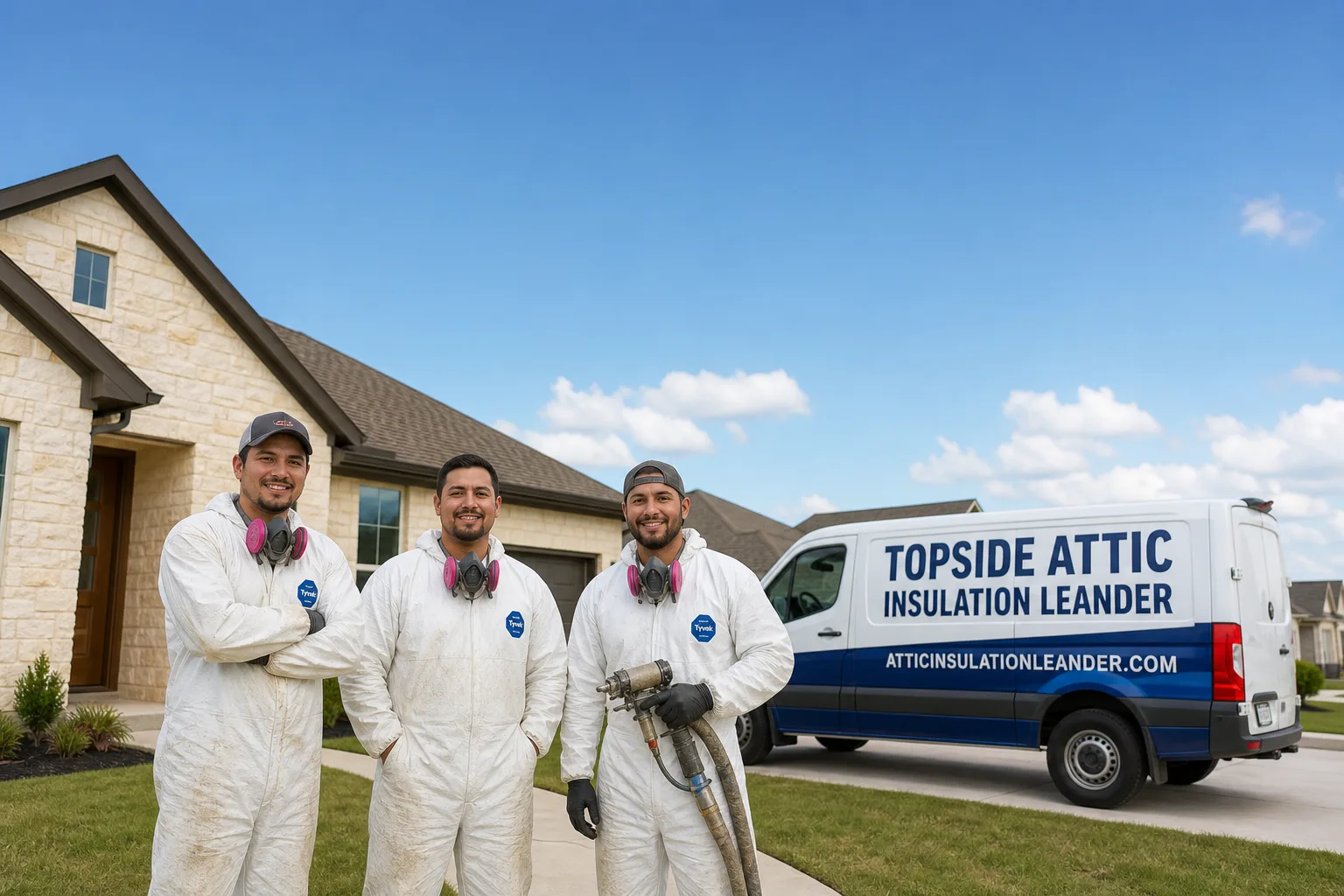
How Much Does Attic Insulation Cost in Leander?
Our Attic Insulation Near Me in Leander, TX typically runs between $1,400 and $3,800 for a full-service job on a 1,500-2,500 sq ft home, with most homeowners landing around $2,100 when blown-in fiberglass or cellulose is installed over an air-sealed attic floor. That range moves depending on attic square footage, current R-value, the insulation type chosen, and whether old material needs to come out first.
If you’ve received a written estimate and want a second set of eyes on it, we offer a Free Second Opinion on any written estimate - bring it to us and we’ll read it with you, line by line.
Attic Insulation Cost Breakdown (2026)
Most attic insulation jobs in Leander break down into two or three line items: the insulation itself, any air sealing completed before the material goes in, and removal of old material if it’s present. The table below reflects what we actually see in the Leander market in 2026, not national averages pulled from a data aggregator.
| Service | Typical Price Range | Notes |
|---|---|---|
| Blown-in fiberglass (1,500 sq ft attic, to R-38) | $1,100 - $1,600 | Most common spec in Leander homes built 2000-2018 |
| Blown-in fiberglass (1,500 sq ft attic, to R-49) | $1,400 - $1,900 | Recommended for Leander’s Climate Zone 3 heat loads |
| Blown-in cellulose (1,500 sq ft, to R-38) | $950 - $1,450 | Recycled content; slightly denser, performs well in Leander’s summer humidity cycles |
| Blown-in cellulose (1,500 sq ft, to R-49) | $1,250 - $1,750 | GreenFiber and similar; good thermal mass for attics that see 140°F+ deck temps in July |
| Attic air sealing (top plates, can lights, penetrations) | $400 - $900 | Done first, before any insulation is added – this is not optional at Envelope Insulation Co. |
| Open-cell spray foam (roof deck, 1,500 sq ft) | $2,800 - $5,500 | Used when HVAC equipment lives in the attic; converts attic to conditioned space |
| Closed-cell spray foam (targeted applications) | $3,200 - $6,500 | Higher R-value per inch; suited for tight spaces or moisture-exposed areas |
| Radiant barrier (foil, 1,500 sq ft) | $650 - $1,200 | Significant summer benefit in Leander’s west-facing roof planes; often combined with blown-in |
| Old insulation removal (per 1,000 sq ft) | $500 - $1,100 | Required when existing material is damaged, compressed, or contaminated |
| Complete job: air seal + blown-in to R-49 (2,000 sq ft attic) | $2,100 - $3,200 | Full-service job; most common scope for homes in Crystal Falls, Bryson, Travisso |
A few things move that number meaningfully. Homes in Leander’s newer planned communities – Crystal Falls, Bryson, Travisso, Mason Hills – tend to have larger attic footprints, which raises the base material cost but often lowers the per-square-foot rate. Older neighborhoods near Hero Way or the original FM 2243 corridor sometimes have vermiculite or compressed fiberglass batt insulation that needs to come out before anything goes in, which adds a removal line item. And Leander’s summer attic temps routinely hit 140-150°F on unshaded south- and west-facing roof planes, which means the argument for R-49 over R-38 is stronger here than in a cooler climate.
One thing that does not vary by job: every written scope from Envelope Insulation Co. includes a flat price before any work starts. Under Haven Standard Clause 1, no crew lifts a tool without a written price and written scope in your hands first.
What Affects Attic Insulation Pricing in Leander
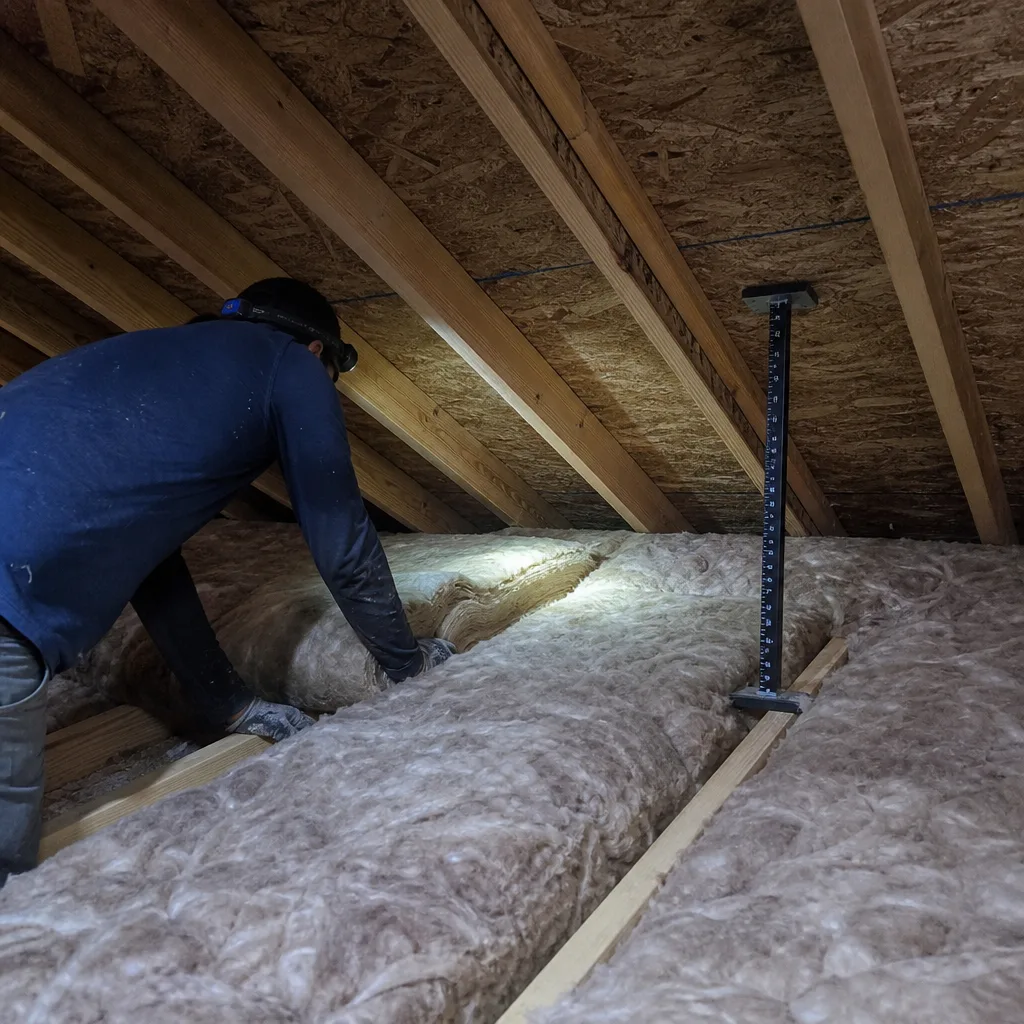
Six variables account for nearly all of the difference between a $1,100 job and a $3,800 job. None of them are hidden fees – they’re just real factors that any honest written estimate will name and price separately.
- Attic square footage. This is the single biggest driver. A 1,200 sq ft attic in an older Leander ranch costs less than a 2,400 sq ft attic in a two-story home in Travisso – even if the R-value target is identical. Material volume scales with area, and labor scales with access points, depth, and how many penetrations need sealing.
- Current R-value and what’s already there. Texas code for Climate Zone 3 calls for R-38 minimum in attics; many Leander homes built before 2010 have R-19 or less. The bigger the gap between existing and target R-value, the more material goes in, and cost rises accordingly. If the existing insulation is in good condition, we can add on top of it. If it’s compressed, wet, or pest-contaminated, removal comes first.
- Air sealing scope. This is where jobs in Leander vary more than most homeowners expect. A home with 40 recessed can lights (common in homes built 2005-2015 in Crystal Falls and comparable subdivisions) has 40 penetrations in the thermal envelope that need to be sealed with fire-rated caulk or foam before insulation covers them. That takes time. A home with 10 can lights and no attic HVAC chases takes considerably less. At Envelope Insulation Co., air sealing is not an upsell – it’s step one, always – but the scope and cost do reflect how many penetrations the attic has.
- Insulation type selected. Blown-in fiberglass (Owens Corning, Johns Manville, Knauf) and blown-in cellulose (GreenFiber and similar) both perform well in Leander’s climate and are priced within $200-$400 of each other for most jobs. Spray foam – open-cell from Icynene or Demilec, closed-cell from similar sources – costs materially more per square foot but serves a specific purpose: if your HVAC equipment sits in the attic, a conditioned attic assembly (spray foam at the roof deck rather than blown-in at the floor) may be the right call, and the energy math often supports it over 10 years.
- Attic access and layout. Some attics in Leander’s older stock near Ronald Reagan Boulevard have low-clearance sections, knee walls, or offset floor levels that add time. A straightforward 2,000 sq ft attic with a single access hatch and 10-foot peak takes less labor than the same square footage split across two access points and a section that bottoms out at 18 inches near the eaves.
- Leander’s climate zone and roof exposure. Leander sits in IECC Climate Zone 3 – hot and humid. Homes on the west side of subdivisions like Bryson or Mason Hills with little tree coverage see longer periods of direct afternoon sun, which means a radiant barrier (installed at the roof deck or rafter underside) adds meaningful value alongside blown-in insulation. That combination – radiant barrier plus blown-in to R-49 – adds $600-$1,200 to a job but measurably reduces peak cooling loads in July and August, when Leander routinely sees consecutive days above 100°F.
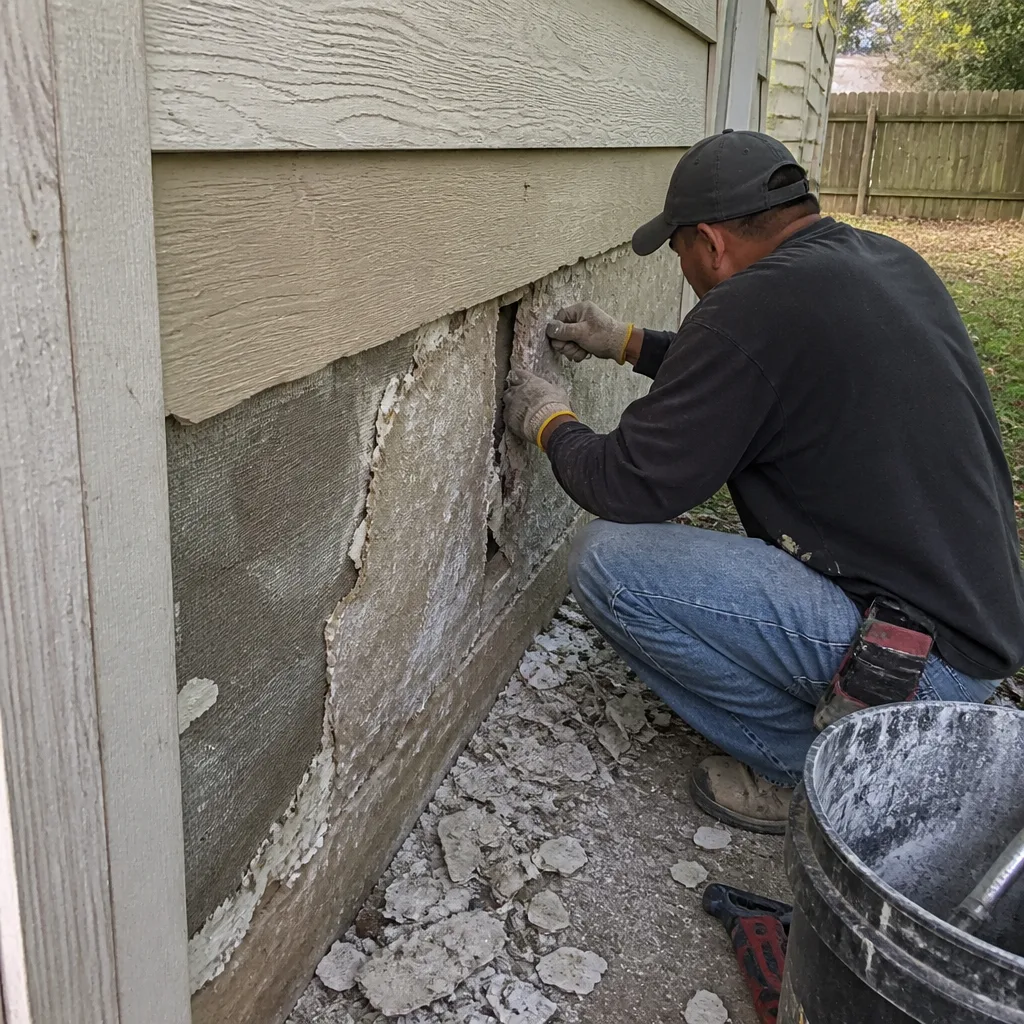 Before
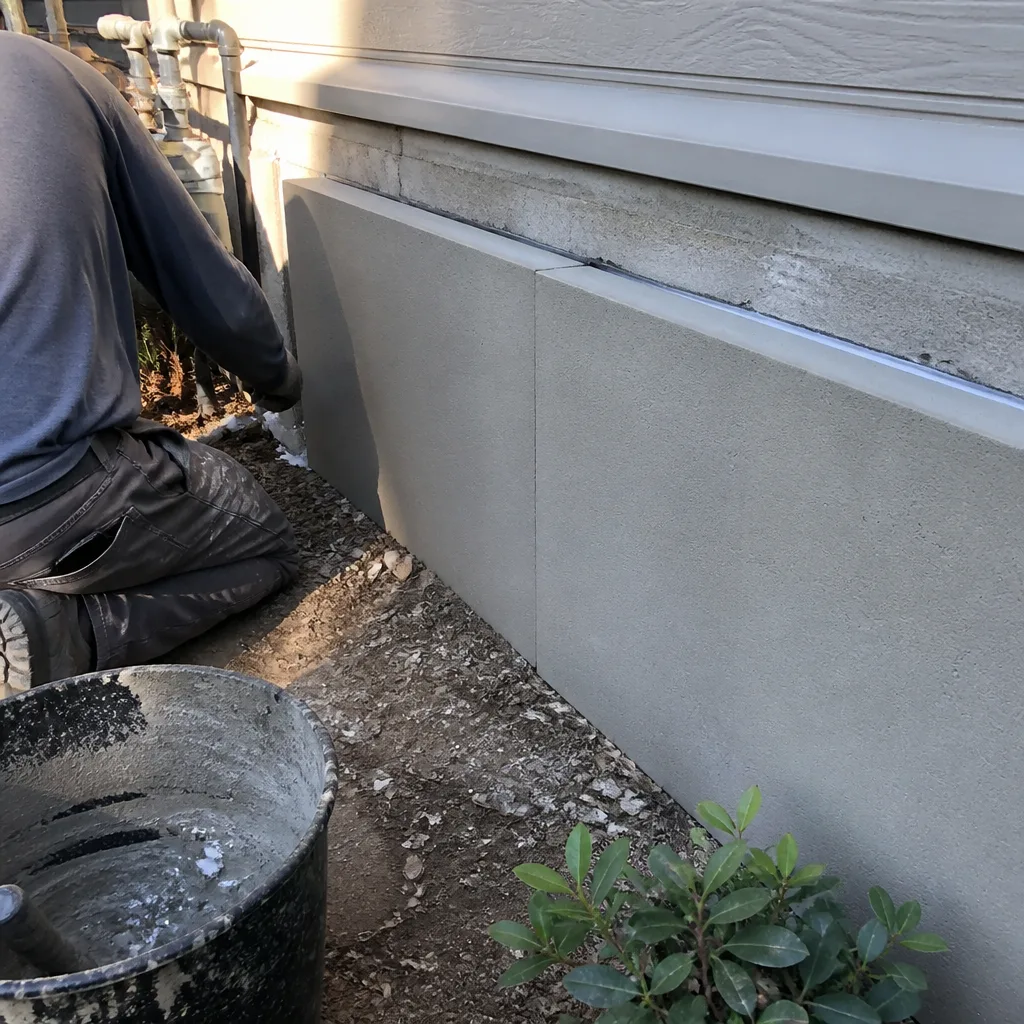 After
AfterDo You Need to Remove Old Insulation First?
Not always – but sometimes the honest answer is yes, and a written estimate should tell you which one before any work starts.
For an Attic Insulation Top-Up, most Leander homes we see with blown-in or batt insulation that’s dry and intact can have new material blown directly over the old after air-sealing the attic floor. The existing layer still contributes to your total R-value, and there’s no reason to remove it.
Three situations call for Attic Insulation Replacement instead. First, pest intrusion: if squirrels, rats, or raccoons have used the attic – which we see regularly in older neighborhoods near Leander’s cedar and live oak corridors – the insulation likely holds urine, droppings, and nesting material that creates air quality and odor problems when disturbed. It comes out. Second, water damage: a slow roof leak that soaked a section of blown-in fiberglass compresses it and reduces its R-value to near zero. That section needs to go. Third, vermiculite: a small number of Leander homes built before 1985 still have vermiculite insulation in the attic, which may contain asbestos. We don’t test or remediate asbestos – that requires a licensed abatement contractor – but we will flag it when we see it.
When removal is required, the cost runs $500-$1,100 per 1,000 sq ft of attic floor and is itemized separately in your written price.
Blown-In vs. Spray Foam in a Leander Attic: Which One Is Right?
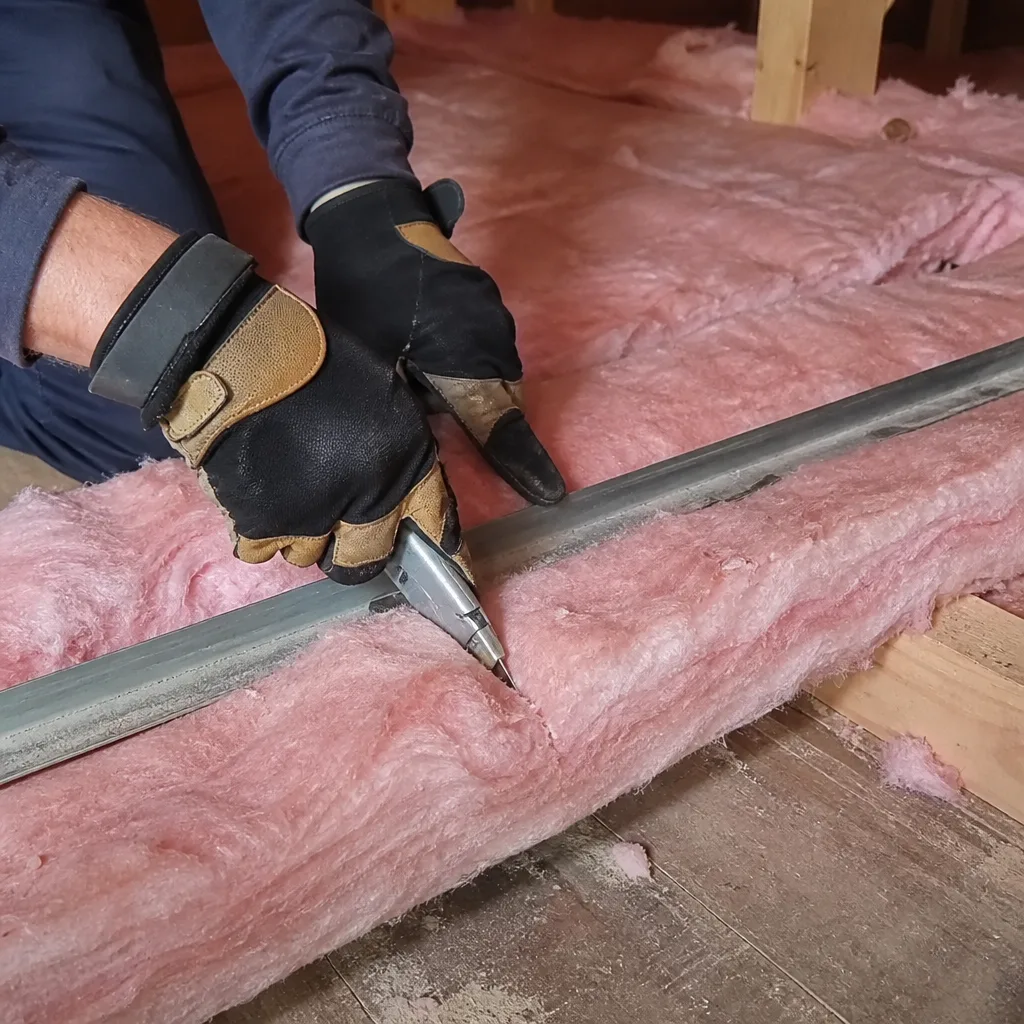
The answer almost always comes down to one question: where does your HVAC equipment live?
If your air handler and ductwork are in the conditioned living space or in a well-sealed mechanical closet, blown-in insulation at the attic floor is the right call for most Leander homes. It’s effective, cost-efficient, and when paired with thorough air sealing, it performs as well as anything on the market for Climate Zone 3 cooling loads. We use materials from Owens Corning, Johns Manville, Knauf, and GreenFiber depending on what the job calls for.
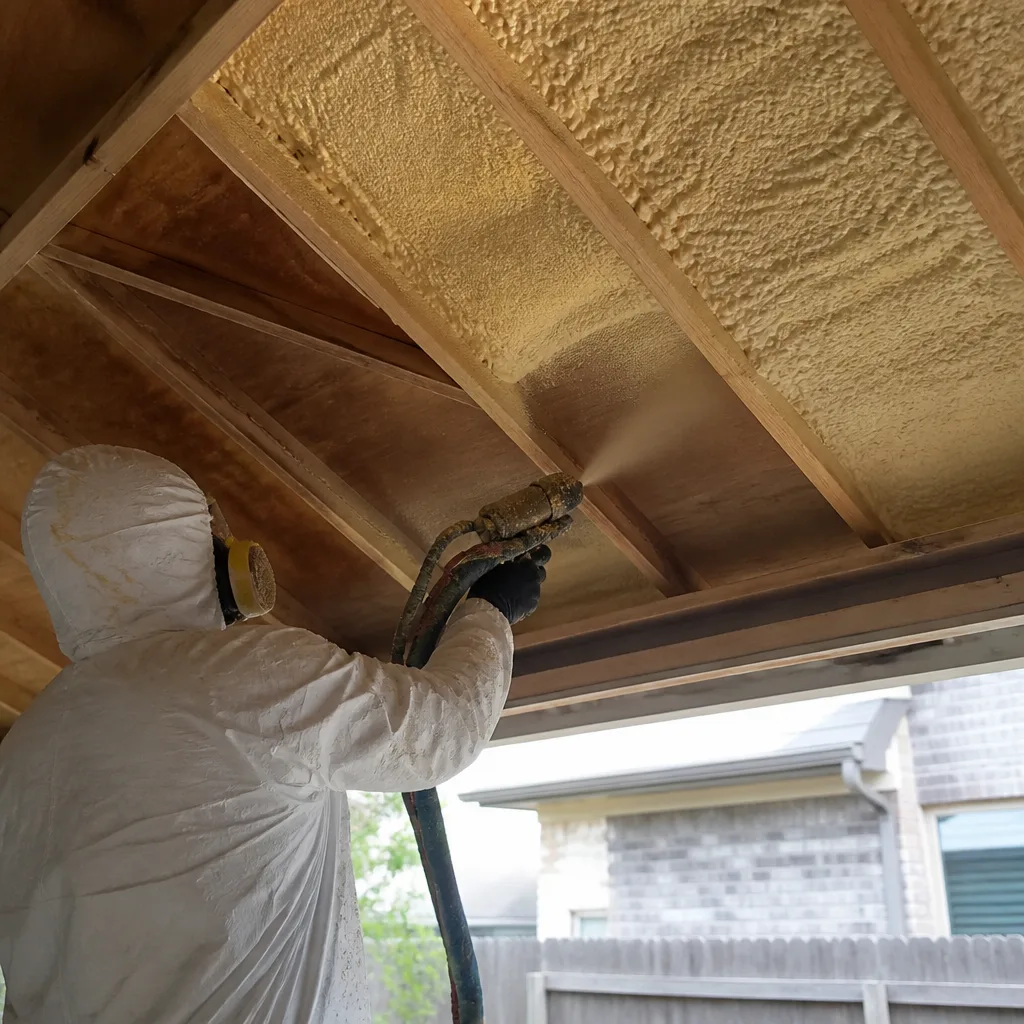
If your air handler sits inside the attic – which is common in Leander homes built in the early 2000s in neighborhoods like Block House Creek, Raintree, and some original Crystal Falls sections – then your HVAC system is operating in a space that hits 140°F in July. That means it works harder, runs longer, and wears faster. In that scenario, a conditioned attic assembly using open-cell spray foam at the roof deck (rather than the attic floor) moves the thermal boundary up to the roofline and brings the mechanical equipment inside the conditioned envelope. Open-cell materials from Icynene and Demilec are the most common products we use for this application. The upfront cost is higher – $2,800-$5,500 for a 1,500 sq ft roof deck – but the operating-cost case over 10 years is real and documentable.
We don’t steer customers toward the more expensive option by default. The written scope we produce before any work starts reflects what the attic actually needs, not what generates the largest ticket.
How to Save on Attic Insulation in Leander
A few practical ways to reduce cost without reducing the quality of the finished job.
- Check for utility rebates. Oncor Electric Delivery – the utility serving most of the Leander grid – has offered rebates on attic insulation upgrades in past years tied to R-value improvement. Rebate availability and amounts change year to year; the best source is Oncor’s residential efficiency page or a call to their rebate line. A documented job with before-and-after specs (which Envelope Insulation Co. provides as a standard deliverable) makes filing that rebate straightforward.
- Ask about the federal energy tax credit. Under current rules, homeowners may be eligible for a federal tax credit on insulation improvements that meet efficiency thresholds. We recommend verifying current eligibility with a tax professional, but the documentation we provide – written scope, materials used, R-value achieved – is exactly what you need to support the claim.
- Don’t skip air sealing to cut cost. This is the most common way homeowners spend more in the long run. Blown-in insulation installed over an unsealed attic floor slows conductive heat transfer but does almost nothing to stop air movement through top-plate gaps, can-light penetrations, and attic bypasses. Leander homes with 40+ can lights (common in tract builds from 2005-2015) can lose a significant portion of conditioned air through those penetrations alone. Air sealing first costs $400-$900 more upfront and saves a measurable amount on cooling bills over a Leander summer.
- Combine work when you can. If you’re already having insulation installed, the attic is open and the crew is on site. Adding a radiant barrier or addressing a small removal section at the same time costs less than scheduling a second visit. Same logic applies if you’re considering Attic Insulation in Leander alongside rodent proofing or attic cleaning – one mobilization covers all of it.
- Get a second opinion on any written estimate. We offer a Free Second Opinion on any written estimate. Bring us a quote from another contractor and we’ll read it with you – not to undercut it, but to help you understand what’s in it and what isn’t. An estimate that leaves out air sealing, for example, is not a lower price for the same job.
- Schedule before summer peak demand. Leander’s insulation demand spikes in May and June as homeowners feel the first 95°F days. Late winter and early spring (February through April) typically offer better scheduling flexibility and, in some years, slightly better pricing on material costs.
For a free estimate specific to your home’s attic, call (737) 252-7159. A live person answers – no voicemail, no callback window measured in business days.
What Our Process Looks Like – and What You Receive When We Leave
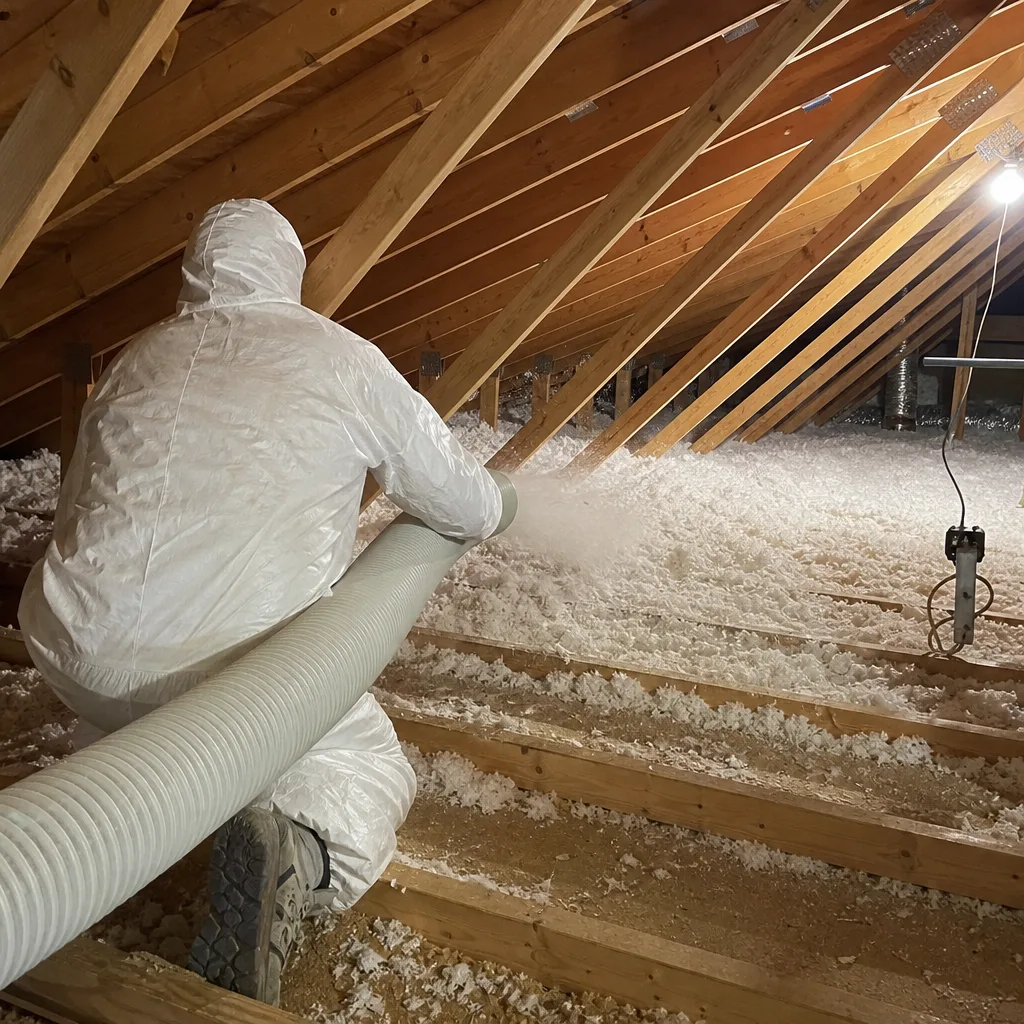
This section matters because the documentation you walk away with affects everything from rebate filing to resale disclosure.
Every job at Envelope Insulation Co. starts the same way: a written price and written scope before any work begins. That’s not a courtesy – it’s Haven Standard Clause 1, and it applies to every job, regardless of size.
Before insulation goes in, we complete attic air sealing at the top plates, all penetrations, recessed can lights, and any attic bypass paths we find. This is step one, not an optional add-on. After sealing is complete, insulation is installed to the specified R-value using materials from Owens Corning, Johns Manville, Knauf, GreenFiber, Rockwool, CertainTeed, Icynene, Demilec, or whichever product the job calls for – no proprietary lock-in.
When the crew finishes, you receive a Documented Photo Record of the completed work – included on every visit, not available on request. On applicable jobs, you also receive before-and-after blower-door numbers: a blower-door test is a pressurization reading that shows, in a single figure (CFM50), how much air your building envelope was losing before sealing and how much it’s losing after. That number lets you verify, in measurable terms, what the air-sealing work actually accomplished.
The 365-Day Done Right Promise covers all completed work. If it’s not right, we make it right. That promise is in writing before anyone starts.
We’ve been operating this way, as an independently owned and operated business under The Haven Standard, since 2016. Across more than 9,000 homes sealed and insulated, the written price before work starts and the documented record when we leave haven’t been optional on a single one of them.
Leander-Specific Notes on Attic Performance
Leander’s growth over the past decade has created a wide mix of home vintages and construction types within a few miles of each other. A few patterns we see regularly:
Homes in Crystal Falls (2003-2012 builds): Many of these have R-19 or R-22 blown-in fiberglass that has settled over time and is now performing closer to R-15. The attic floors in this era of construction also tend to have a high density of recessed can lights – 30 to 50 is common – which represent significant air-sealing work before new insulation can go in. Budget for $400-$700 in air sealing as a realistic line item.
Homes in Bryson and Travisso (2016-present): Newer construction here tends to have better initial insulation but large attic footprints. Some Travisso homes exceed 3,000 sq ft of attic floor. HVAC equipment in the conditioned space (rather than attic) is more common in this vintage, which makes blown-in at the attic floor the appropriate and cost-efficient solution. These homes may not need removal, but they often benefit from a radiant barrier given their west-facing roof exposure.
Older homes near the original Leander town center (pre-2000 construction): Attic access in this stock can be tight, and a small number of homes in this area have older batt insulation that has compressed to near zero R-value. Removal is more common here. Some homes also have original ductwork that runs through the unconditioned attic space, which makes the argument for a conditioned attic assembly stronger.
Homes near Lake Travis tributaries and cedar corridors: Leander’s eastern and southeastern edges border cedar and live oak habitat. Wildlife intrusion – squirrels and rats in particular – is more common here than in the denser subdivision interiors. If a home in this zone hasn’t had the attic inspected in five or more years, it’s worth including rodent proofing and attic cleaning in the scope alongside insulation.
FAQs – Attic Insulation Cost in Leander, TX
How much does attic insulation cost in Leander, TX?
Most our Attic Insulation services in Leander run between $1,400 and $3,800, with the typical full-service job – air sealing plus blown-in to R-49 on a 1,800-2,200 sq ft attic floor – landing around $2,100-$2,600. Smaller attics or jobs that don’t require removal can come in under $1,400. Larger attics, spray foam applications, or jobs that include old-insulation removal can exceed $3,800. The best way to get a number specific to your home is to get a written estimate – we provide one free before any work starts. Call (737) 252-7159 and a live person will answer.
Is it cheaper to repair or replace attic insulation?
Adding new material on top of existing insulation – when the existing material is dry, intact, and not pest-contaminated – costs roughly $950-$1,600 for a 1,500 sq ft attic and is the right approach when the existing R-value is at least R-11 or R-13. Full replacement (removal plus reinstall) runs $1,800-$3,500 for the same footprint. Repair (adding on top) is cheaper, but only when the existing insulation earns it. If there’s moisture damage, pest contamination, or vermiculite, replacement is the only honest answer – adding on top of damaged material doesn’t fix the underlying problem. Your written estimate will name which scenario applies and why.
What R-value do I need in Leander, TX?
Texas Energy Code for Climate Zone 3 – which covers Leander – sets a minimum of R-38 in attics. The Department of Energy’s recommendation for Climate Zone 3 is R-49 to R-60 for uninsulated attics or major upgrades. Given Leander’s sustained summer heat load (consecutive 100°F+ days in July and August, attic deck temps of 140-150°F), we typically recommend R-49 as the target for a full install. The incremental material cost between R-38 and R-49 is modest – roughly $200-$400 on most jobs – and the performance difference over a Leander summer is real. R-60 is appropriate in some cases, particularly in older homes with a lot of air leakage history.
Does attic insulation really save money on my energy bill in Leander?
Yes, but the savings come from two things together, not just the insulation alone: air sealing plus increased R-value. A home that goes from R-19 (settled) to R-49 with thorough air sealing of top plates and can-light penetrations typically sees a measurable reduction in cooling runtime during Leander’s peak summer months. The before-and-after blower-door numbers we document on every applicable job give you a measurable figure – CFM50 before and after sealing – rather than a vague claim about energy savings. The exact dollar amount on your bill depends on your home’s size, your thermostat settings, and Oncor’s current rate, but the directional outcome is not in question.
How long does attic insulation installation take in Leander?
Most full-service jobs – air sealing plus blown-in insulation on a 1,500-2,500 sq ft attic – take 4 to 8 hours, typically completed in a single day. Larger attics, spray foam applications at the roof deck, or jobs that include old insulation removal may extend to a second day. You’ll know the timeline before any work starts because it’s included in the written scope. We send a named technician and a text when they’re on the way – you’re not waiting for an unnamed crew in a window measured in half-days.
Why does one estimate include air sealing and another doesn’t?
Because not every contractor treats air sealing as part of the job. A blown-in insulation estimate that skips attic air sealing is a lower price for a materially different scope. Blown-in insulation slows conductive heat transfer; it does not stop conditioned air from moving through gaps around top plates, recessed can lights, and attic bypass paths. In a Leander home with 40 recessed lights, those penetrations represent a significant fraction of the home’s total air leakage. At Envelope Insulation Co., air sealing is completed before any insulation goes in – not as an upsell, but as a hard prerequisite. If you have a written estimate that doesn’t include it, bring it to us and we’ll read it with you under our Free Second Opinion offer.
Key Takeaways
- Attic insulation in Leander runs $1,400-$3,800 for most residential jobs; the typical full-service scope lands around $2,100-$2,600.
- R-49 is the recommended target for Leander’s Climate Zone 3 heat load – the incremental cost over R-38 is small relative to summer performance.
- Air sealing (top plates, can lights, penetrations) must come before insulation is added. It’s a separate line item but not optional.
- Homes in Crystal Falls, Bryson, Travisso, and Mason Hills have different attic profiles – footprint, vintage, and HVAC location all affect the right scope and final price.
- Before-and-after blower-door numbers on every applicable job let you verify the air-sealing result in a single measurable figure.
- Every job includes a written price before any work starts, a Documented Photo Record when we leave, and the 365-Day Done Right Promise.
- A Free Second Opinion on any written estimate is available – bring us a competing quote and we’ll read it with you.
Get a Written Estimate for Your Leander Home
If you want to know what your attic specifically will cost, the fastest path is a written estimate from someone who’s been in the attic. We serve Leander and the surrounding area from our base at Envelope Insulation Co. – independently owned and operated under The Haven Standard since 2016, with more than 9,000 homes sealed and insulated, every one with a written price before work started.
Call (737) 252-7159 – a live person answers, 24 hours a day, no voicemail loop. We’ll schedule a time to assess your attic, measure the current R-value, identify air-sealing scope, and deliver a flat written price before anyone lifts a tool. If you already have a written estimate from another contractor, bring it. We’ll read it with you.
Written by Wes Okafor, Owner at Envelope Insulation Co. (operating as Topside Attic Insulation Leander), serving Leander, TX since 2016.
Pricing reflects the Leander market as of 2026. Topside Attic Insulation Leander offers free estimates – call (737) 252-7159.
What Our Customers Say
"Crawl space encapsulation done properly. Photographs of the vapour barrier at every seam, and the damp smell in the hallway is gone."
- Ainsley P."They air-sealed the attic floor before insulating and showed me the blower-door number before and after. The upstairs is finally the same temperature as downstairs."
- Marisol D."Fixed price, clean work, and they hauled the old material away as agreed."
- Todd M.