
How Much Does Radiant Barrier Installation Cost in Leander?
Radiant Barrier Installation services in Leander, TX typically run between $1,400 and $3,200 for a standard single-story home with an attic footprint of 1,500 to 2,800 square feet. Most Leander homeowners land around $1,800 to $2,400 when the attic is accessible, unobstructed, and the existing insulation doesn’t need to be moved first. A written price is provided before any work begins – that’s not a policy we negotiate on.
Radiant Barrier Installation Cost Breakdown (2026)
Radiant barrier pricing in the Leander market breaks down by attic size, foil type, and the condition of what’s already up there. The table below reflects what we’re actually quoting in Leander and surrounding areas like Trails End, Mason Hills, and Crystal Falls in 2026 – not national averages pulled from a database somewhere.
| Scope of Work | Typical Price Range |
|---|---|
| Single-story home, 1,200 – 1,500 sq ft attic, standard foil | $1,100 – $1,600 |
| Single-story home, 1,500 – 2,000 sq ft attic, standard foil | $1,400 – $2,000 |
| Single-story home, 2,000 – 2,500 sq ft attic, standard foil | $1,800 – $2,600 |
| Two-story home, 2,500 – 3,500 sq ft attic, standard foil | $2,400 – $3,500 |
| Perforated foil upgrade (better moisture performance) | Add $150 – $350 |
| Attic air sealing before radiant barrier installation | Add $400 – $900 |
| Insulation removal or repositioning required | Add $300 – $700 |
| Attic access upgrade (new pull-down stair or hatch) | Add $250 – $500 |
A few things push that number up in Leander specifically. Homes built in the Crystal Falls and Bryson developments between 2017 and 2023 often have complex rooflines with multiple valleys and hip sections – that geometry adds labor time because foil has to be cut and fitted around each rafter intersection rather than stapled in long straight runs. Attics in older Leander homes along Hero Way or near the Reagan Boulevard corridor, many built in the late 1990s and early 2000s, sometimes have deeper insulation piled on the attic floor that needs to be temporarily moved or worked around before the radiant barrier can go up properly. And in summer, our crews work Leander attics in rotations because attic temperatures here routinely hit 140-160°F by late morning – that limits daily production and is part of why Central Texas radiant barrier pricing runs slightly higher than national figures suggest.
What brings the price down: a straightforward gable-roof design with clear ridge access, existing insulation at or below joist level, and a full-size pull-down stair rather than a scuttle hole. If your attic checks those boxes, you’ll likely land in the lower half of the range for your square footage tier.
What Affects Radiant Barrier Installation Pricing in Leander
- Attic square footage: This is the biggest single driver. Labor is priced per square foot of roof deck area to be covered, not by the home’s conditioned footprint. A two-story 2,400 sq ft home often has less attic deck to cover than a single-story home of the same size – something a lot of Leander homeowners don’t expect when they start comparing quotes.
- Roof geometry and pitch: Steep roofs (8:12 pitch and above) and complex hip-and-valley designs require more cuts and more careful fitting. Several Leander neighborhoods developed by Taylor Morrison and Meritage in the last decade lean toward steeper pitches and multi-faceted rooflines, and that adds measurable labor time. A simple gable roof at a 4:12 pitch is the fastest scenario.
- Attic accessibility: A full-size pull-down stair lets a crew move materials efficiently. A small scuttle access cuts productivity and can add $150 to $400 in labor depending on how tight the opening is and whether equipment has to be disassembled to fit through. Some production homes in Leander’s newer subdivisions were built with undersized attic hatches – it’s worth measuring yours before getting a quote.
- Existing insulation depth and type: Radiant barriers work by reflecting radiant heat before it reaches the insulation below. If the insulation on your attic floor is heaped above joist level, crew members can’t move across the attic floor safely and material may need to be raked back temporarily. Blown-in cellulose – common in Leander homes with GreenFiber installs from the mid-2000s – compresses and recovers, but it still adds labor steps.
- Foil type – perforated vs. solid: Solid foil reflects slightly better but doesn’t allow moisture vapor to pass through. In Central Texas, where Leander’s high summer humidity combined with air-conditioned attic bypasses can cause condensation issues, perforated foil is often the better long-term choice. The cost difference is modest – $150 to $350 on a typical job – but the selection matters for durability.
- Whether air sealing is done first: This is where our approach at Envelope Insulation Co. differs from most contractors in the Leander market. We don’t install a radiant barrier over an attic floor that has open top-plate penetrations, unsealed can lights, or gaping chase walls – because a radiant barrier only addresses radiant heat transfer, and those gaps are letting conditioned air out around the clock. If your attic needs air sealing first, that work is scoped and priced separately with a written line item before anything starts.
 Before
 After
AfterRadiant Barriers and Leander’s Climate: Why This Upgrade Makes Specific Sense Here
Leander sits in Williamson County, IECC Climate Zone 2A – hot and humid – which means the attic isn’t just hot in July, it’s persistently hot from roughly May through October. The sun angle and intense afternoon radiation hitting west-facing roof decks in neighborhoods like Travisso and North Lakeway drives attic temperatures well past what most homeowners expect. We’ve measured attic temperatures in Leander homes that exceeded 155°F at 2 p.m. on a clear July afternoon with no radiant barrier present.
A radiant barrier installed on the underside of the roof deck – the most common installation method for existing homes – works by reflecting a large portion of that radiant heat back upward before it ever reaches the insulation sitting on the attic floor. The insulation then has less heat load to resist. In Climate Zone 2A, that’s a meaningful reduction. The U.S. Department of Energy’s data for hot-humid climates suggests attic temperature reductions of 20-30°F are achievable with proper installation, which translates directly to reduced cooling runtime during Leander’s long summer afternoons.
That’s different from how radiant barriers perform in, say, Chicago. In northern climates, the heating season dominates and radiant barriers add less value. In Leander, the cooling season is long enough that the energy math works clearly in favor of the upgrade – particularly if your HVAC equipment is located in the attic, which is true of a large number of homes in the Bryson, Carneros Ranch, and Caballo Ranch neighborhoods.
The Air Sealing Prerequisite – What Most Leander Quotes Leave Out
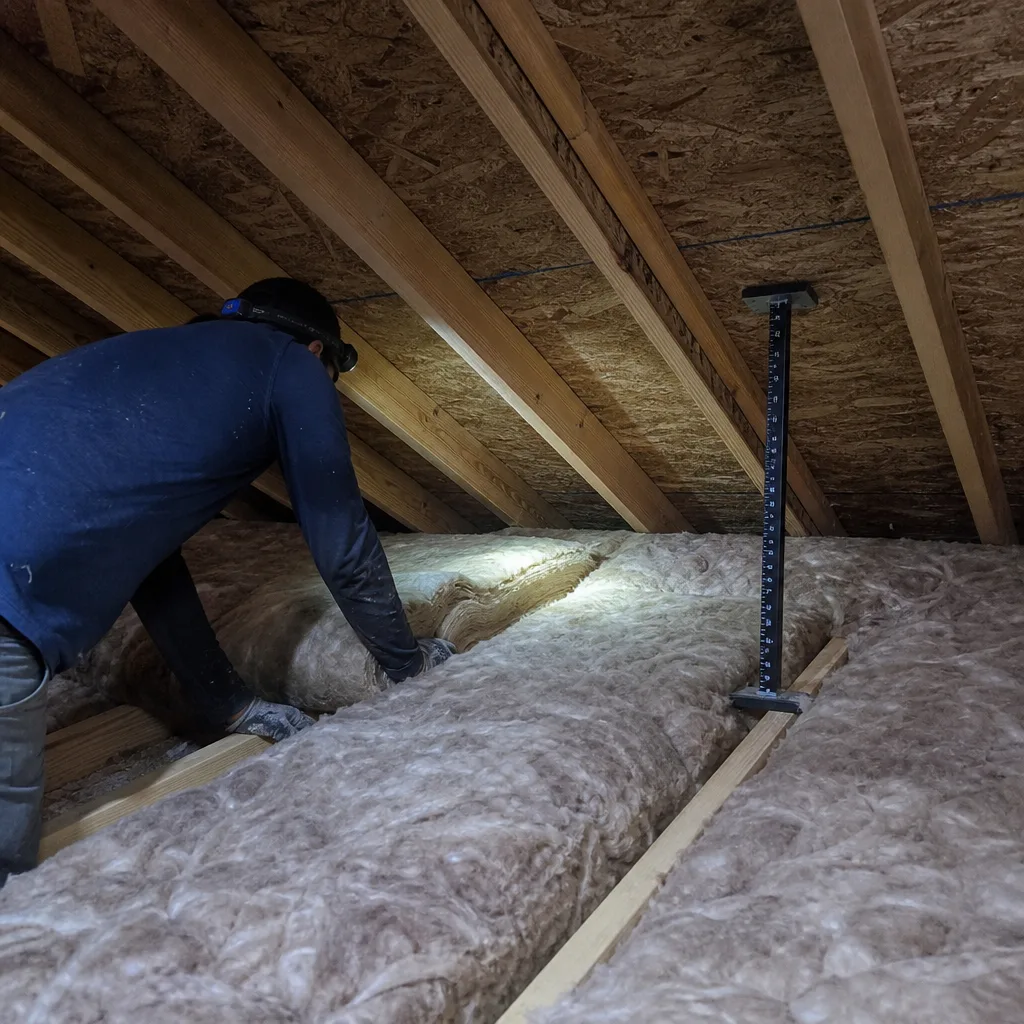
Here’s something worth reading carefully before you collect quotes: most radiant barrier installers in the Leander area will arrive, staple foil to your rafters, and leave. That’s the job as they define it.
We define it differently. Before any foil goes up on a job Envelope Insulation Co. completes, we walk the attic floor and identify the air leaks that are costing you the most money: open top plates above interior walls, recessed can lights that are essentially holes punched through the ceiling, unsealed plumbing and electrical penetrations, and HVAC chase gaps. In Leander homes built during the 2004-2015 construction boom, these leaks are nearly universal – the code required insulation, not air sealing, and builders did what code required.
Air sealing is priced and written separately – it’s not bundled into the radiant barrier price in a way that makes it hard to see what you’re paying for each piece. On applicable jobs, we document the before-and-after with a blower-door test – a pressurization reading that measures, in a single number (CFM50 – cubic feet per minute of air leakage at 50 Pascals of pressure), exactly how much conditioned air your building envelope was losing before we started and how much it’s losing when we’re done. That number is in your job record. You can verify what you paid for.
A radiant barrier over an unsealed attic floor still provides some benefit. But it’s working against a leak that runs 24 hours a day, 365 days a year. Sealing first, then installing the barrier, is how the building science actually works – and it’s the sequence we’ve followed on every job since 2016.
How to Save on Radiant Barrier Installation in Leander
The most direct way to spend less on radiant barrier installation is to get a written, itemized quote – not a ballpark – from at least two contractors, and compare what’s actually included line by line. A $1,200 quote that doesn’t include air sealing and a $1,900 quote that does are not the same job. We offer a free second opinion on any written estimate you’ve already received: bring it in or send a photo, and we’ll read through it with you and explain what’s there and what’s missing.
A few other practical ways to reduce the total cost:
- Combine work when your attic is already open. If you’re also adding blown-in insulation or replacing old batt insulation, scheduling the radiant barrier installation at the same time eliminates a second mobilization charge. In Leander, combined attic insulation and radiant barrier projects often save $200 to $400 compared to scheduling each separately.
- Improve attic access before the crew arrives. If your home has a scuttle-hole access instead of a pull-down stair, installing a new stair yourself – or having it done before the insulation appointment – can reduce labor time on the insulation job itself. Pull-down stair kits for standard openings run $150 to $300 at local suppliers.
- Check for utility rebates. Austin Energy does not serve Leander – Leander ISD is primarily served by Pedernales Electric Cooperative (PEC) and some areas by Georgetown Utilities. PEC has offered residential energy efficiency rebate programs in the past; the terms change year to year, so call PEC directly at the number on your bill and ask specifically about attic insulation and radiant barrier rebates for the current program year before scheduling work.
- Don’t delay past late spring. Attic work in July and August in Leander is significantly harder on crews. We build that reality into our scheduling, but if you book in March or April, you’re getting a crew that can work longer in the attic each day, which can mean tighter scheduling and faster completion on complex jobs.
- Get the written price before anything starts. This isn’t just how Envelope Insulation Co. operates under Haven Standard Clause 1 – it’s also how you protect yourself from scope creep. A contractor who can’t give you a flat written price before the job starts is a contractor whose final invoice may not match what you were told. Written price, written scope, written warranty – that’s the baseline before a single staple goes in.
For a free estimate on your specific attic, call (737) 252-7159. We’ll price the job in writing before anything starts – that’s not something you have to ask for.
What the Job Looks Like Start to Finish
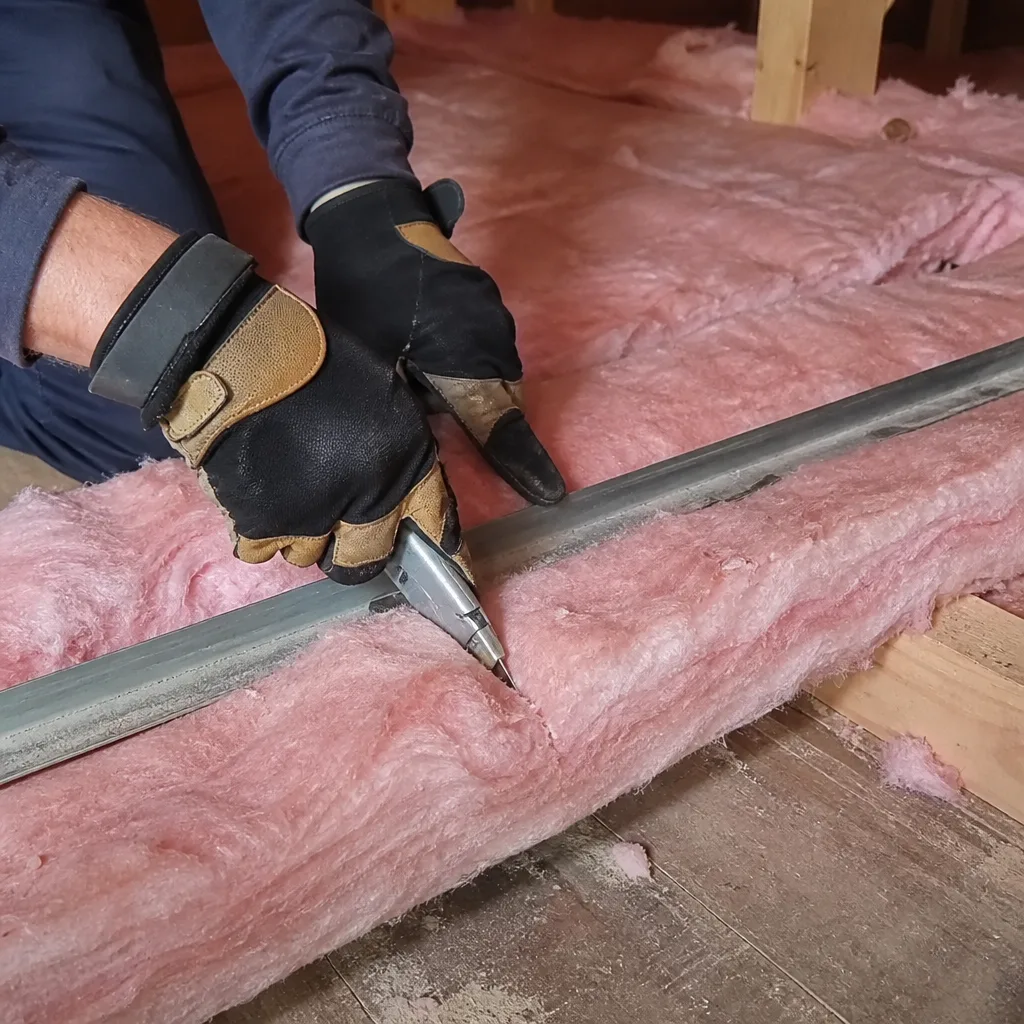
Knowing what actually happens on installation day helps you evaluate whether a contractor’s quote is realistic. Here’s the sequence on a standard Leander single-story radiant barrier job.
First, we walk the attic before any material gets staged. On a new job, that walk serves two purposes: we confirm the measurements match the quote (if they don’t, the price gets adjusted in writing before work starts – not after), and we identify any conditions that affect installation – compressed insulation, low spots, previous water damage at penetrations, or live-load issues on the attic floor decking. In neighborhoods like Rand Ranch and Sage Hill, we regularly find previous insulation installs that left bypasses open above can lights – those get documented in the pre-job photo record.
If air sealing is in scope, that work happens before any foil is stapled. Top plates get sealed with appropriate foam or caulk depending on gap size. Can light penetrations are addressed. HVAC chase tops are closed. That sequence is non-negotiable because once the foil is up, access to the attic floor is more constrained.
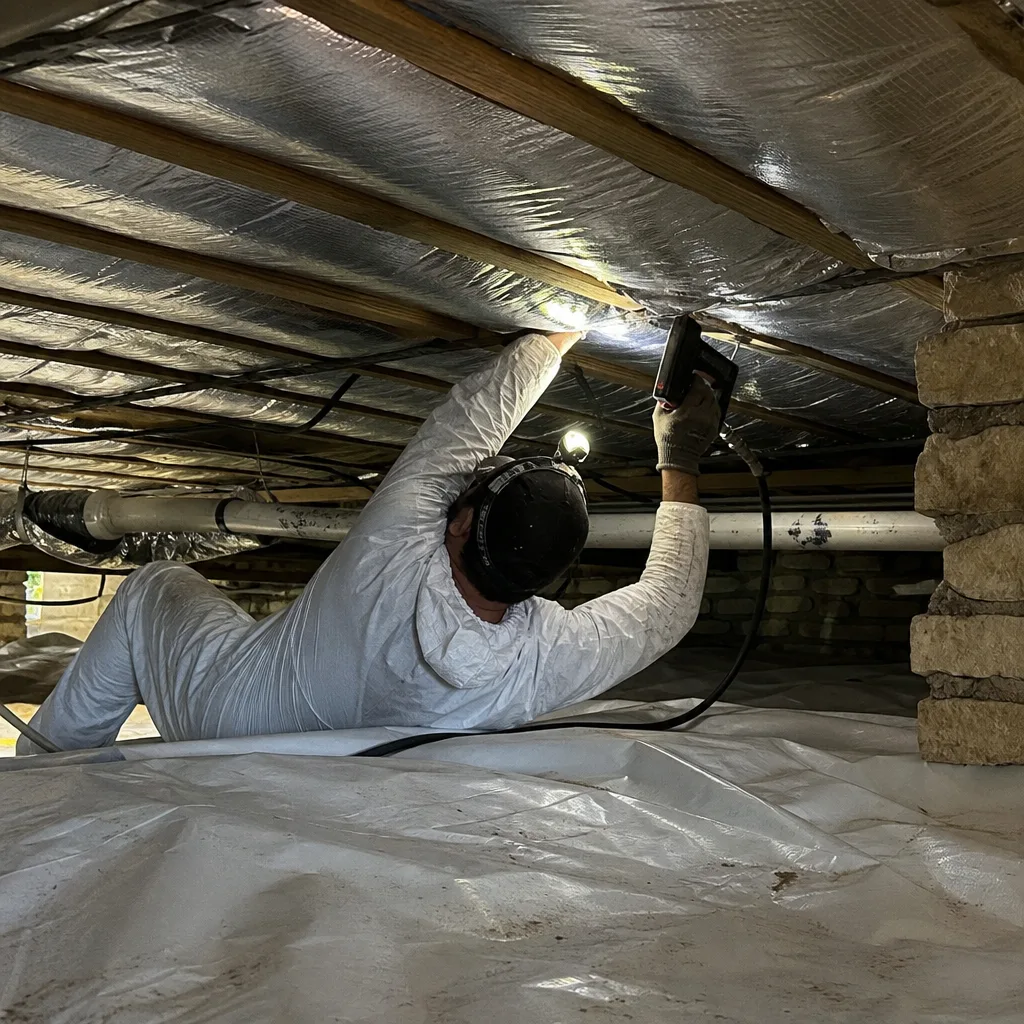
The foil installation itself – for a 2,000 sq ft single-story home – typically takes one full crew day. The foil is cut to span rafter bays and stapled to the underside of the roof deck with a small gap left at the ridge and at the eaves so the attic can still ventilate. That gap is intentional: radiant barriers need airflow on both sides to work properly, and blocking soffit or ridge ventilation in Leander’s climate would cause moisture problems. Any crew that runs foil tight to the ridge without leaving a ventilation gap is doing the job wrong.
When the crew leaves, you receive a documented photo record of the completed installation – foil coverage at rafter bays, sealed penetrations if air sealing was included, and the attic access area. That record is part of every job, not something you have to request.
Radiant Barrier vs. More Attic Insulation: Which One First?
This is the question we get most often from Leander homeowners who are comparing options. The short answer: if your attic insulation is below R-30, add insulation first. If you’re already at R-38 or above and your attic is properly air sealed, a radiant barrier is the next meaningful upgrade.
Here’s why. Insulation resists heat flow by slowing conduction – the way heat moves through solid materials. A radiant barrier reflects radiant heat – the infrared radiation that travels across the air gap from the hot roof deck to the insulation surface below. Both mechanisms matter in Leander’s climate, but they address different parts of the heat transfer equation. Running either one without the other leaves money on the table.
The combination that performs best in Central Texas: a properly air-sealed attic floor, R-38 to R-49 blown-in insulation (the current 2021 IECC recommendation for Climate Zone 2), and a perforated radiant barrier on the roof deck. That three-part system addresses air leakage, conductive heat transfer, and radiant heat transfer – the full picture. Doing them in sequence, documented at each step, is what our Radiant Barrier Installation in Leander service is built around.
If you’re not sure where your attic currently stands, a home energy audit is the diagnostic step that gives you an ordered list of what to fix first. It’s worth doing before committing to any single upgrade.
FAQs – Radiant Barrier Installation Cost in Leander
How much does radiant barrier installation cost in Leander, TX?
Radiant barrier installation in Leander costs between $1,100 and $3,500 for most residential jobs, with the typical range for a 1,500 to 2,500 sq ft attic landing between $1,400 and $2,600 depending on roof complexity, accessibility, and whether air sealing is included. Homes with simple gable roofs and good attic access come in at the lower end; two-story homes with hip roofs and complex framing sit toward the top. Call (737) 252-7159 for a written price specific to your home – there’s no charge for the estimate.
Is radiant barrier installation worth it in Leander’s climate?
Yes, specifically because Leander sits in IECC Climate Zone 2A with a cooling season that runs five to six months. Radiant barriers are most effective in climates with long, hot summers and significant solar radiation on roof surfaces – which describes Central Texas precisely. The benefit is less compelling in predominantly heating climates. Homes in Leander with HVAC equipment or ductwork located in the attic see additional benefit because the equipment itself runs more efficiently when attic temperatures drop. A $1,800 to $2,400 installation that reduces attic temperature by 20-30°F can shorten daily AC runtime meaningfully over a season.
How long does radiant barrier installation take in a typical Leander home?
Most single-story Leander homes with attic square footage between 1,500 and 2,200 sq ft take one full crew day – typically six to eight hours including setup and cleanup. Two-story homes or those with complex rooflines and multiple hip sections may require a day and a half. If air sealing is included in the same appointment, add two to four hours depending on the number and severity of penetrations found during the attic walk. The job record and photo documentation are completed before the crew leaves, so you’re not waiting on a follow-up email to know the work is done.
Can I install a radiant barrier myself in my Leander attic?
The foil material itself is sold at building supply stores for roughly $0.15 to $0.30 per square foot in material cost alone, which sounds appealing. But a few practical realities: Leander attic temperatures exceed 140-155°F on summer afternoons, making DIY installation genuinely dangerous without proper precautions and a two-person crew. Incorrect installation – running foil tight to the ridge, blocking soffit vents, or leaving gaps at rafter intersections – reduces effectiveness and can create moisture problems over time. If you’re determined to do it yourself, schedule the work in November through February when attic temperatures are manageable, work with a partner, and leave a 2-3 inch gap at the ridge and eaves for ventilation. For most homeowners, the labor savings don’t outweigh the risk and the likelihood of an installation that underperforms.
Does a radiant barrier replace attic insulation in Leander homes?
No – a radiant barrier and attic insulation address different types of heat transfer and work together, not in place of each other. If your current insulation is below R-30, adding insulation should come first; the per-dollar energy return on insulation is higher at that level than adding a radiant barrier to an underinsulated attic. Once you’re at R-38 or above and your attic floor is properly air-sealed, the radiant barrier becomes the next logical upgrade. The sequence matters because insulation resists conduction and a radiant barrier reflects radiation – both are happening in your attic every afternoon from May through September in Leander. If you’re not sure what you have, we can walk your attic and give you the current R-value reading as part of the estimate visit – no charge.
What’s included in Envelope Insulation Co.’s radiant barrier quotes for Leander homes?
Every quote includes a written price with a flat total (no “starting at” language), a written scope describing exactly what gets installed and where, and a written warranty – all delivered before work begins. That’s Haven Standard Clause 1, and it applies to every job regardless of size. The quote will also show air sealing as a separate line item if it’s recommended, so you can see exactly what you’re paying for each piece of work. When the job is complete, you receive a documented photo record of the installation. On jobs that include air sealing, before-and-after blower-door readings are included so you can verify the air-sealing result in measurable numbers, not just our word for it. Call (737) 252-7159 to schedule your estimate.
Why Leander Homeowners Work with Envelope Insulation Co.
We’ve been operating under The Haven Standard since 2016, and in that time we’ve completed work on more than 9,000 homes with a written price before every job and a documented record when every crew left. That’s not a marketing claim – it’s the operating procedure that every technician on every job follows, including radiant barrier installs in Leander.
The thing that actually differentiates us in the Leander market isn’t the foil brand or the staple pattern – it’s the sequencing. We don’t install insulation or radiant barriers over unsealed attic floors. Air sealing of top plates, can lights, and penetrations is completed before any radiant barrier goes up, because a foil layer that’s reflecting radiant heat while conditioned air streams out through open bypasses is only solving half the problem. Most contractors in the area don’t air-seal at all – it’s not included, not offered, and sometimes not mentioned.
Wes Okafor leads our team, and the standard he set from the beginning is the one we work to on every job: show the homeowner what we found, show them what we did, and give them the numbers to verify it. That means the blower-door readings are in your file. The photos are in your file. The written warranty is in your file before we start, not after.
If you’ve already got a written quote from another contractor, bring it to us. We’ll read through it with you line by line as part of our free second opinion – no pressure, no sales pitch, just a plain reading of what’s included and what’s not. That offer stands for any written estimate, any job size, any neighborhood in Leander.
You can reach the home office directly at (737) 252-7159. A live person answers – no voicemail loop, no callback window. If you’d prefer to start with a text, that works too.
Key Takeaways
- Radiant barrier installation in Leander runs $1,400 to $2,600 for most single-story homes and $2,400 to $3,500 for larger two-story homes with complex rooflines.
- Attic square footage, roof geometry, and accessibility drive cost more than material choice alone.
- Air sealing before radiant barrier installation is the correct sequence – and it’s priced as a separate, visible line item, not hidden in the total.
- Leander’s Climate Zone 2A makes radiant barriers a genuinely useful upgrade – particularly in homes with HVAC equipment or ductwork in the attic.
- Pedernales Electric Cooperative may offer rebates for attic upgrades – confirm the current program year terms directly with PEC before scheduling work.
- Every quote from Envelope Insulation Co. is written, flat, and delivered before work starts. On air-sealing jobs, before-and-after blower-door numbers are included so you can verify the result.
- A free second opinion on any written estimate is available – call (737) 252-7159.
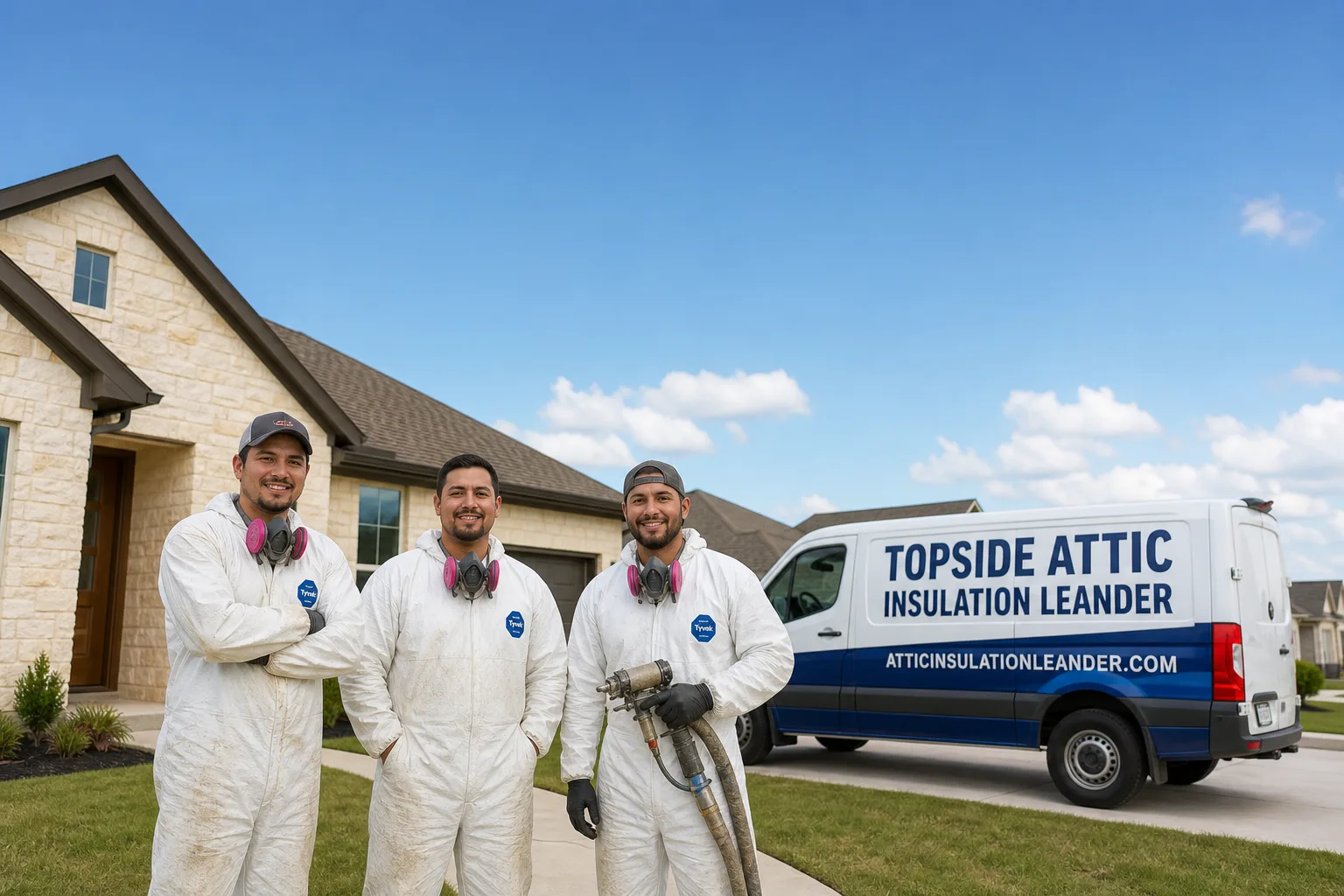
Written by Wes Okafor, Owner at Envelope Insulation Co. (operating as Topside Attic Insulation Leander), serving Leander, TX since 2016.
Pricing reflects the Leander market as of 2026. Topside Attic Insulation Leander offers free estimates – call (737) 252-7159.
What Our Customers Say
"Fixed price, clean work, and they hauled the old material away as agreed."
- Todd M."They photographed rodent damage in the old insulation that we had no idea about, and priced the exclusion work separately so we could decide."
- Harriet N."Two other companies quoted to blow more insulation on top of what was there. These were the only ones who said the existing material had to come out first, and explained why."
- Clifford E.