
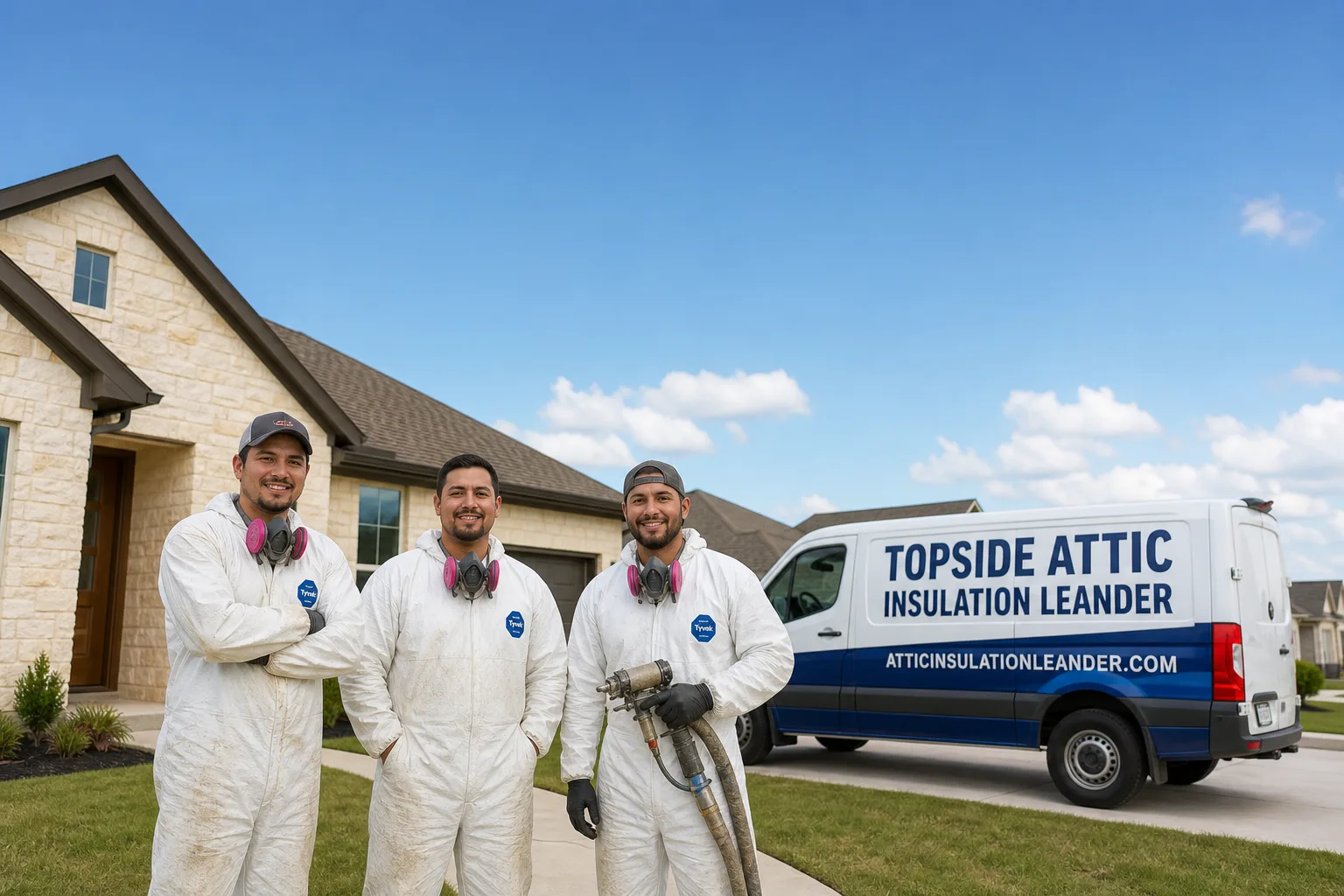
How Much Does Insulation Removal & Replacement Cost in Leander?
Insulation removal and replacement in Leander, TX typically runs between $1,400 and $4,200 for a standard attic, with most single-story homes in the 1,800-2,400 square foot range landing around $1,800-$2,800 when you factor in vacuum removal, attic air sealing, and new blown-in insulation installed to current code. Jobs involving contaminated material – rodent droppings, mold, or fire damage – cost more, usually $2,800-$5,500, because the remediation step adds labor, containment, and disposal fees before any new insulation goes in.
Insulation Removal & Replacement Cost Breakdown (2026)
The table below reflects what Envelope Insulation Co. sees on jobs throughout Leander and the surrounding Williamson County market in 2026. These are real ranges, not national averages padded with disclaimers.
| Scope of Work | Typical Cost Range (Leander, TX) | Notes |
|---|---|---|
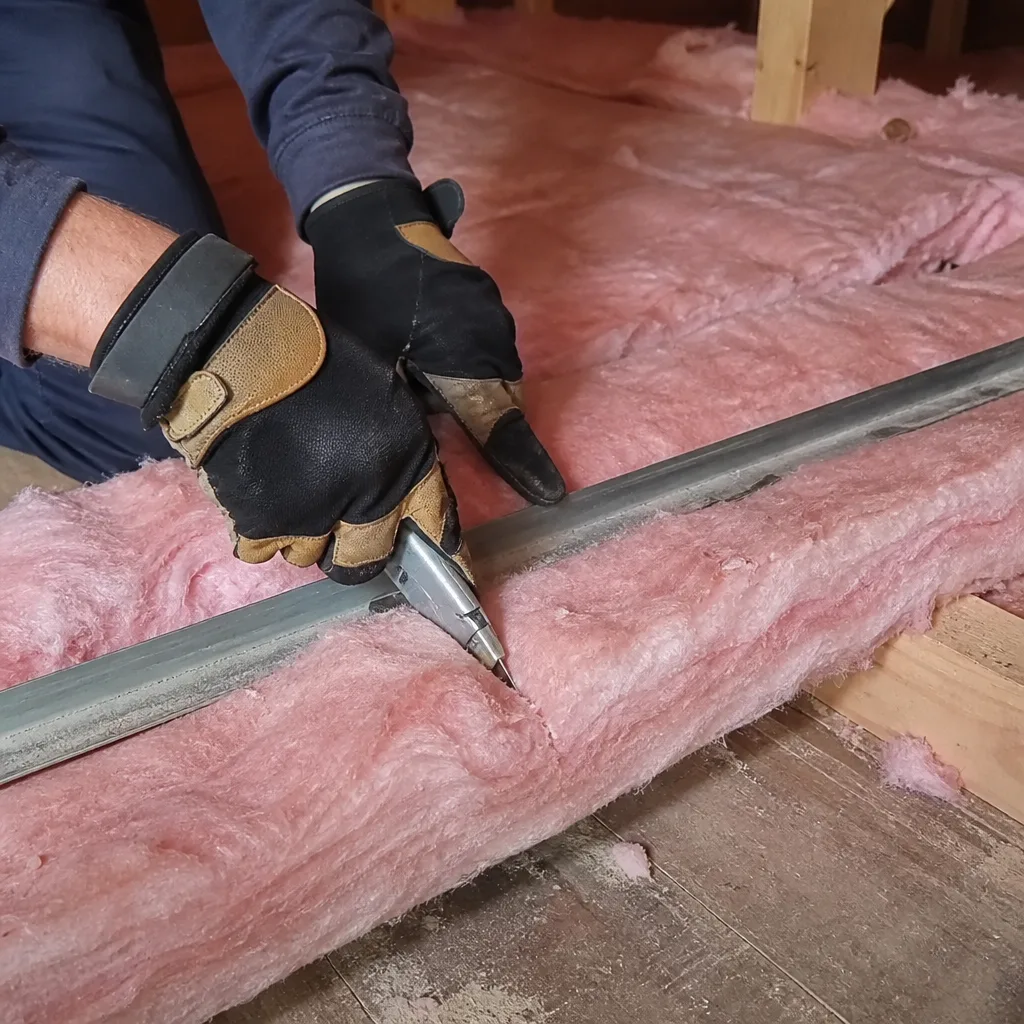
| Blown-in insulation removal only (attic, per sq ft) | $0.75 - $1.40 / sq ft | Vacuum extraction; bagged and hauled |
| Batt insulation removal only (attic, per sq ft) | $0.55 - $1.10 / sq ft | Hand removal; faster labor but more disposal volume |
| Attic air sealing (top plates, can lights, penetrations) | $450 - $950 | Hard prerequisite before new insulation at Envelope |
| Blown-in cellulose or fiberglass installation (per sq ft) | $0.80 - $1.60 / sq ft | R-38 to R-49 depth; code minimum in Leander is R-38 |
| Open-cell spray foam (attic deck application, per sq ft) | $1.80 - $2.80 / sq ft | Used for unvented attic assemblies; Icynene or Demilec |
| Contaminated insulation removal (rodent/mold) | $1.20 - $2.20 / sq ft | Includes HEPA containment and antimicrobial treatment |
| Complete removal + air seal + replacement (1,800 sq ft attic) | $1,800 - $3,200 | Most common full-service job in Leander |
| Complete removal + air seal + replacement (2,400 sq ft attic) | $2,400 - $4,200 | Common in Crystal Falls, Travisso, and Highlands at Mayfield Ranch |
| Remediation-required removal + full replacement | $2,800 - $5,500 | Fire, severe rodent, or mold damage; disposal costs rise sharply |
A few things move these numbers in either direction. Attic access is the first variable – homes in older Leander neighborhoods off Hero Way or near Crystal Falls Parkway sometimes have a single 22-by-30-inch hatch, which slows vacuum extraction and adds an hour or two of labor versus a larger pull-down stair opening. The depth of existing material matters too: some 1990s-era construction in Leander came out of the ground with R-19 batts that were never upgraded, meaning there’s less to remove but the energy gap is wider. On the other end, newer builds in Travisso or Bryson occasionally have blown-in settled to 8 or 10 inches over the years, which is more volume to bag out.
Material selection also shifts the number. Blown-in fiberglass (Johns Manville or Owens Corning) and blown-in cellulose (GreenFiber or Knauf) are the most common replacement materials in Leander attics and generally sit at the lower end of the installation range. Rockwool or spray foam push the number up but serve specific performance goals – Rockwool for its fire resistance, spray foam where the attic is being converted from vented to unvented. Under Haven Standard Clause 1, every one of these jobs starts with a written price and a flat scope before anyone touches the hatch, so the number on the table is the number on the invoice.
What Affects Insulation Removal & Replacement Pricing in Leander
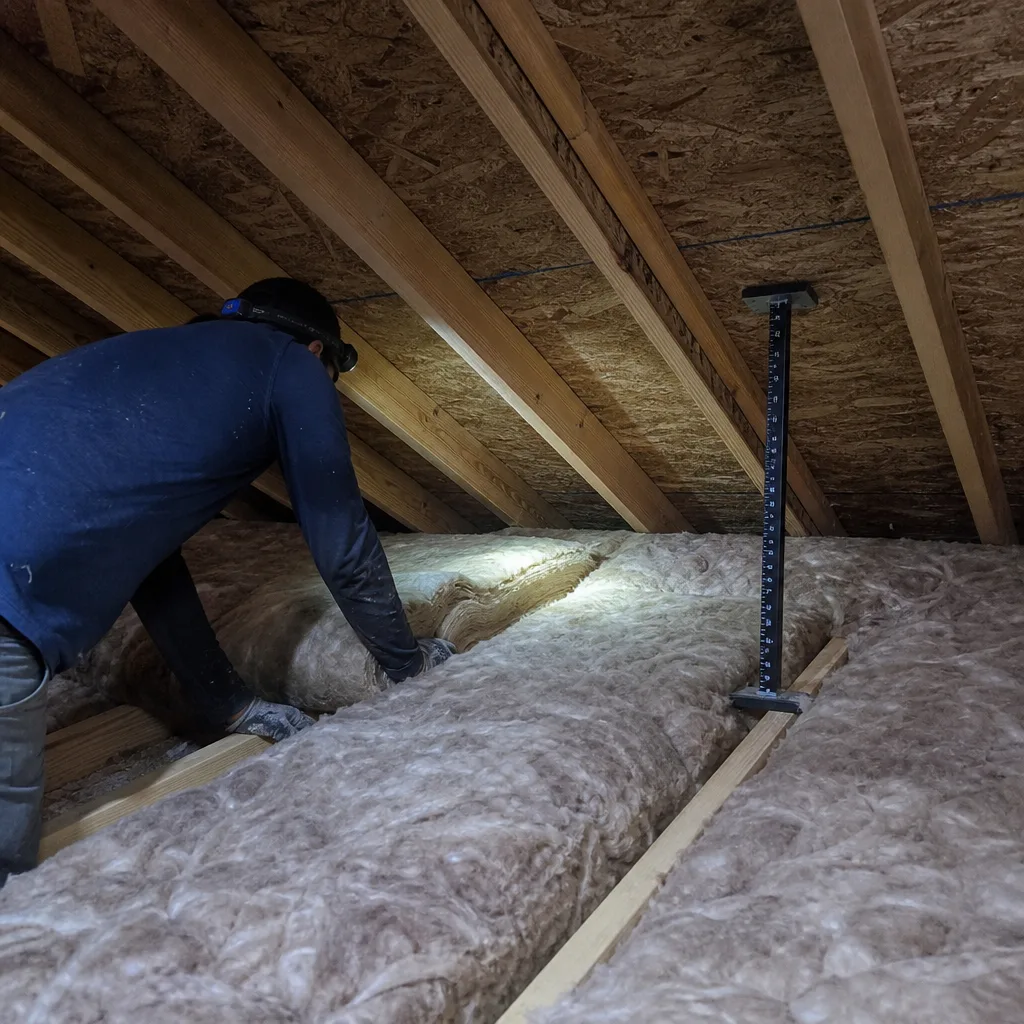
- Attic square footage and geometry: A simple rectangular attic on a 1,800 square foot ranch-style home in Mason Hills is straightforward. A multi-gabled roofline on a larger two-story in Travisso – with half-walls, knee walls, and HVAC equipment taking up floor space – takes longer to vacuum and longer to cover evenly with new material. Expect to add 10-20% to a standard estimate when the geometry is complicated.
- Condition and type of existing material: Old fiberglass batts that were installed in the late 1980s or early 1990s are usually hand-pulled and bagged, which is faster but bulkier. Settled blown-in cellulose, common in Leander homes built between 1995 and 2010, gets vacuum-extracted – slower but cleaner. Contaminated material (rodent-damaged, fire-stained, or water-wicked) requires HEPA-rated containment, antimicrobial treatment, and separate disposal, which is why the price band for those jobs starts considerably higher.
- Leander’s climate and insulation code minimums: Williamson County sits in Climate Zone 2, and Leander’s adopted building code requires a minimum of R-38 in attic assemblies for existing homes and R-49 for new construction. Austin’s proximity and the region’s summer heat index – attic temperatures regularly reach 145-160°F in July and August – mean under-insulated attics here do measurable damage to HVAC runtimes and energy bills. Meeting or exceeding code isn’t optional; it’s the floor. Homes that were insulated to R-19 or R-22 before a renovation need considerably more material to hit current minimums, which affects both labor and material cost.
- Air sealing scope: At Envelope Insulation Co., air sealing is a hard prerequisite – not an upsell – on every replacement job. That means every top plate gap, can light penetration, plumbing chase, and HVAC boot gets sealed with two-part foam or caulk before new insulation goes in. The scope of that sealing work depends on what’s there: a 1990s Leander home with recessed can lights every few feet in the ceiling below will have far more penetrations to address than a 2018 build that used airtight LED fixtures. In our experience across Leander, homes built between 1990 and 2008 average 20-40 can light penetrations per attic floor; sealing all of them is what actually moves the blower-door number.
- Blower-door testing requirements: On applicable jobs – meaning any full removal and replacement where air sealing is performed – we run a blower-door test (a pressurization reading that shows, in one number, how much conditioned air the building envelope is losing) before and after. The post-seal reading documents the result. Some homeowners in Leander are surprised to learn their home was losing the equivalent of leaving a window fully open year-round. That test adds a small time cost but is included because published before-and-after numbers are the only honest way to show what actually changed.
- Disposal and haul-away logistics: Leander doesn’t have a dedicated construction debris drop-off close to central residential areas, so haul-away adds fuel and time. Standard blown-in or batt removal from a 2,000 square foot attic typically generates 15-25 contractor bags of material. Contaminated jobs can double that. Haul-away is included in Envelope’s quotes – it’s part of the written scope – but it’s worth understanding why that line item exists when comparing estimates that might exclude it.
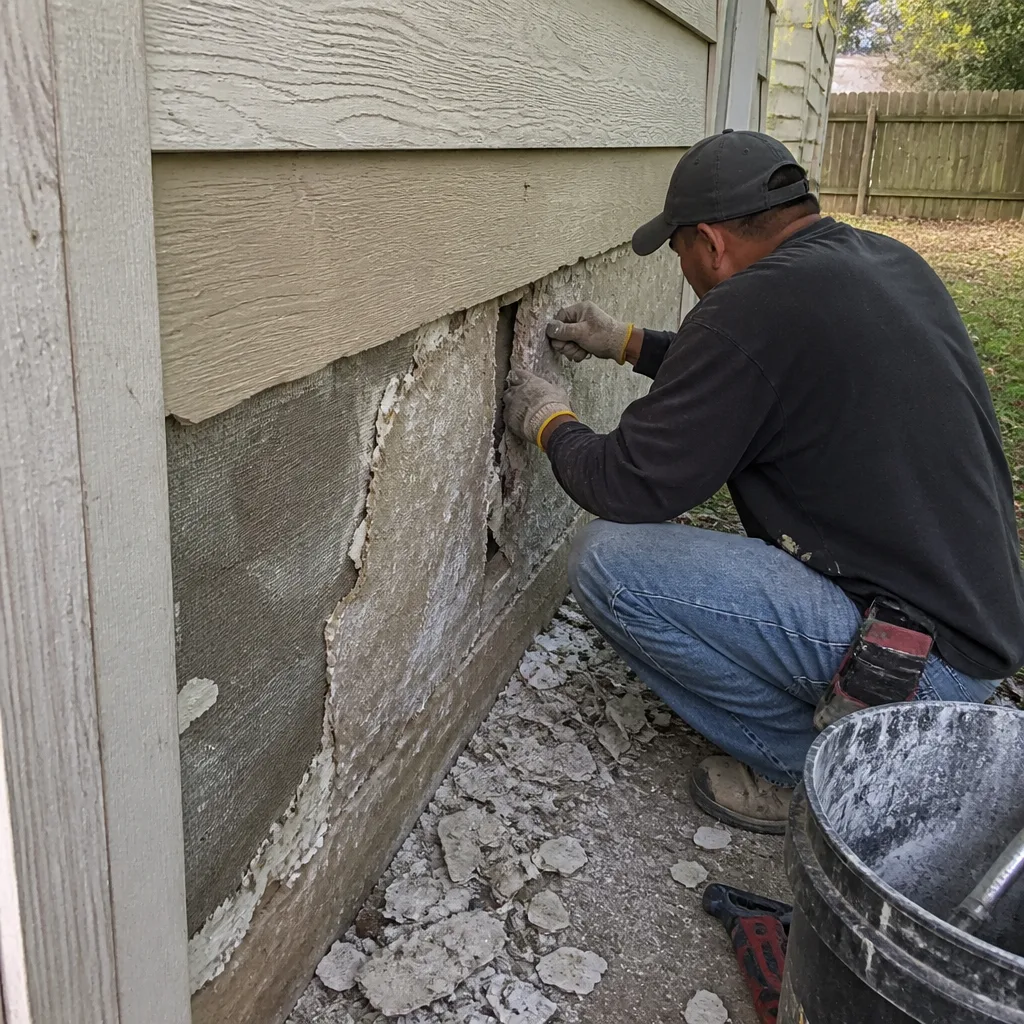 Before
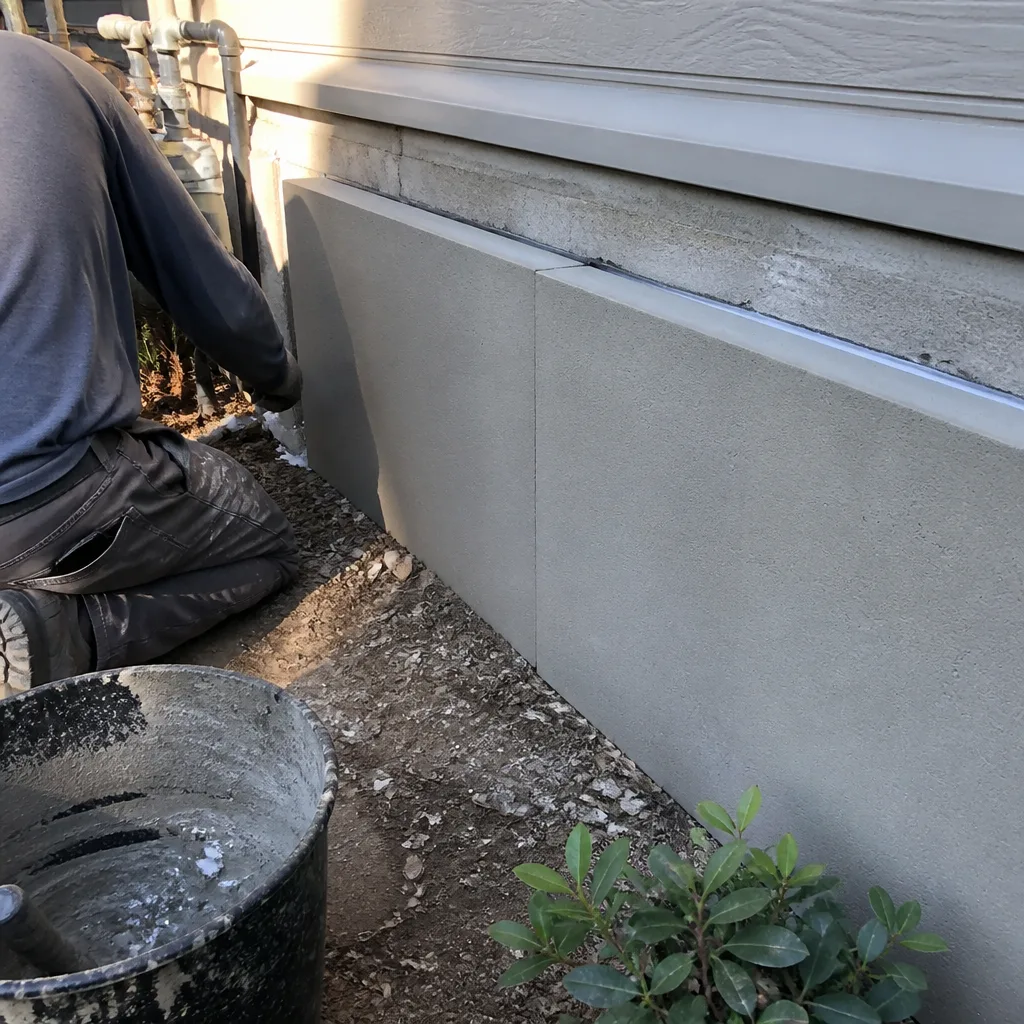 After
AfterHow to Save on Insulation Removal & Replacement in Leander
The most direct way to reduce the total cost is to have the work done correctly once, rather than partially – which is where most of the callbacks and re-dos originate. An attic that gets new blown-in insulation piled over an unsealed floor will perform only marginally better than what was there before. The insulation traps heat, but the conditioned air is still leaving through every unsealed top plate and can light. That’s not savings; it’s a postponed expense.
A few things that actually reduce what you spend:
- Combine the work: If you’re already having the old material removed, adding air sealing and new insulation in the same mobilization cuts cost compared to doing each step separately. A second crew visit means a second setup fee, a second haul-away trip, and more scheduling lead time. Bundling the full scope into one job is usually the most cost-efficient path.
- Check your utility programs: Pedernales Electric Cooperative and Austin Energy (for homes on the Austin Energy grid near Leander’s eastern edge) both run residential rebate programs tied to insulation upgrades. Pedernales has historically offered rebates on air sealing combined with insulation improvements for homes that meet their efficiency thresholds. These aren’t guaranteed – program funding changes year to year – but it’s worth verifying eligibility before the job starts. We can help you identify which program applies to your address.
- Get a free second opinion on any written estimate: Under the Haven Standard, Envelope offers a free second opinion on any written estimate from another contractor. That means we will read a competing quote with you, line by line, and tell you what it includes, what it doesn’t, and whether the scope matches what your attic actually needs. This isn’t a pressure tactic; it’s documentation review. Bring the quote – we’ll look at it honestly.
- Address attic access before the crew arrives: If your attic hatch is too small or blocked, that’s a solvable problem, but solving it on the day of the job adds time. A 22-by-30-inch hatch can be enlarged to a 30-by-54-inch pull-down stair opening for roughly $300-$500, and that investment reduces labor time on any future attic work, including HVAC service.
- Don’t defer contaminated removal: We see this regularly in Leander: a homeowner knows there’s a rodent issue in the attic but waits because the remediation cost feels significant. Waiting allows secondary mold growth, additional structural soiling of the roof deck and top plates, and – if the HVAC air handler is in the attic – contaminated air circulating through the duct system. The remediation cost at year one is usually half what it becomes at year three.
For a no-obligation written estimate on your specific attic, call (737) 252-7159. Under Haven Standard Clause 1, a flat price and written scope are prepared before any work begins – no hourly surprises, no scope drift on the day of the job. Estimates are free.
FAQs – Insulation Removal & Replacement Cost in Leander
How much does insulation removal and replacement cost in Leander, TX?
Most full removal and replacement jobs in Leander run between $1,800 and $4,200, depending on attic size, existing material type, and whether the job requires contamination remediation. A 2,000 square foot attic with standard blown-in removal, attic air sealing, and new R-49 blown-in installation typically lands around $2,200-$2,800. Contaminated attics – rodent damage, mold, or fire – start around $2,800 and can reach $5,500 for heavily soiled spaces. Call (737) 252-7159 for a written estimate specific to your home’s attic – it’s free, and the price is flat before any work starts.
Is it cheaper to add insulation over existing material instead of removing it first?
Adding new insulation over existing material costs less upfront – typically $0.80-$1.60 per square foot versus $1.30-$3.00 per square foot for removal plus reinstall. But if the existing material is contaminated, compressed below effective R-value, or covering an unsealed attic floor, the savings disappear quickly. At Envelope, we never add new insulation over an unsealed attic floor. Blowing fresh material over open top plates and unaddressed can light penetrations produces a measurably worse result on the blower-door test – and the blower-door number doesn’t lie. If the existing material is in acceptable condition and the attic floor is properly sealed, adding to it is a legitimate option. We’ll tell you which situation you have before we quote either path.
How long does an insulation removal and replacement job take in Leander?
A standard removal, air seal, and reinstall on a 1,800-2,400 square foot attic takes one full day, sometimes extending to a second morning for larger attics or complicated rooflines. Contamination remediation – HEPA containment, antimicrobial treatment, drying time – adds a day before the new installation can proceed. We give you a specific time estimate in the written scope, so you know what the schedule looks like before any crew arrives.
Does the Leander building code require a specific R-value for insulation replacement?
Yes. Williamson County, where Leander sits, is in Climate Zone 2 under the International Energy Conservation Code as adopted by Texas. The current minimum for attic insulation in existing homes is R-38, and new construction requires R-49. If your home was built before 2010 and the insulation was never upgraded, it’s very likely below R-38. Replacement jobs at Envelope are installed to at least current code minimums, and we typically recommend R-49 for Leander attics given the length and intensity of the Central Texas cooling season. The written scope will specify the depth and R-value installed so you have documentation of what was done.
What’s included in Envelope Insulation Co.’s insulation removal and replacement service?
Every Insulation Removal & Replacement in Leander job through Envelope includes: a written flat price before work starts, vacuum or hand removal of existing material, haul-away and disposal, attic air sealing of all top plates and penetrations before new material goes in, new insulation installed to the specified R-value, a documented photo record of conditions before and after, and a before-and-after blower-door test on applicable jobs so you can see the actual air-sealing result in a single number. The 365-Day Done Right Promise – if it’s not right, we make it right – applies to every completed job in writing. For pricing specific to your address, call (737) 252-7159.
Can I get a second opinion on an insulation estimate I already have?
Yes, and we encourage it. Bring any written estimate to Envelope and we’ll review it with you at no charge – that’s the Free Second Opinion that’s part of the Haven Standard. We’ll identify what’s included, what’s missing (air sealing is the most common omission), and whether the scope matches what your attic actually needs. This applies whether or not you ultimately hire us. A written estimate is the baseline; understanding what it covers is the part that saves homeowners from expensive surprises.
What the Job Looks Like, Start to Finish
Most homeowners asking about our Insulation Removal & Replacement services in Leander are trying to figure out whether a quote they received is reasonable, or whether their attic is at the point where replacement makes more sense than a top-up. Here’s what the process actually looks like when Envelope does the work, because understanding the sequence helps you evaluate any estimate, not just ours.
The job starts with an attic inspection – photographed, documented, and used to build the written scope. We measure the existing insulation depth in multiple locations (a single measurement at the hatch is not representative; insulation settles unevenly), assess the condition and type of material, note every penetration in the attic floor that will need sealing, and check attic ventilation while we’re up there. In Leander, we frequently see soffit vents blocked by the existing blown-in material – the insulation settled or was over-installed against the eaves and effectively eliminated cross-ventilation. That’s noted in the inspection and corrected before new material goes in.
If you’re on the home page researching this for the first time, the short version is: removal, seal, install, document. In that order, every time.
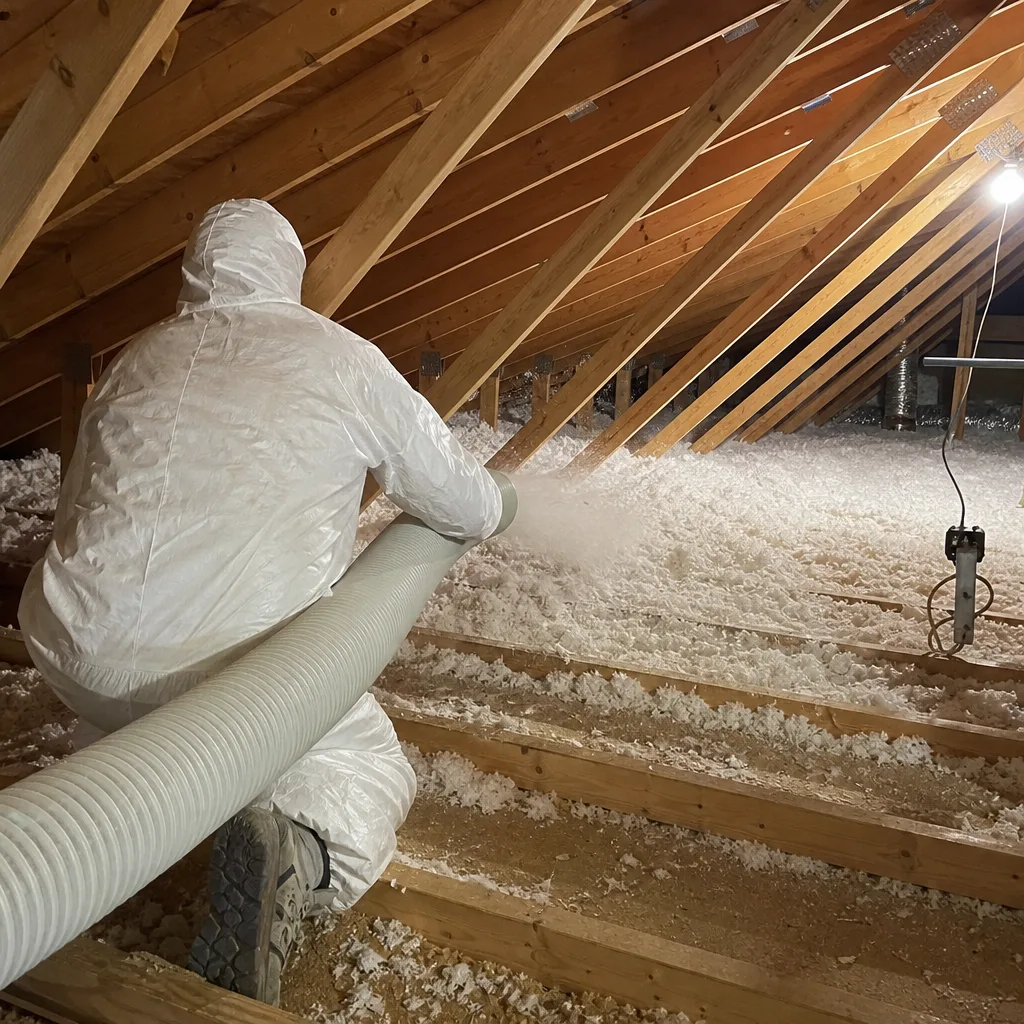
Once the written scope is approved, the crew arrives – background-checked, uniformed, and announced by a text message with the technician’s name before they pull into the driveway. That’s part of the Haven Standard. Removal is done with a commercial vacuum system and a hose run to a collection trailer; the attic stays as clean as a vacuum-based process can keep it. Air sealing follows: two-part foam on the larger gaps around top plates, plumbing chases, and HVAC boots; caulk on smaller penetrations; purpose-built covers on can lights that need to remain accessible. After sealing is complete, we run the blower-door test. That reading – a number in CFM50, meaning cubic feet per minute of air movement at 50 Pascals of pressure – is recorded and becomes part of your job documentation.
New insulation goes in last. Material is sourced from Owens Corning, Johns Manville, GreenFiber, Knauf, Rockwool, or another manufacturer depending on the performance goal – there’s no proprietary product lock-in. Depth is installed to spec, verified in multiple locations, and photographed. The second blower-door reading closes the job, and both numbers – before and after – go into your documented record. You’ll see the difference in a single figure.
Leander-Specific Notes Worth Knowing
Leander’s growth over the last decade has been fast enough that the housing stock spans a wide range of construction eras, all within a few miles of each other. A home in the Crystal Falls community might have been built in 2005 with fiberglass batts and no air sealing attention at all; a home in Bryson might have been built in 2019 with spray foam at the roof deck and no attic floor insulation to speak of. These are fundamentally different jobs with different costs, and any estimate that doesn’t account for that difference isn’t priced against your actual attic – it’s priced against an average.
In the older sections of Leander – neighborhoods off Hero Way, US-183, and the areas east of the rail corridor – we regularly find original late-1980s or early-1990s insulation that has never been touched. R-11 to R-19 batts, unfaced, sitting on a ceiling deck with open top plates and original knob-and-tube era wiring still present in some cases. That last point matters for spray foam and vapor barrier choices; the written scope will flag it.
In newer developments like Highlands at Mayfield Ranch and Travisso, the construction quality is generally higher, but we still see attic air sealing gaps at HVAC penetrations and around recessed lighting that was added during finish-out. The blower-door numbers on those homes are often better than older stock but still meaningfully higher than they should be.
Central Texas heat is not abstract. An attic in Leander hitting 155°F in August with R-22 insulation and unsealed top plates is transferring radiant and conducted heat into the living space faster than the HVAC system can remove it. That’s not an efficiency talking point – it’s a documented load calculation that affects equipment runtime, equipment lifespan, and your monthly bill. The cost of a proper removal and replacement, spread over the years of performance improvement, usually makes sense on the numbers alone. We can walk through that math with you before the estimate is written.
Why Wes Okafor Started With Air Sealing First
Wes Okafor built Envelope Insulation Co. around a straightforward observation: insulation installed over an unsealed attic floor is like putting a blanket over a screen door. The blanket adds some comfort, but the air is still moving through the gaps. The industry standard for years was to blow insulation and move on; the air sealing conversation was optional, delivered at the end of the estimate as an add-on the homeowner could decline.
Wes’s decision – codified in the Haven Standard since 2016, and applied to every job since then – was to treat air sealing as a hard prerequisite, not an upsell. If you hire Envelope for insulation removal and replacement in Leander, the air sealing gets done first. That’s not negotiable, and it’s not padded into the price to inflate the estimate. It’s there because the blower-door number before and after proves it works, and publishing those numbers is the only honest way to stand behind the result.
Since 2016, Envelope has completed this scope on more than 9,000 homes – every one with a written price before work started and a documented photo record when the crew left. That’s the business model: evidence first, enthusiasm never performed.
Key Takeaways
- Insulation removal and replacement in Leander typically costs $1,800-$4,200 for standard attics; contaminated jobs run $2,800-$5,500.
- Leander sits in Climate Zone 2; current code minimum is R-38 for existing homes and R-49 for new construction.
- Air sealing – top plates, can lights, penetrations – must happen before new insulation is installed to produce a measurable result on the blower-door test.
- Attic geometry, existing material condition, contamination level, and access opening size are the primary cost drivers.
- Every Envelope job comes with a flat written price before work starts, a Documented Photo Record, and before-and-after blower-door readings on applicable jobs.
- The 365-Day Done Right Promise applies in writing to every completed job.
- Free second opinion is available on any written estimate from another contractor – bring the quote.
- Pedernales Electric Cooperative rebates may apply to qualifying insulation and air sealing improvements in Leander; verify eligibility before the job starts.
For a written estimate specific to your Leander address, call (737) 252-7159. A flat price and written scope are ready before anyone touches the attic hatch – that’s Haven Standard Clause 1, and it applies to every job, no exceptions.
Written by Wes Okafor, Owner at Envelope Insulation Co. (operating as Topside Attic Insulation Leander), serving Leander, TX since 2016. Pricing reflects the Leander market as of 2026. Topside Attic Insulation Leander offers free estimates – call (737) 252-7159.
What Our Customers Say
"Two other companies quoted to blow more insulation on top of what was there. These were the only ones who said the existing material had to come out first, and explained why."
- Clifford E."The winter gas bill dropped by about a third. They had estimated a quarter, so they under-promised."
- Genevieve R."Crawl space encapsulation done properly. Photographs of the vapour barrier at every seam, and the damp smell in the hallway is gone."
- Ainsley P.