
Johns Manville Home Energy Audit in Leander: What to Know First
We provide independent Johns Manville home energy audit in Leander, typically scheduled within 48 hours and completed in a single visit. Most audits run $280-$450 depending on home size and the number of conditioned zones tested. We publish every blower-door result in writing before any insulation work is proposed.
This page is for Leander homeowners who have Johns Manville insulation products in their attic, walls, or crawl space and want to know whether those materials are performing as specified. We see a lot of JM Spider blown-in fiberglass and ComfortTherm batts in homes built between 2015 and 2022, especially in Crystal Falls, Travisso, and the older sections of Leander near Bagdad Road. If your summer electric bills are climbing and your thermostat reads 78°F while the hallway feels like 82°F, the problem is usually air moving through the envelope, not the insulation itself. Call (737) 252-7159 to book. Estimates are free.
How Johns Manville Products Fail - and How We Fix Them
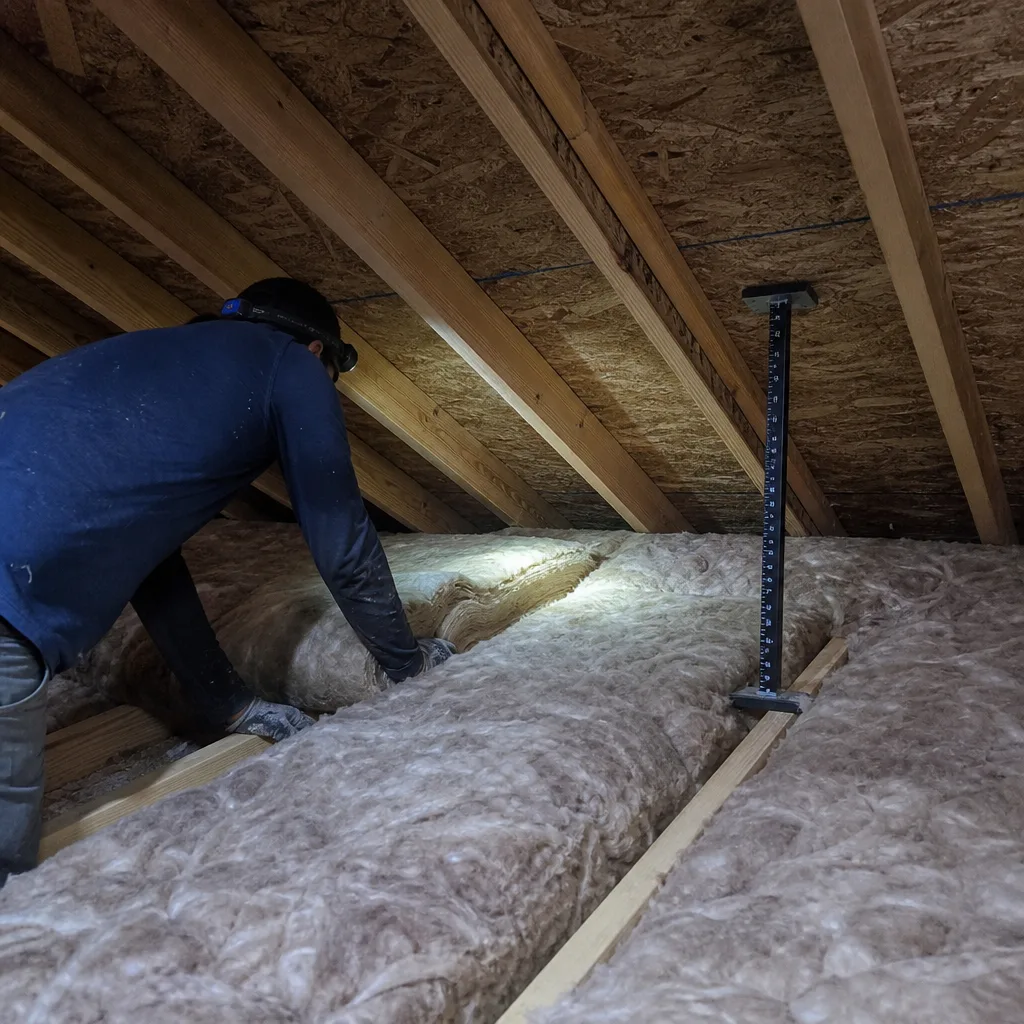
- Spider blown-in fiberglass settling below labeled R-value in Leander’s 140°F attics. The product is rated at full loft, but in Crystal Falls and Travisso we regularly measure 20-30% depth loss where summer attic temperatures exceed manufacturer test conditions. The fix isn’t adding more Spider on top; it’s sealing the air leaks that are driving convective looping through the fiberglass, then topping to verified depth with a calibrated ruler card.
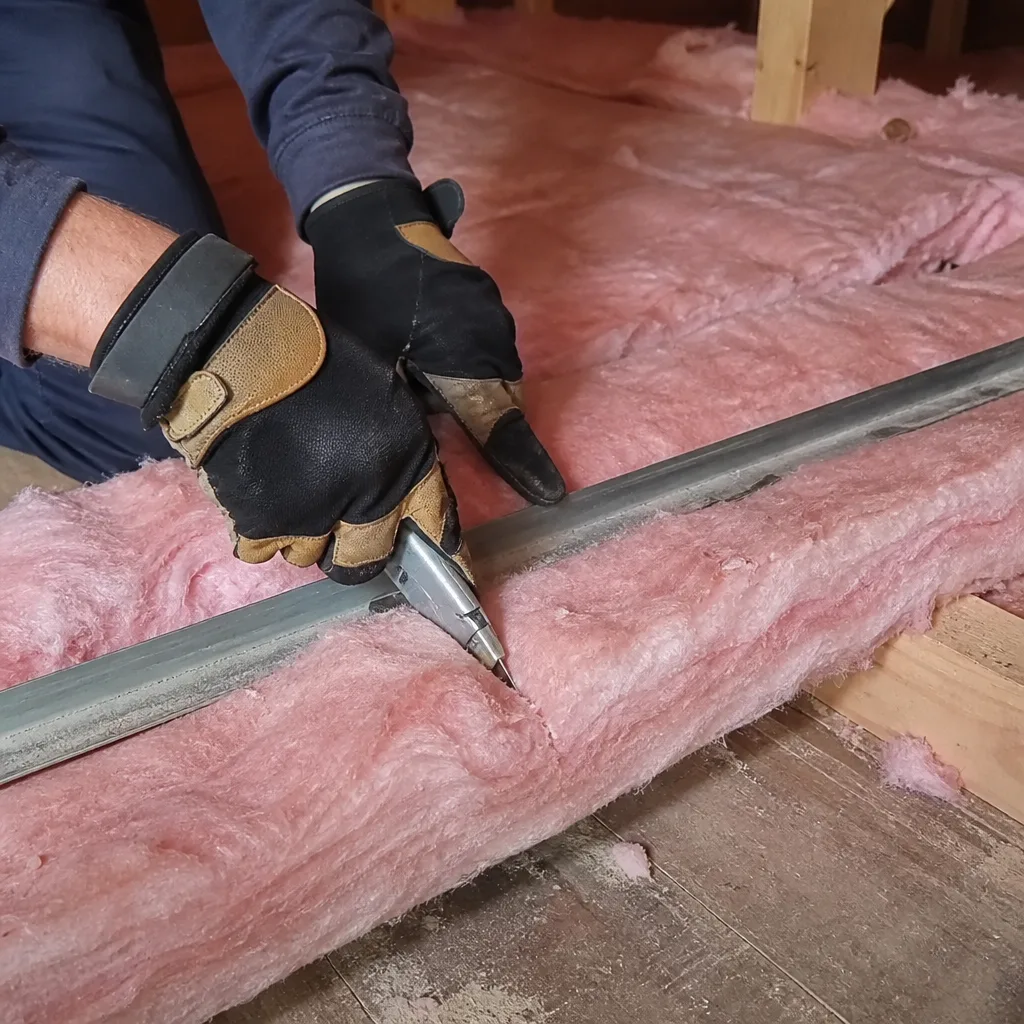
- ComfortTherm batts compressed by homeowners storing holiday decorations. We find this in Leander’s 1,800-2,400 square foot builds from 2016-2019. Once a batt is compressed to half its designed thickness, the R-value drops disproportionately. We document the compression with FLIR, remove the damaged sections, air-seal the subfloor or top plates beneath, and reinstall to full specification.
- JM formaldehyde-free binder breaking down near recessed can lights. The binder degrades faster where attic temperatures spike above 130°F and the fixture isn’t properly IC-rated or sealed. We see this as dusting on the attic floor below the installation. Our fix: seal every can light with a pre-fabricated cover, verify with blower-door, then replace the degraded batt.
- Insul-Wool rock wool batts misinstalled with gaps at stud bays. Johns Manville’s rock wool line is less forgiving of sloppy cuts than fiberglass; a 1-inch gap at the edge of a bay creates a thermal bypass that FLIR picks up immediately. We find this most often in Leander’s custom builds where the original contractor rushed the interior wall insulation. We pull, cut to fit properly, and verify with thermal imaging.
- AtticMaster radiant barrier facing delaminating from the substrate. In Leander’s intense solar gain environment, the adhesive on older AtticMaster installations can fail, leaving reflective sheets hanging or bunched. This isn’t just an R-value problem; it’s a fire risk if the material contacts hot fixtures. We remove the failed barrier, inspect all electrical penetrations, and reinstall only where the assembly makes sense for the roof geometry.
Our Johns Manville Home Energy Audit Process
- 1
Call and schedule. A live person answers. We ask square footage, year built, and whether you’ve noticed hot rooms or rising bills. We quote the audit price range upfront.
- 2
Arrival and walkthrough. Our technician texts when en route. We inspect the attic access, note any Johns Manville product labels visible from the hatch, and set up the blower-door frame in an exterior door.
- 3
Blower-door test and thermal imaging. We depressurize the house to 50 Pascals and record the CFM50 reading. Then we scan with FLIR to map the leaks that reading represents. This tells us whether the Johns Manville insulation is underperforming because of material failure or because air is moving through it.
- 4
Written findings and scope. You get a documented photo record, the blower-door number, and a flat price for any recommended work. No work starts without a written price. That’s Haven Standard Clause 1.
- 5
Air sealing first, then insulation. If we proceed: seal the envelope first. Then fill it. Top plates, can lights, penetrations, and the attic access hatch get sealed before any new Johns Manville or other material goes in.
- 6
Final blower-door test and documentation. We run the door again and publish the before-and-after numbers. You leave with the readings, the photos, and the written warranty.
 Before
 After
AfterWhat Johns Manville Home Energy Audit Costs in Leander
| Service | Typical Range |
|---|---|
| Single-zone blower-door test with thermal imaging | $280-$340 |
| Two-zone test (main house + garage apartment or ADU) | $380-$450 |
| Duct leakage test with blower-door (recommended for homes with flex duct in vented attics) | $420-$520 |
| Full home energy audit with written scope and photo documentation | $340-$450 |
What moves the price: home size, number of HVAC zones, accessibility of the attic (some Leander homes have scuttle hatches sized for 1950s construction), and whether we need to bring in a duct blaster. We also provide a Free Second Opinion on any written estimate from another contractor. Bring us their scope; we’ll read it with you.
Why Leander Homeowners Call Topside Attic Insulation Leander for Johns Manville Work
We’ve sealed and insulated over 9,000 homes since 2016, every one with a written price before work started and a documented record when the crew left. In Leander specifically, Wes Okafor and our crew have worked in the neighborhoods where Johns Manville products were spec’d by the builder and installed fast, not necessarily right. We know what Spider looks like when it’s been convecting for three summers. We know that ComfortTherm batts don’t recover from compression.
We don’t push proprietary products. Our materials come from Johns Manville, Owens Corning, Knauf, Rockwool, CertainTeed, Icynene, Demilec, GreenFiber, and Reflectix. If your home needs something else, we say so. The 365-Day Done Right Promise applies to everything we touch. Calls are answered by a live person, 24/7.
FAQs
No. As an independent Johns Manville service provider, our diagnostic work doesn’t affect any material warranty that may still be in effect. We document existing conditions with photos rather than disturbing installed product unnecessarily. If we find a manufacturing defect in batts still under warranty, we’ll flag it in our report so you can pursue a claim with your installer or Johns Manville directly. Call (737) 252-7159 to schedule.
Repair is viable when the material is intact but underperforming due to air leaks, compression, or gaps. Replacement makes sense when the binder has failed, the product has been contaminated by rodent activity, or the original installation was so incomplete that spot fixes cost more than starting over. We quote both paths in writing and let the numbers decide. Call (737) 252-7159 for an exact scope.
Most audits are scheduled within 48 hours, and we complete the visit in 2-3 hours. Same-week availability is common. We don’t use callback windows measured in business days; a live person answers and books the appointment. Call (737) 252-7159.
We source Johns Manville products when they’re the right match for the assembly. We also use Knauf, Owens Corning, Rockwool, and others depending on the application. We don’t lock you into a single brand. Every material choice is noted in the written scope with the R-value and installed depth specified.
A Documented Photo Record of attic and crawl space conditions, the blower-door test result in CFM50, FLIR images showing thermal bypasses, and a written scope with flat pricing for any recommended work. On jobs we complete, you also get before-and-after blower-door numbers and the written 365-Day Done Right Promise.
Written by Wes Okafor, Owner, Topside Attic Insulation Leander at Topside Attic Insulation Leander, serving Leander and nearby areas.