
Knauf Crawl Space Encapsulation: The Leander Owner’s Guide
Knauf crawl space encapsulation systems installed in Leander homes typically run between $3,800 and $7,200 for a complete vapor barrier and sealed assembly, depending on crawl space square footage and whether the foundation walls need insulation. We stock Knauf-compatible 12-mil and 20-mil reinforced polyethylene barriers, seam tape, and mechanical fastening systems on our Leander trucks, and most encapsulation jobs are completed in one to two days. Most homeowners discover a failing encapsulation when they notice musty odors returning, humidity readings climbing above 60% on their thermostat, or seasonal condensation reappearing on ductwork that had previously stayed dry.
Which Knauf Models This Applies To
Knauf does not brand crawl space encapsulation as a discrete “model” like an HVAC unit. Instead, the Knauf components you’re matching are the vapor barrier membrane, the fastening profile, and the tape system. The Knauf 12-mil reinforced polyethylene barrier is stamped with a lot code and thickness marking along the factory edge, usually found on the roll core label. If your existing barrier is tearing at seam lines or the Knauf seam tape is delaminating from the foundation wall, that’s your failure point.
The critical compatibility gotcha in Leander’s Hill Country installations: Knauf’s 20-mil barrier is compatible with the same fastening track as the 12-mil, but the 20-mil requires a heavier-duty double-sided seam tape (Knauf part reference CT-200 series) that bonds to the denser weave. Some Leander contractors have installed 12-mil tape on 20-mil barrier, and the seam fails within 18 months when the clay soil shifts in our wet spring seasons. We carry both tape grades and verify the match before any material goes down.
We are an independent service provider, not affiliated with Knauf. We also stock Reflectix radiant barrier products for crawl space ceiling applications where the homeowner wants to separate the crawl from the conditioned floor above.
Signs Your Knauf Crawl Space Encapsulation Is Failing
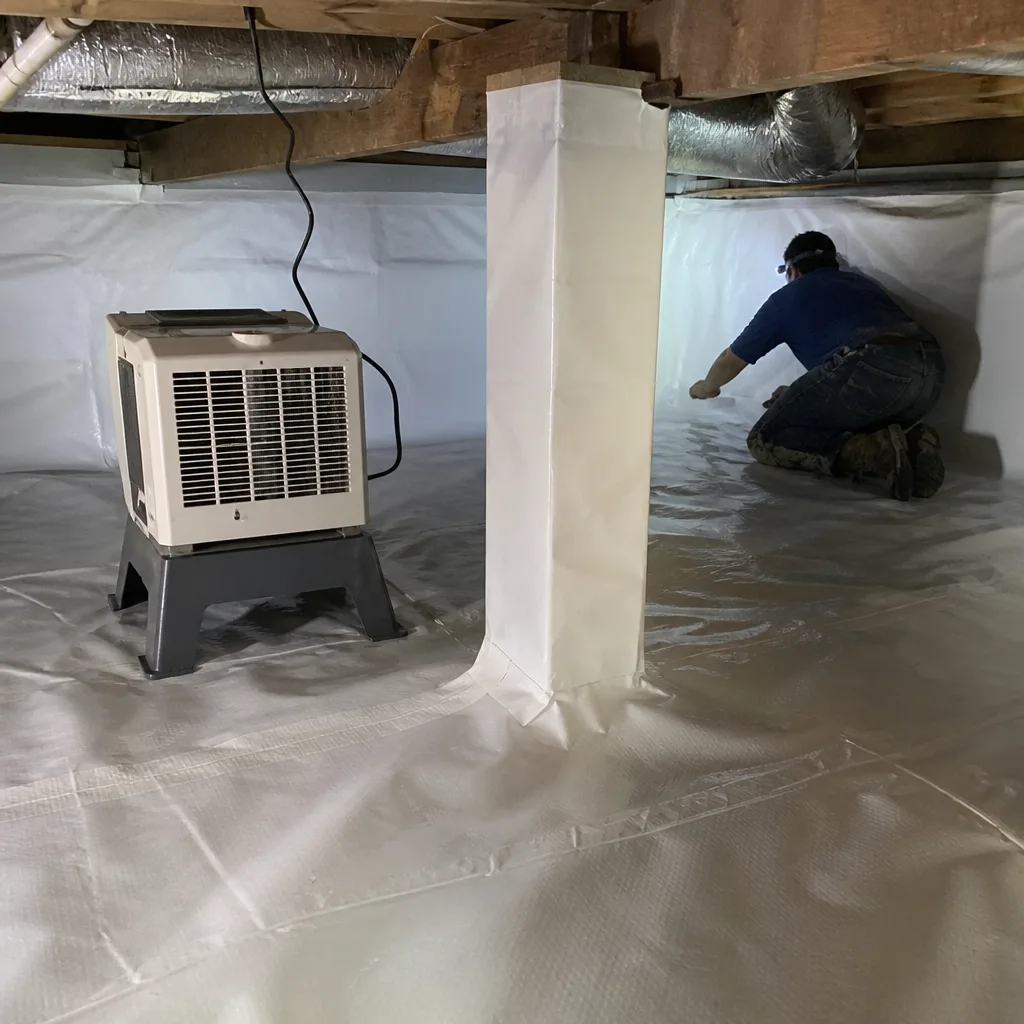
- Seam separation at the perimeter wall. The Knauf tape loses adhesion when foundation wall moisture exceeds the tape’s rated vapor transmission. In Leander, this happens most often on north-facing walls where groundwater wicks through limestone substrate and the wall surface never fully dries.
- Condensation on HVAC ducts and floor insulation. Your encapsulation was supposed to keep relative humidity below 60%. When the barrier tears or the seal at the pier posts fails, humid outside air enters and condenses on the coldest surface, usually the supply duct. The underlying cause is a breach in the air barrier, not a problem with your air conditioner.
- Musty odor returning after two or more dry years. A properly sealed Knauf system blocks both vapor and the mold spores that ride on it. If the smell is back, the polyethylene has punctured at a traffic path or the wall seal has pulled away. We see this in Leander’s older Crystal Falls builds where original 6-mil barriers were upgraded to Knauf 12-mil but the wall prep was skipped.
- Standing water or mud forming on the barrier surface. This is not a barrier failure; it’s a drainage failure that the barrier is revealing. The Knauf membrane is doing its job by keeping soil moisture from evaporating upward, but if your perimeter drain or sump is clogged, water will pool on top. We check drainage before we reseal.
- Increased energy bills with no HVAC change. A failed encapsulation lets humid air infiltrate the floor system, forcing your air conditioner to run longer latent-load cycles. The Knauf barrier’s R-value contribution is minimal; its energy benefit comes from moisture control. When that stops, your kilowatt hours show it.
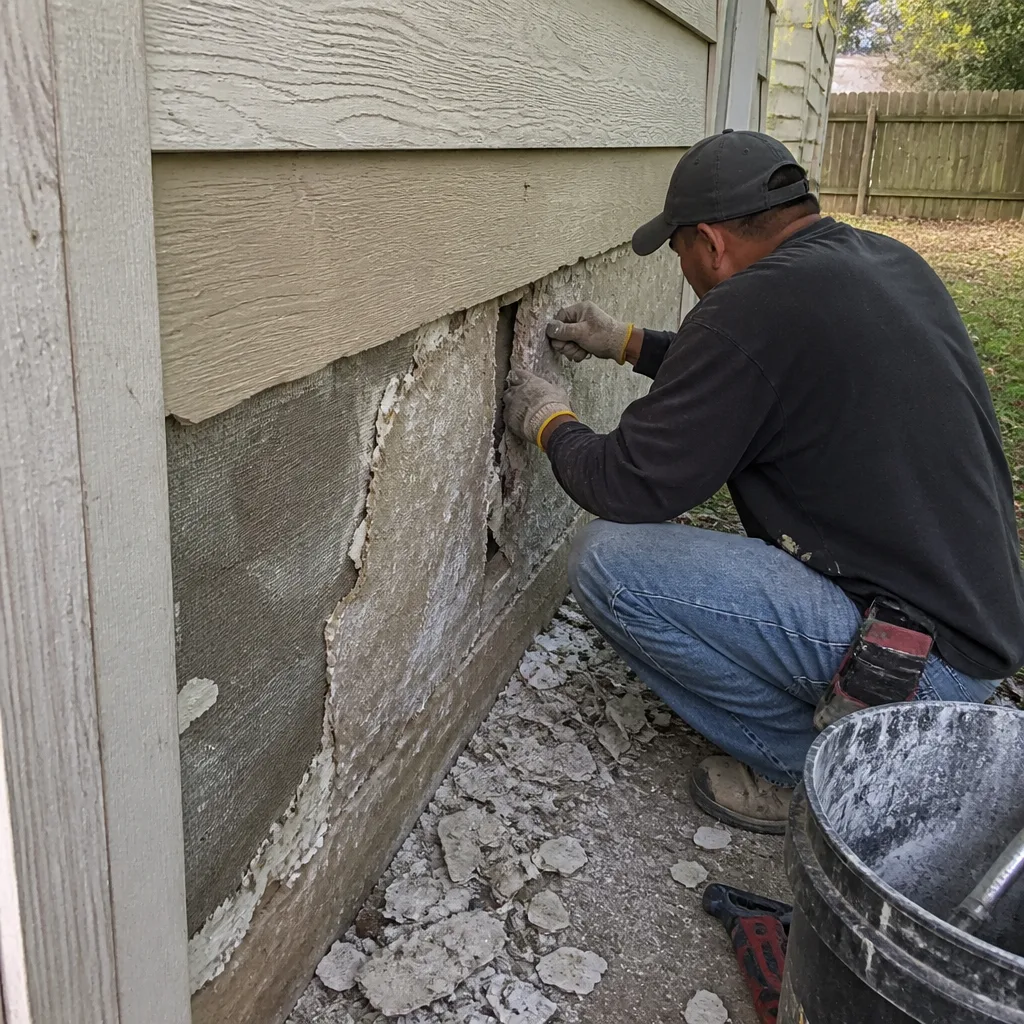 Before
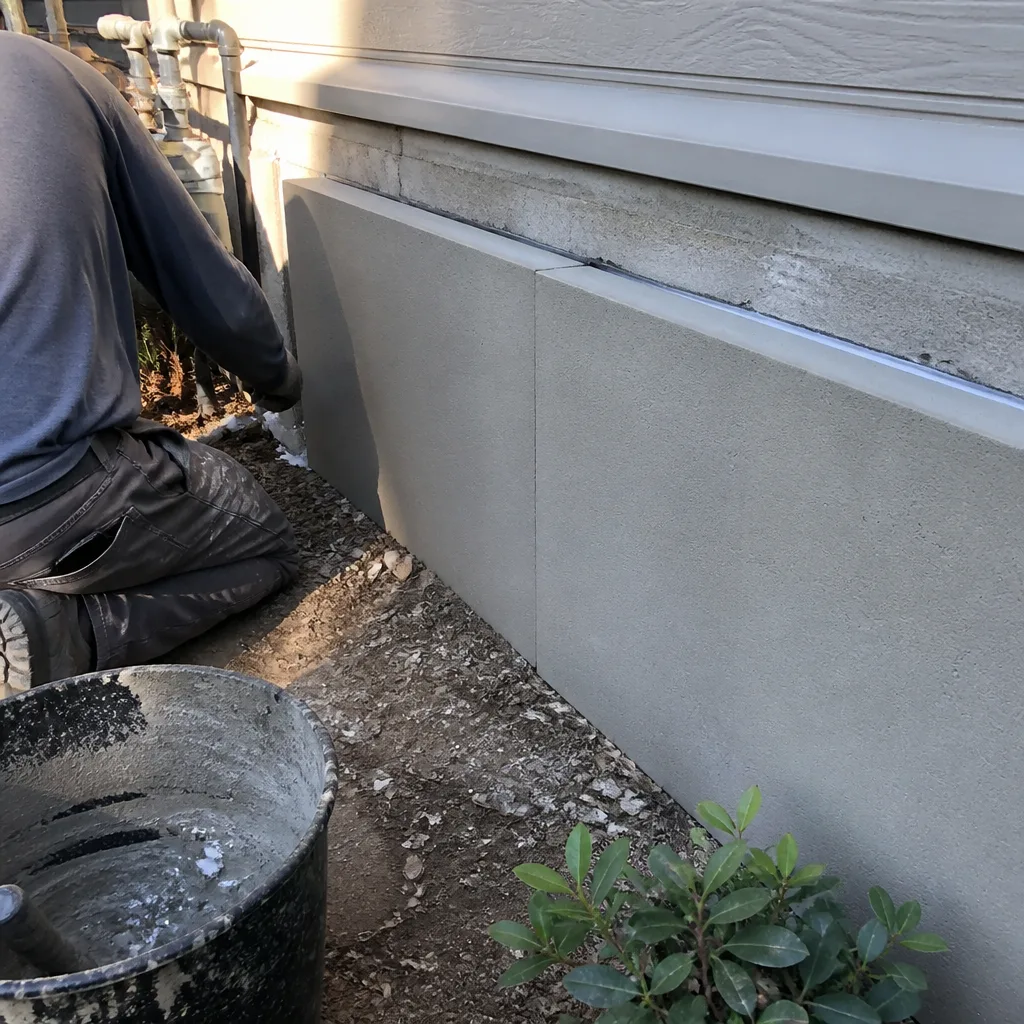 After
AfterReplacement Cost & What’s Included
Complete Knauf crawl space encapsulation replacement in Leander runs $3,800 to $5,800 for crawl spaces under 1,200 square feet with good drainage and accessible pier post spacing. Larger crawl spaces, 20-mil barrier upgrades, or jobs requiring drainage correction before sealing land in the $5,800 to $7,200 range. Every quote we write itemizes membrane cost per square foot, seam tape linear footage, mechanical fastener count, and labor hours, so you see where the number comes from.
What drives the range: barrier thickness (12-mil vs. 20-mil), whether foundation walls get insulated with Knauf Insulation EcoSeal or left uninsulated, and how much existing material we remove. Removal of a failed prior encapsulation adds $400 to $900 depending on debris volume. Our installed work carries the 365-Day Done Right Promise, and you receive a written scope, written warranty, and Documented Photo Record before we leave.
DIY or Call Us?
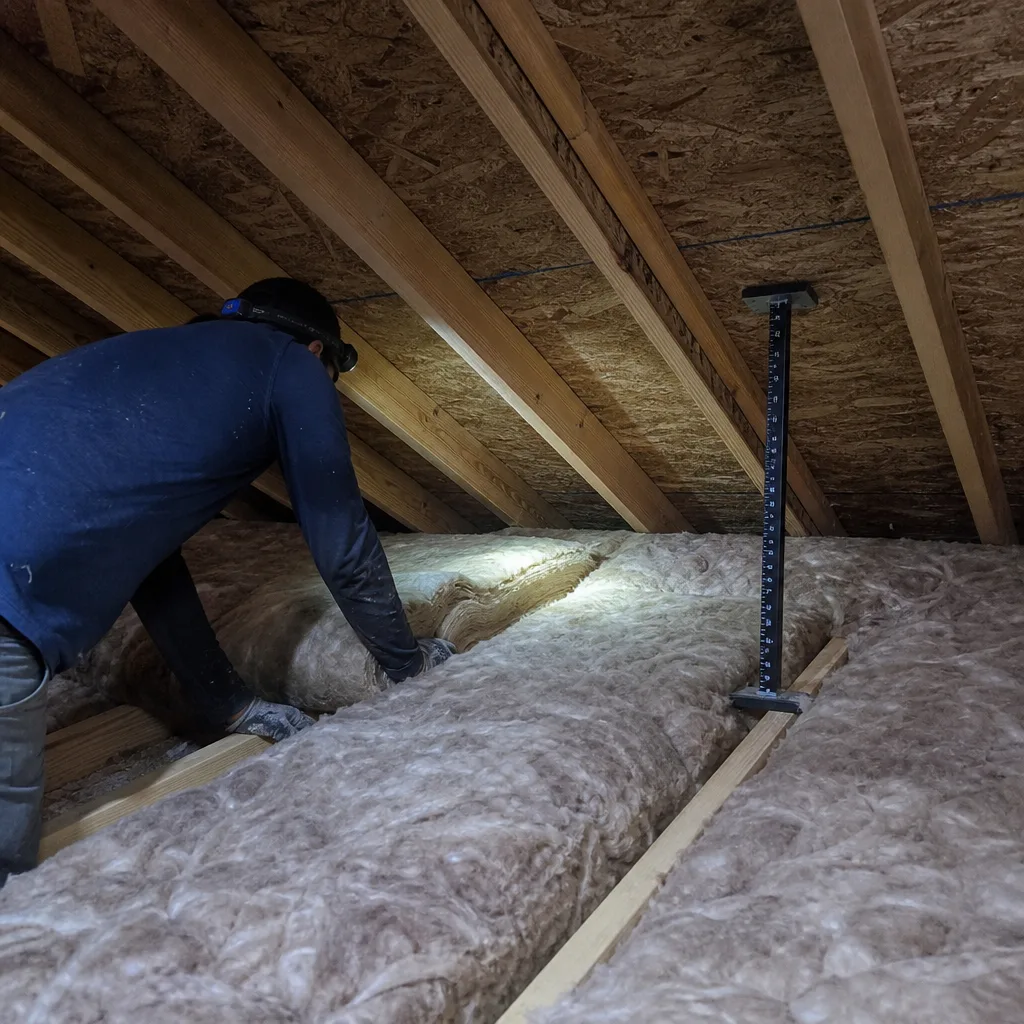
There’s no high-tension danger in crawl space encapsulation, but there’s plenty of ways to waste material and still fail. A homeowner can safely inspect: check the barrier for tears, verify your sump pump runs, and use a $15 humidity meter to confirm readings at multiple points. What goes wrong in DIY: inadequate wall surface prep (Knauf tape needs a clean, dry, oil-free concrete or block surface), wrong tape-to-mil pairing, and missed pier post collars where the barrier must be cut and resealed around each support.
Seal the envelope first. Then fill it. In a Leander crawl space, that means we verify drainage, seal the perimeter, then lay barrier. If your humidity readings are climbing and the tape is peeling, call (737) 252-7159. We’ll bring the right Knauf-compatible materials and a written price before any work starts.
FAQs
A properly installed Knauf 12-mil or 20-mil system lasts 15 to 20 years in Leander’s climate, though the seam tape may need attention at year 10 to 12 if the foundation wall experiences seasonal moisture cycling. The barrier itself does not degrade from UV (there is none in a crawl space), but mechanical damage from service traffic and rodent activity are the usual life-limiters. Call (737) 252-7159 for an inspection if you’re past year 10 and seeing any symptoms above.
Localized repair is viable if the failure is limited to one seam section or a single puncture, provided the existing barrier is still the correct mil thickness and the wall seal is intact elsewhere. We patch with matching Knauf material and overlap-seam per manufacturer spec. If multiple seams are failing or the barrier is the wrong thickness for the application, partial repair becomes false economy. We’ll tell you which category you’re in after a visual inspection, and estimates are free.
Most complete replacements in Leander take one to two days: half a day for removal and surface prep, half a day to a full day for installation depending on pier post count and whether wall insulation is included. We do not rush the tape cure time; Knauf seam tape achieves full adhesion at 24 hours in conditions below 70% relative humidity. Your crawl space stays accessible during cure if you need to reach a shutoff valve.
Yes. We carry 12-mil and 20-mil Knauf-compatible reinforced polyethylene, CT-100 and CT-200 series seam tape, mechanical fasteners for block and poured-wall foundations, and pier post collar assemblies. For outlier sizes or same-day emergency coverage of large crawl spaces, our supplier in North Austin stocks same-day. We do not start a job with material we don’t have in hand.
Written by Wes Okafor, Owner, Topside Attic Insulation Leander at Topside Attic Insulation Leander, serving Leander and nearby areas.