
Rockwool Crawl Space Encapsulation & Vapor Barrier in Leander: What to Know First
We provide independent Rockwool crawl space encapsulation and vapor barrier service in Leander, with most jobs scheduled within two business days and completed in a single visit. Crawl space encapsulation with Rockwool Comfortbatt or Comfortboard insulation typically runs $3,200-$6,800 for Leander homes, depending on crawl square footage, existing moisture damage, and whether the foundation vents get sealed or converted to conditioned-air supply. We do not start work without a written price and a documented scope - that’s Haven Standard Clause 1.
This page is for Rockwool owners in Leander, Cedar Park, and Liberty Hill who are seeing musty odors, sagging subfloor insulation, or humidity readings above 65% in their crawl space and want to know whether their existing Rockwool product can be salvaged or needs removal. Call (737) 252-7159 for a free estimate with written pricing before any work starts.
How Rockwool Products Fail - and How We Fix Them
- Comfortbatt R-30 compressed against subfloor joists. In Leander’s clay-heavy soils, foundation settling creates uneven joist spacing. Comfortbatt cut to 16-inch centers gets pinched at the ends, dropping its effective R-value by 30-40% and creating thermal bypasses where humid crawl air contacts the subfloor. We remove the compressed batts, install proper friction-fit blocking, and replace with full-dimension cuts verified with a calibrated ruler card.
- Comfortboard 80 wicking ground moisture. Rockwool’s rigid board is hydrophobic - it won’t absorb liquid water - but the facing adhesive can fail when installed directly on crawl walls with chronic condensation. We’ve pulled Comfortboard 80 in Crystal Falls homes where the kraft facing delaminated completely, leaving bare board and a mold film on the concrete. We fix this with a poly vapor barrier behind the board, not against it, so the wall can dry to the interior.
- Comfortbatt installed before air sealing. This is the most common Rockwool issue we see in Leander builds from 2015-2020. The batts went in over unsealed rim joists and plumbing penetrations, so conditioned air leaks around the insulation rather than through it. The Rockwool itself looks fine, but the floor above is cold and the crawl space draws humid attic air down through chase ways. We pull the batts, seal the envelope first, then reinstall - “Seal the envelope first. Then fill it.”
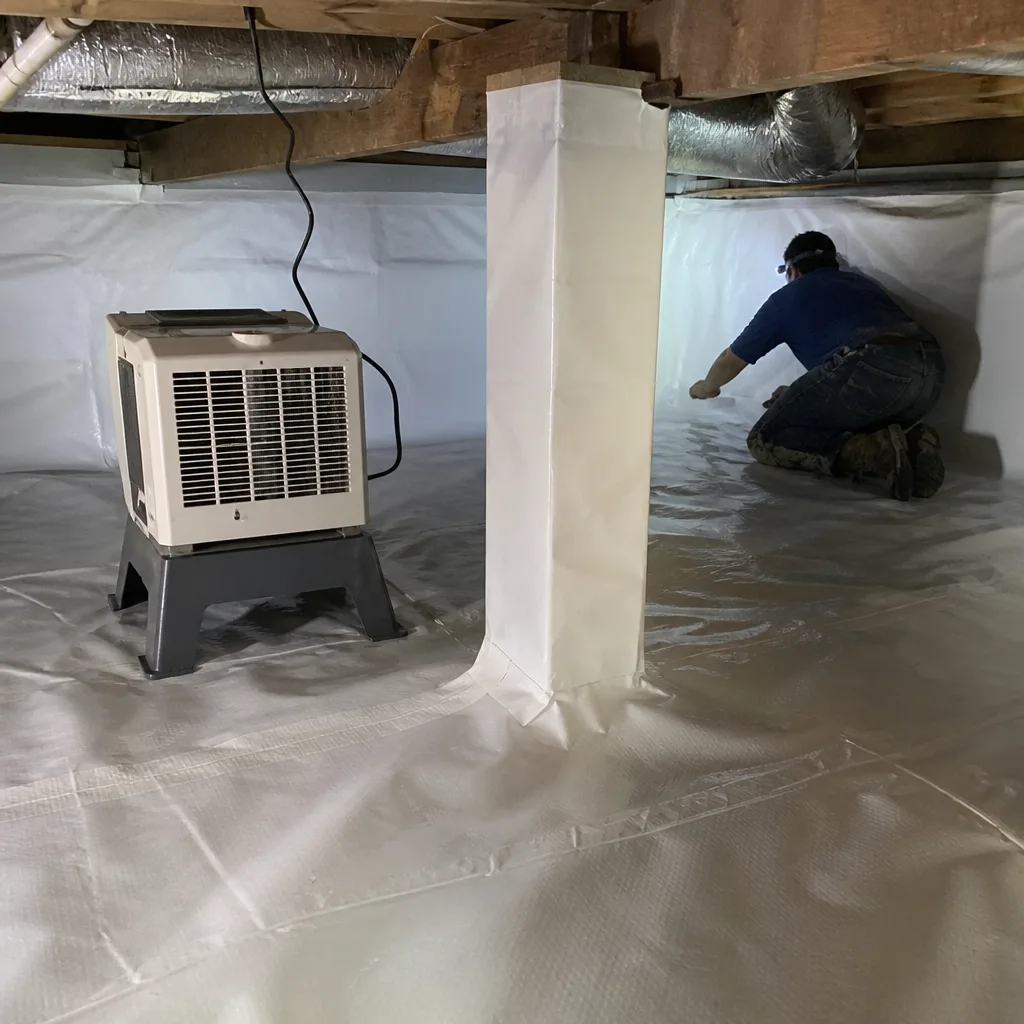
- Rockwool left exposed without vapor barrier in vented crawls. Leander’s spring humidity averages 75% and spikes higher after Hill Country storms. Exposed Comfortbatt in a vented crawl space becomes a filter for airborne moisture and rodent nesting material. We encapsulate with a 12-mil reinforced poly barrier over the ground, seal the vents, and either reinstall the Rockwool in a conditioned space or switch to a closed-cell spray foam if the joist bays are too irregular for batt retention.
- Comfortboard 110 used below grade without drainage plane. In Leander’s newer developments with walk-out basements and partial crawls, we’ve found Comfortboard 110 - the high-density commercial board - installed against below-grade block with no dimple mat or footing drain. The Rockwool doesn’t fail, but the block behind it saturates, effloresces, and spalls. We remove the board, install a dimple drainage mat, and reinstall with cap fasteners that don’t penetrate the waterproofing membrane.
Our Rockwool Crawl Space Encapsulation & Vapor Barrier Process
- 1
Moisture mapping and thermal imaging. We start with a FLIR scan of the crawl space and subfloor, plus humidity logging at three points for 48 hours if the problem is intermittent. You get the images in your Documented Photo Record.
- 2
Written price before any work starts. We specify Rockwool removal, salvage, or retention; vapor barrier mil rating; vent sealing versus conditioning; and any drainage or dehumidification needed. No work begins without your signed scope.
- 3
Air sealing first. Rim joists, sill plates, plumbing and electrical penetrations get sealed with acoustic sealant and flash-and-batt detail where appropriate. We run a blower-door test if the crawl connects to conditioned space - pre- and post-readings included.
- 4
Vapor barrier and insulation installation. Ground poly gets sealed at seams with butyl tape and run 6 inches up foundation walls. Rockwool gets reinstalled to full loft, or replaced if compromised, with depth verified by ruler card on every bay.
- 5
Post-work documentation. Final photos, updated humidity readings, and if applicable, blower-door numbers showing the air-sealing result. Your 365-Day Done Right Promise warranty activates on completion.
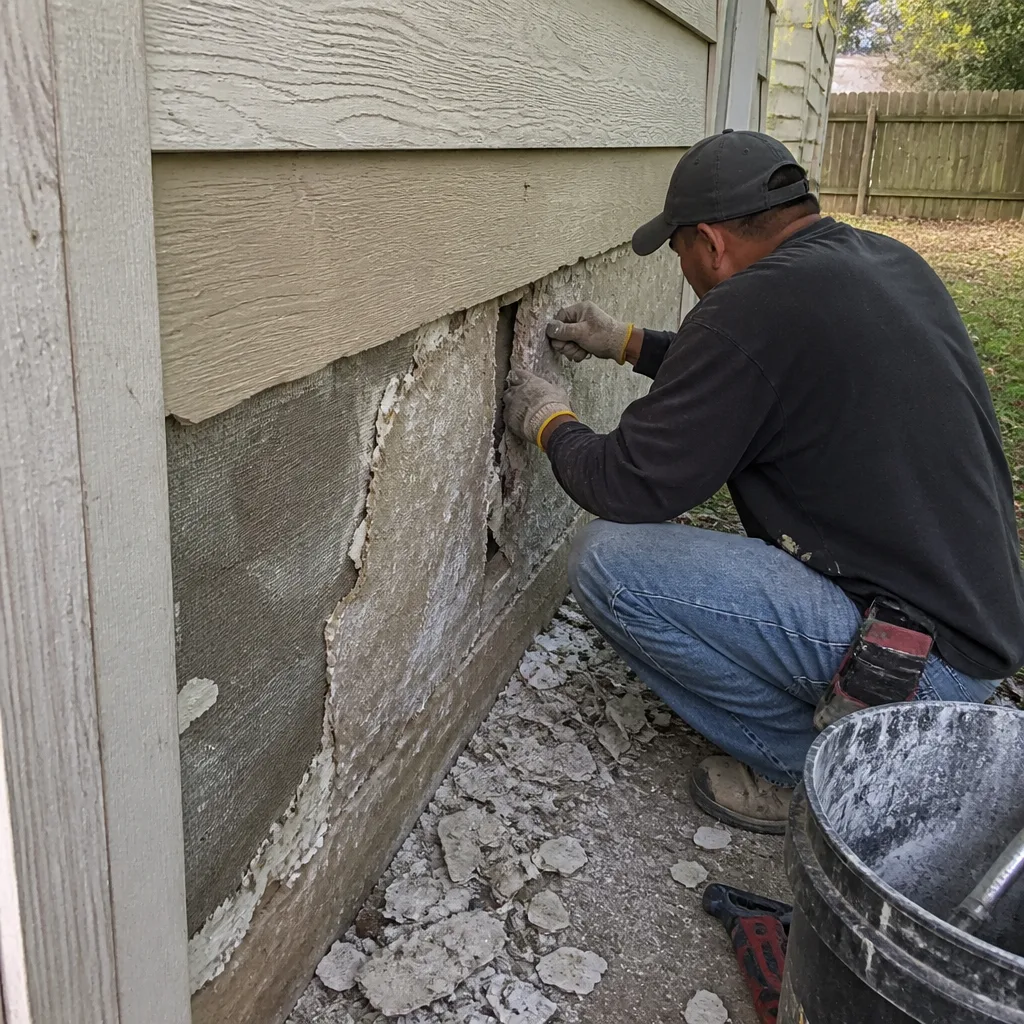 Before
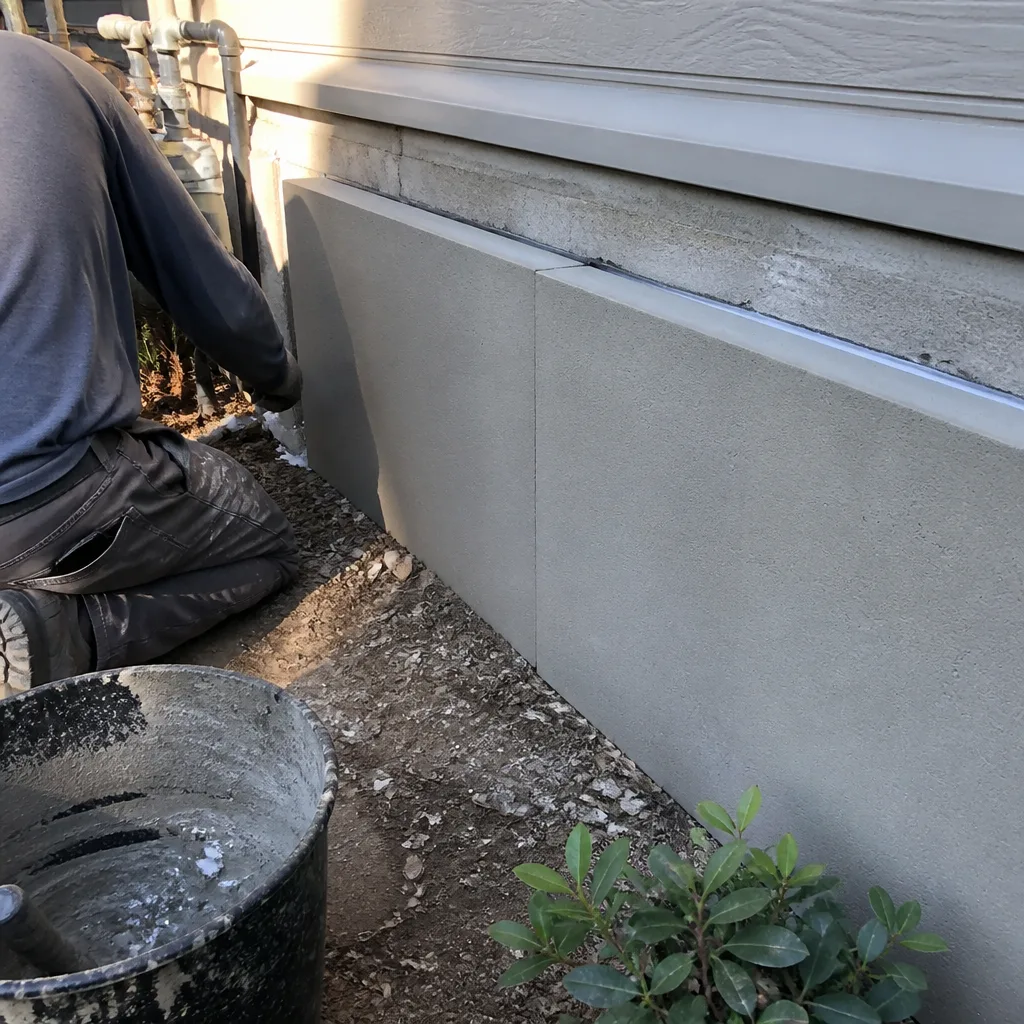 After
AfterWhat Rockwool Crawl Space Encapsulation & Vapor Barrier Costs in Leander
Most Rockwool crawl space encapsulation and vapor barrier jobs in Leander fall into these ranges:
| Scope | Typical Range |
|---|---|
| Vapor barrier only (12-mil poly, no insulation work) | $1,800-$3,200 |
| Encapsulation with existing Rockwool salvage and reinstallation | $3,200-$4,800 |
| Full removal, air sealing, new Rockwool Comfortbatt, vapor barrier | $4,500-$6,800 |
| Conditioned crawl conversion with dehumidifier and vent sealing | $6,500-$9,400 |
What moves the price: crawl square footage (Leander’s 2,400-square-foot ranch-style homes average 1,800-2,200 square feet of crawl), accessibility (some Old Town Leander pier-and-beam foundations have 14-inch clearance), existing moisture damage to subfloor or joists, and whether the HVAC ducts need rerouting for conditioned-crawl supply. We also service Reflectix products if your crawl has a mixed insulation history.
Every estimate is free, written, and delivered before any work starts. Bring us a competing quote - we offer a Free Second Opinion on any written estimate.
Why Leander Homeowners Call Topside Attic Insulation Leander for Rockwool Work
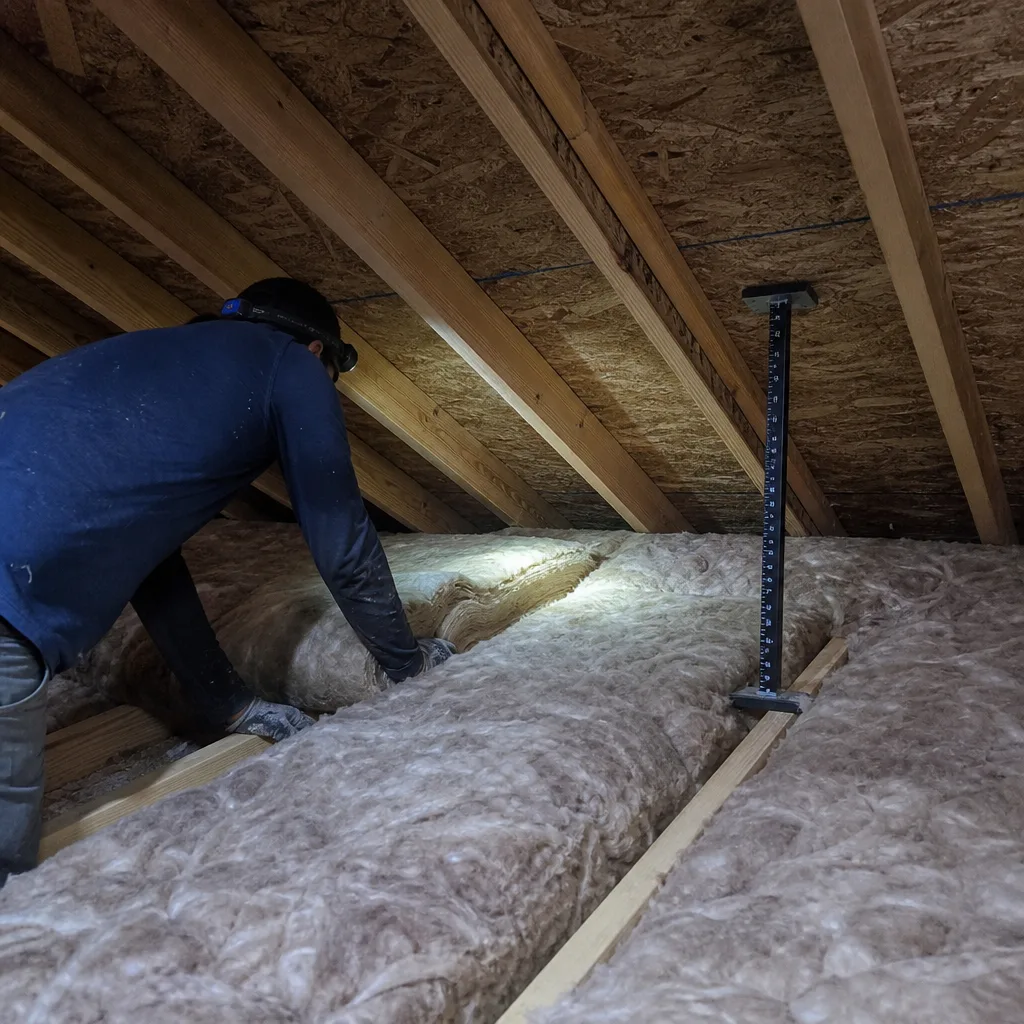
We’ve sealed and insulated over 9,000 homes since 2016, and the Rockwool jobs we see in Leander share a pattern: the product was installed correctly by manufacturer spec, but the building envelope wasn’t sealed first. Wes Okafor learned the trade at Triton College in River Grove, Illinois, where blower-door diagnostics and air-sealing sequencing came before any insulation work - and that’s how we run every crawl space job here.
Our techs are background-checked and uniformed, calls are answered by a live person 24/7, and you leave with a written report, photos, and on applicable jobs, before-and-after pressurization numbers - not a handshake and a receipt. The 365-Day Done Right Promise applies to all completed work. We source Rockwool, Reflectix, and other major brands with no proprietary lock-in, so the recommendation is based on your crawl space, not our inventory.
FAQs
No - Rockwool’s limited warranty covers manufacturing defects, not installation conditions, so converting a vented crawl to conditioned space does not void it. However, if the Rockwool was installed by a previous contractor who failed to follow Rockwool’s moisture-management guidelines, that installation warranty is separate and may have already expired. We document existing conditions with photos so any future claim has a baseline. Call (737) 252-7159 for a free estimate - we’ll review what warranty documentation you have.
Rockwool does not manufacture “parts” for crawl space encapsulation in the traditional sense - batts and boards are commodity building materials. We source Rockwool Comfortbatt, Comfortboard, and AFB through standard distribution channels, and we also install quality equivalent products from Owens Corning, Johns Manville, and Knauf if the job calls for a different density or facing type. As an independent Rockwool service provider, we are not affiliated with or authorized by Rockwool, so we choose materials based on performance spec, not brand obligation.
If the Rockwool is dry, uncompressed, and free of rodent contamination, salvaging and reinstalling after air sealing saves 30-40% versus full replacement. In Leander, we find salvageable Rockwool in roughly half the crawls we inspect - the other half has moisture staining, compression from foot traffic during plumbing repairs, or rodent nesting that makes removal the only sanitary option. We tell you which category you’re in during the estimate, with photos. Free estimates, written pricing - call (737) 252-7159.
Most jobs are scheduled within two business days and completed in one day for crawls under 2,500 square feet. Two-day jobs happen when we find hidden moisture damage to subfloor or joists that wasn’t visible during the initial inspection - we stop work, photograph the finding, and provide a revised written price before continuing. No surprises, no pressure to proceed. Live person answers calls 24/7 if you need to check schedule status.
In Leander’s climate, yes - we recommend a dedicated dehumidifier for any conditioned crawl space, sized to the volume and sealed with a condensate pump to the exterior. The Hill Country’s spring humidity and clay soils that wick moisture create a baseline load that vapor barrier alone won’t handle. We specify the dehumidifier capacity in our written scope and can install it as part of the encapsulation or provide the electrical and drainage rough-in for your own unit. Call (737) 252-7159 for exact sizing and pricing.
Ready to stop the musty air and cold floors? Call (737) 252-7159 for a free estimate on Rockwool crawl space encapsulation and vapor barrier in Leander. We’ll provide a written price before any work starts, and you’ll get a Documented Photo Record and our 365-Day Done Right Promise when the job is done.
Written by Wes Okafor, Owner, Topside Attic Insulation Leander at Topside Attic Insulation Leander, serving Leander and nearby areas.