
Attic Batt Insulation in Leander, TX
Attic Insulation services in Leander typically run between $1.50 and $3.20 per square foot installed, depending on the R-value you need, the condition of what’s already up there, and whether air sealing is addressed first. Most Leander homes we work on land between $900 and $2,800 for a full attic batt installation. The job is usually completed in a single day, and you walk away with a written scope, a photo record, and a blower-door reading if air sealing was part of the work.
Batt insulation – the pre-cut, blanket-style fiberglass or mineral wool sections that fit between attic joists – is one of the most practical choices for Leander homes with standard 16-inch or 24-inch joist spacing. It installs cleanly, it doesn’t require specialized spray equipment, and it gives you a predictable, measurable R-value layer by layer. That said, batts only perform the way the label says they will if the attic floor beneath them is air-sealed first. We’ve pulled back deteriorating batts in Leander homes in Bryson, Crystal Falls, and the older sections of Blockhouse Creek and found that the insulation was sitting on top of gap-filled top plates and unsealed can lights, doing about half the job the homeowner thought they were paying for.
At Topside Attic Insulation Leander, air sealing is not an optional add-on. Under the Haven Standard we’ve operated by since 2016, we seal every penetration, top plate gap, and recessed light before a single batt goes down. If that sequence isn’t followed, the insulation isn’t doing its job – and we won’t pretend otherwise. Our broader Attic Insulation in Leander service covers every insulation method we offer, but this page focuses specifically on batt work: what it costs, when it’s the right call, and exactly how we install it. Questions before you read? Call us at (737) 252-7159 – a live person answers, not a voicemail.
When You Need Attic Batt Insulation
- Your energy bills are climbing but your HVAC system checks out fine. In Leander summers, when outdoor temps run above 100°F for stretches of six to eight weeks, a poorly insulated attic can add 20 to 30 percent to your cooling load. If your system is in good shape but the bills keep rising, the attic floor is a likely culprit. We’ve seen homes near Lakeline Boulevard where the original builder-grade batts had compressed to half their rated thickness over the years, dropping effective R-value from an R-30 to something closer to R-18.
- Your existing batts are visibly damaged, wet, or displaced. Roof leaks, pest intrusion, and HVAC condensation all compromise batt performance. Compressed, stained, or rodent-disturbed insulation loses its loft – and with it, its R-value. Wet fiberglass batts in particular can become a mold substrate if left in place.
- You’re finishing a new addition or bonus room above a conditioned space. Attic cavities adjacent to new construction often get overlooked in the insulation plan. Batt sections sized to your joist spacing can be installed precisely without overrunning adjacent areas.
- You have standard joist spacing and want a straightforward, verifiable install. Blown-in insulation settles over time and can be hard to gauge depth without probes. A correctly installed batt layer gives you a visible, measurable R-value you can confirm with a tape measure. For homeowners who want to be able to inspect their own attic later, that transparency matters.
- You’re replacing or upgrading insulation after a rodent remediation or attic cleaning. After attic cleaning and rodent-proofing work, the attic floor needs fresh insulation. Batts install cleanly over a treated, sanitized substrate and give you a fresh documented baseline to reference going forward.
- The home was built before 2000 and has never had a full insulation inspection. A large portion of Leander’s pre-2000 housing stock – particularly in the Savannah, Tahitian Village, and Vista Ridge corridors – was insulated to the code minimums of the time. Texas energy codes have changed significantly since then, and what met code in 1995 falls short of what current IECC standards recommend for Central Texas climate zone 2 and 3 homes.
Our Attic Batt Insulation Process
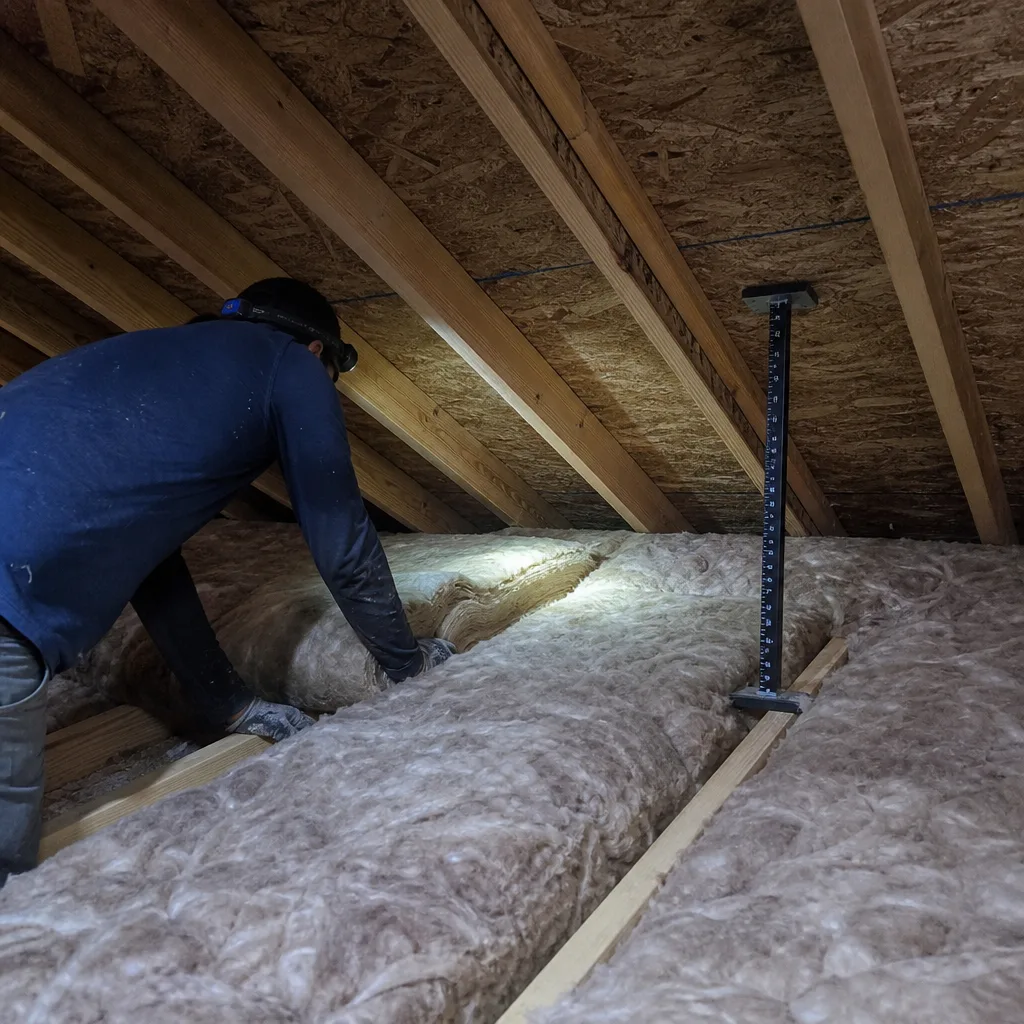
- Written scope and price before anything starts. Under Haven Standard Clause 1, a written price is produced before any work begins – flat, itemized, and signed off by both parties. You’ll see the R-value target, the square footage, the brand of material we’re using (we source from Owens Corning and similar manufacturers – no proprietary product lock-in), and the air-sealing scope if it’s included. No surprises on the day of install.
- Attic inspection and blower-door baseline. Before batts go in, a technician pulls a blower-door reading – a pressurization measurement, in CFM50, that tells us exactly how much conditioned air the home’s building envelope is currently losing. We photograph existing insulation depth, condition, and any visible damage. This baseline is what makes our before-and-after numbers meaningful rather than approximate.
- Air sealing – mandatory, not optional. Every top plate gap, recessed light (can light) penetration, HVAC boot, and plumbing or electrical chase gets sealed with fire-rated caulk or spray foam before we touch the batts. In Leander’s Bryson and Crystal Falls neighborhoods, where open-cell framing and can-heavy ceiling plans are common, this step typically closes the single largest source of energy loss in the home. We won’t skip it and we won’t install batts over an unsealed floor.
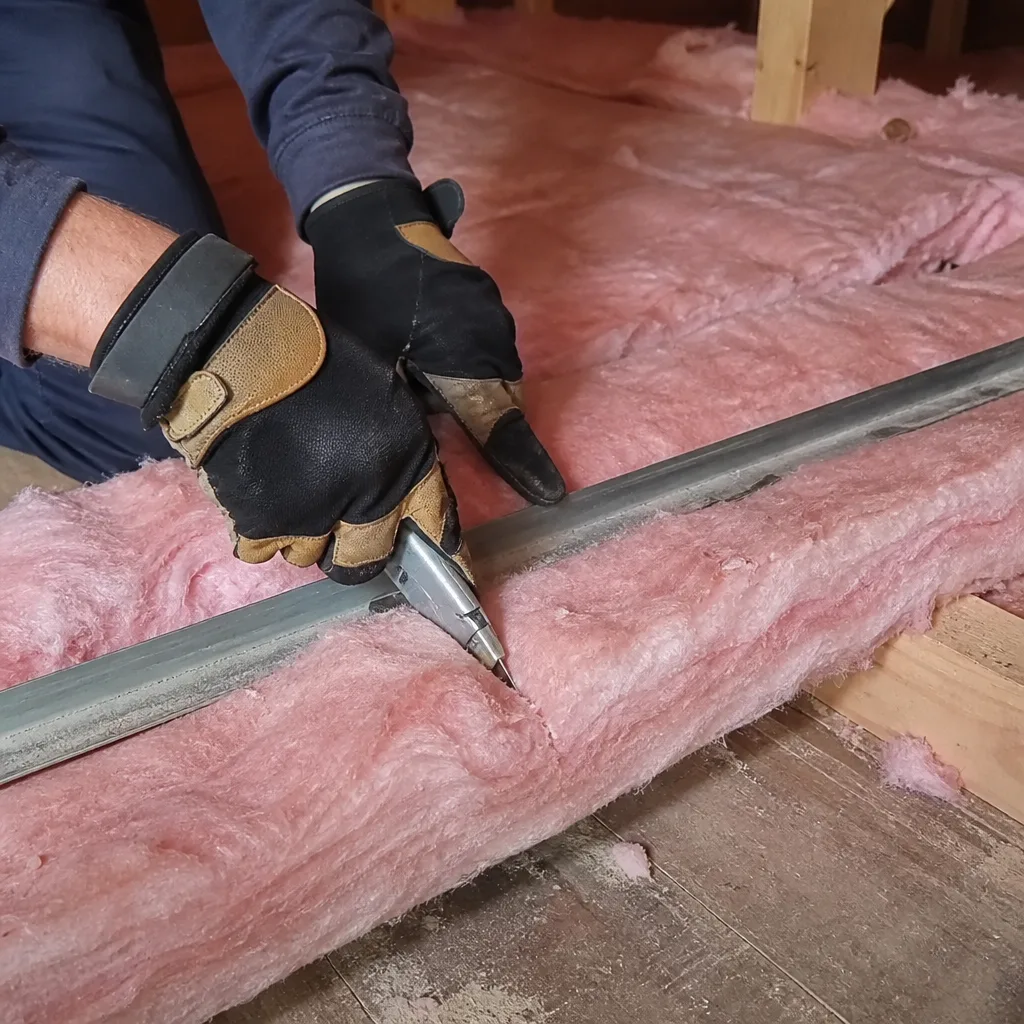
- Batt installation to rated R-value. Batts are cut to fit and placed friction-tight between joists – no gaps at the edges, no compression at the ends, no stacking that reduces loft. Depending on the target R-value (R-38 is the current code-minimum recommendation for new construction in Central Texas; R-49 is the DOE recommendation for this climate zone), we may install a single layer or a cross-hatched double layer to minimize thermal bridging through the joists.
- Post-installation blower-door test and documentation. Once the work is complete, we run a second blower-door reading. The before and after numbers are recorded, photographed, and included in your job file. If air sealing closed a meaningful portion of the envelope – a typical Leander home moves from around 3,800 CFM50 to somewhere between 2,000 and 2,600 CFM50 after thorough sealing – you’ll see that in a single number, not a vague description.
- Documented photo record and written warranty delivered before we leave. Every visit closes with a Documented Photo Record: timestamped images of the attic floor before work began, mid-install, and after completion. Your written warranty and the 365-Day Done Right Promise documentation are handed to you the same day. If it’s not done right, we make it right – that’s not a slogan, it’s a written commitment.
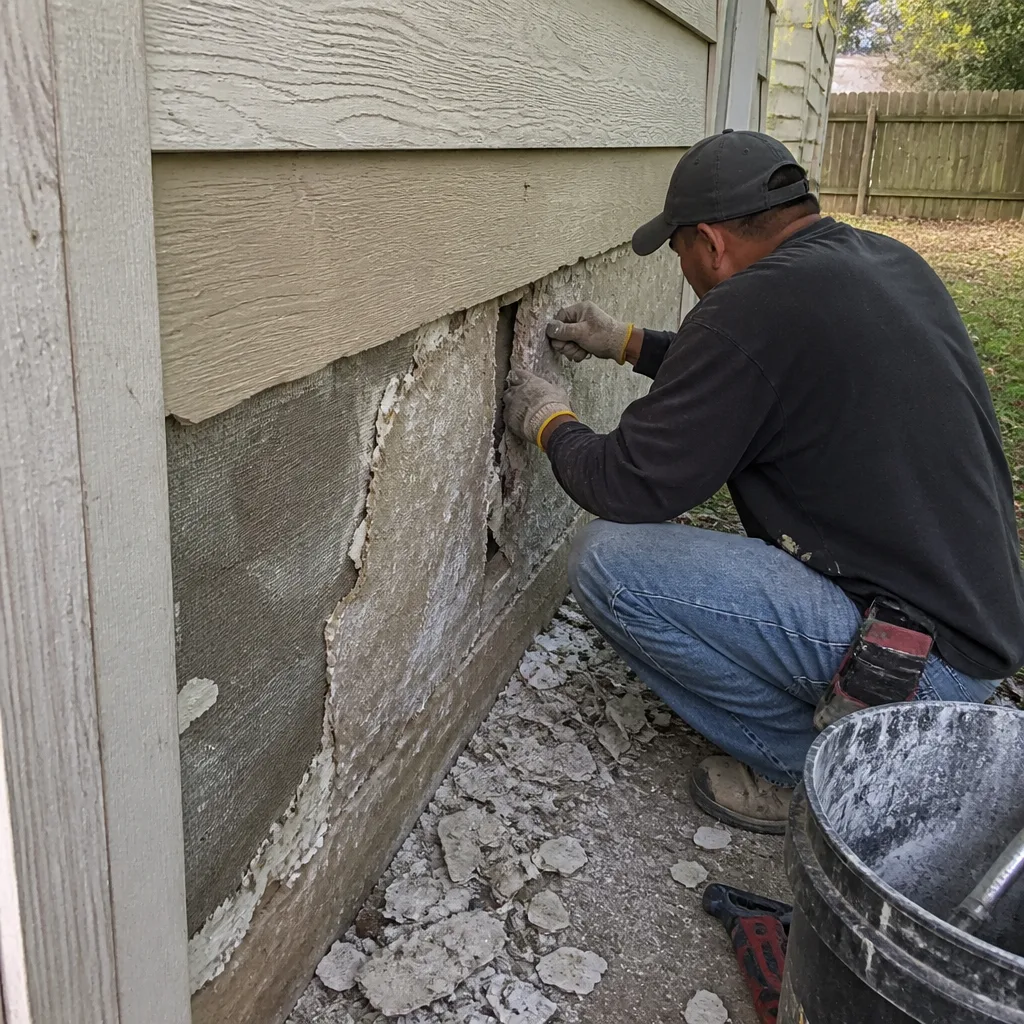 Before
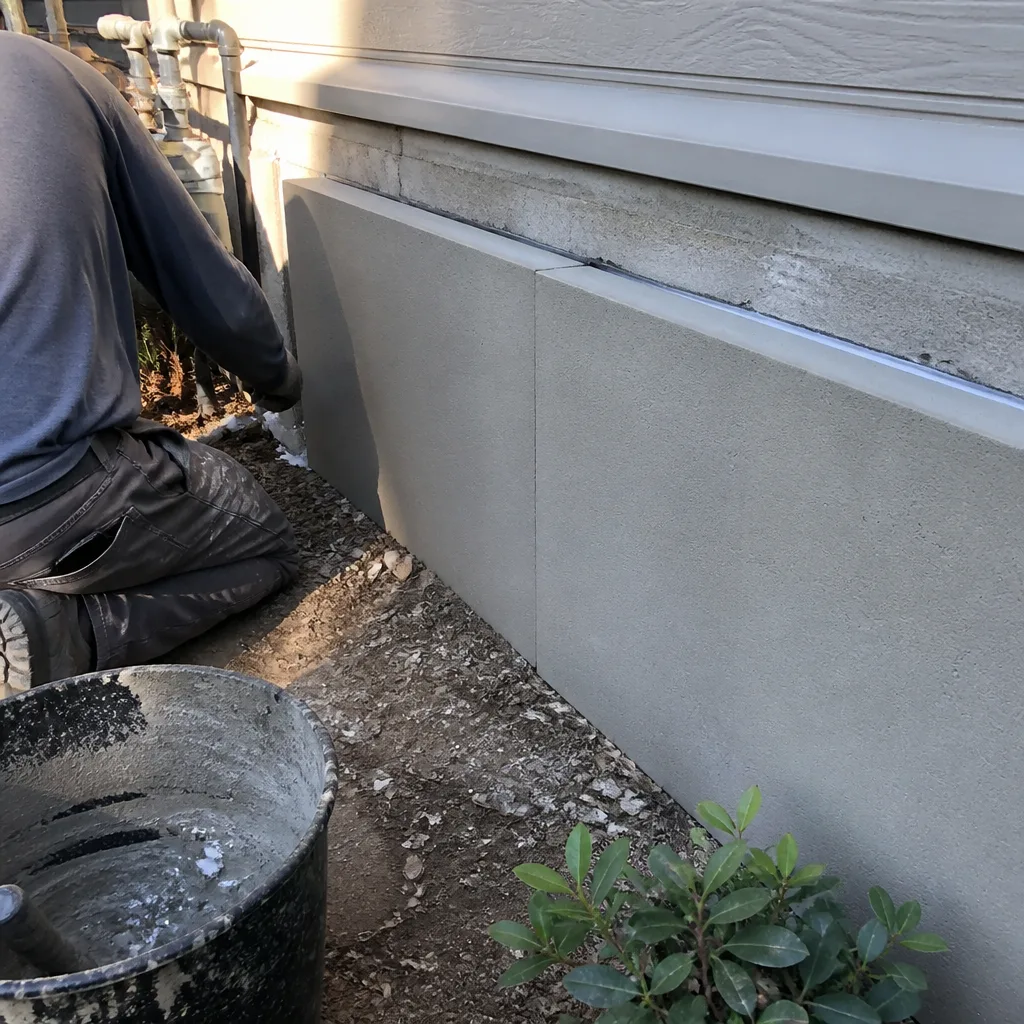 After
AfterAttic Batt Insulation Pricing in Leander
Most attic batt insulation jobs in Leander fall in the following ranges. These reflect real project data from homes we’ve worked on in this market – not national averages padded for margin:
| Scope | Typical Price Range |
|---|---|
| Partial replacement (400-700 sq ft, R-38) | $600 – $1,100 |
| Full attic batt install, 1,200-1,800 sq ft home (R-38) | $1,100 – $1,900 |
| Full attic batt install, 1,800-2,400 sq ft home (R-49) | $1,600 – $2,800 |
| Air sealing (added to any batt job) | $350 – $750 |
| Old insulation removal before install | $400 – $900 depending on depth and condition |
What moves the number up or down: joist spacing (16-inch is faster and cheaper to fit than irregular or nonstandard spacing), current attic condition (if existing damaged batts need removal first, that’s a separate line item), R-value target, and whether air sealing is scoped in. The attic access situation matters too – a large pull-down stair in a newer Leander home is a different logistical picture than a 22-inch hatch in an older Tahitian Village house.
We don’t give ballpark estimates verbally and then adjust at billing. Under Haven Standard Clause 1, you receive a flat written price before any work starts – and that price doesn’t change unless the scope changes, in writing, by mutual agreement. If you’ve already received a written estimate from another contractor, we’ll read it with you at no charge as part of our Free Second Opinion on Any Written Estimate.
To get an accurate number for your home, call (737) 252-7159. A technician will assess the attic, confirm the square footage and current R-value, and produce a written estimate the same visit. There’s no charge for the estimate.
FAQs – Attic Batt Insulation
How much does attic batt insulation cost in Leander, TX?
Most full Attic Insulation Replacement jobs in Leander run between $1,100 and $2,800, depending on square footage, R-value target, and whether old insulation removal is needed first. Air sealing, which we require before batt installation, typically adds $350 to $750 to the project. The per-square-foot rate for batt material and labor generally falls between $1.50 and $3.20. Call (737) 252-7159 and we’ll produce a written price after inspecting your attic – no charge for the estimate.
Is batt insulation better than blown-in insulation for my Leander attic?
Batt insulation is the better fit when your joist spacing is standard (16 or 24 inches on center), you want a visually verifiable R-value layer you can confirm by eye, or you’re installing over a freshly cleaned or treated attic floor. Blown-in insulation – typically loose-fill fiberglass or cellulose – covers irregular spaces more easily and can be added over existing batts to increase R-value without full removal. Many Leander attics end up with a batt layer plus a blown-in top layer for this reason. We’ll tell you which approach makes sense for your specific attic during the inspection, and you’ll see the recommendation in writing before any decision is made. For a full overview of both approaches, see our Attic Insulation in Leander page.
What R-value do I need for my attic in Leander?
The current International Energy Conservation Code minimum for attics in Central Texas (climate zone 2-3, which covers Leander) is R-38 for new construction. The U.S. Department of Energy’s recommendation for existing homes in this climate zone is R-49 to R-60. Most homes we inspect in Leander – particularly those built before 2010 – are sitting at R-19 to R-25, which is a meaningful gap. We measure your current insulation depth and condition during the inspection, translate that to an actual R-value, and show you the difference between what you have and what the current recommendations call for. That gap is what your energy bills are paying for.
Do I need to be home during the attic batt insulation installation?
You don’t need to be present for the full install, but we do ask that someone is available at the start so we can walk through the written scope together and confirm access. Under the Haven Standard, you’ll receive a text with your technician’s name before they arrive – no anonymous crew showing up unannounced. All technicians are background-checked and uniformed. At close-out, we’ll walk through the Documented Photo Record with whoever is on site, or send it to you digitally the same day if you’re not available.
Batt Insulation and the Building Envelope: Why Sequence Matters
Attic batt insulation doesn’t work in isolation. The attic floor is part of a system – the building envelope – and batts are only one component of that system. The other component, air sealing, is what determines whether conditioned air actually stays inside the home or leaks out through gaps that no amount of insulation can compensate for.
Here’s the practical version: fiberglass batts slow heat transfer by trapping still air in their fibers. But if air is moving through a gap in the top plate behind the batt, that movement carries heat with it directly – bypassing the insulation entirely. A blower-door test quantifies this. We’ve measured Leander homes where a well-intentioned full batt install was installed over an unsealed attic floor, and the before-and-after blower-door numbers barely moved because the air pathways were still open.
This is why Envelope Insulation Co.’s approach – sealed first, then insulated, in that order – isn’t a marketing position. It’s a physical reality. The Haven Standard formalizes it as a hard prerequisite because we’ve seen what happens when the sequence is reversed: the customer pays for insulation, gets a fraction of the performance they expected, and finds out years later when the energy bills still don’t reflect the investment.
If you’ve received an estimate from another contractor that doesn’t include an air sealing line item, bring it to us. Our Free Second Opinion on Any Written Estimate means we’ll read it with you, point out what’s included and what isn’t, and give you a straight answer about whether the scope addresses the actual problem.
What You Receive When the Job Is Done
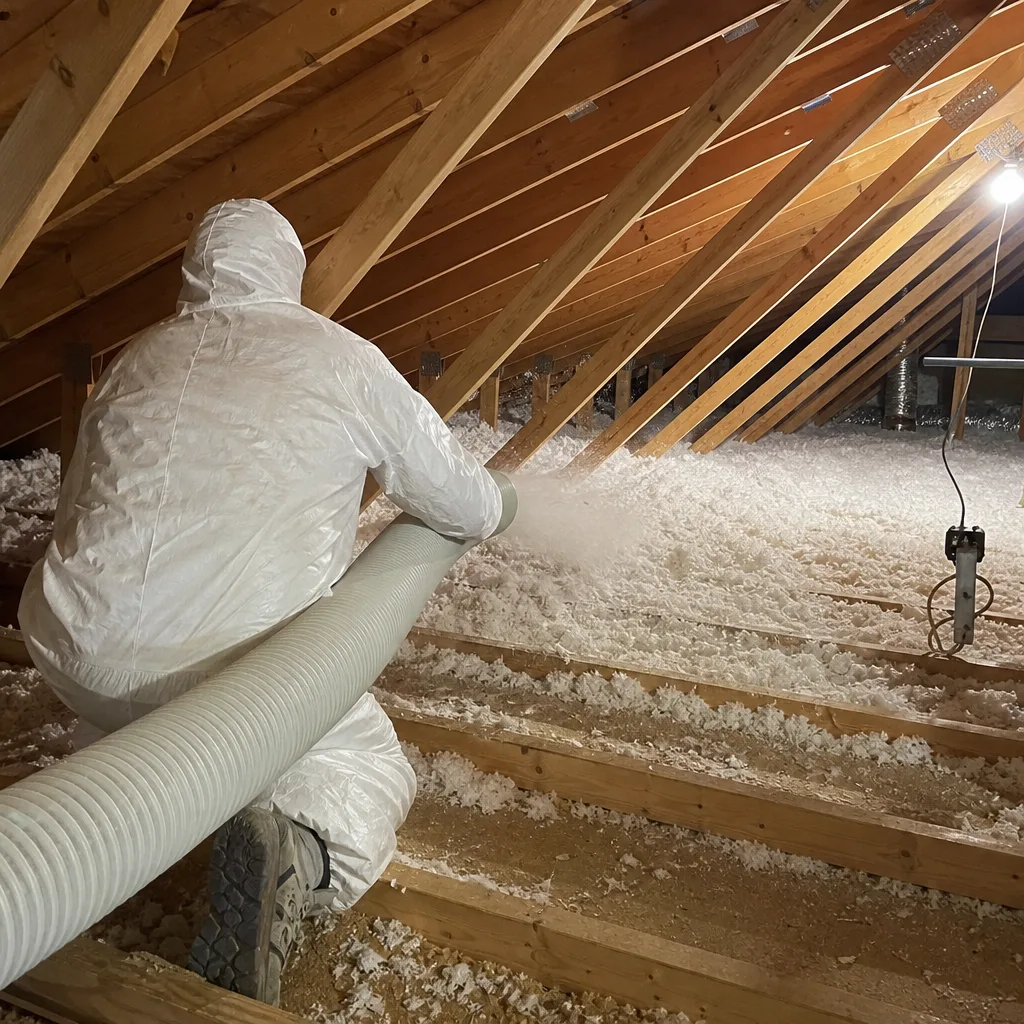
We describe the documentation before the job starts so you know what “finished” actually means:
- Written scope and flat price, signed before work begins
- Pre-installation blower-door reading in CFM50 (on jobs that include air sealing)
- Timestamped Documented Photo Record: before, during, and after installation
- Post-installation blower-door reading showing the measured change in air leakage
- Written warranty and 365-Day Done Right Promise documentation
- Material data sheets for the batt product installed, including brand and rated R-value
These aren’t available on request. They’re included on every job, delivered before the crew leaves.
Key Takeaways
- Attic batt insulation in Leander typically costs $1,100 to $2,800 for a full install, with air sealing adding $350 to $750.
- The DOE recommends R-49 to R-60 for attics in Central Texas; most pre-2010 Leander homes we inspect are well below that.
- Air sealing is completed before any batt goes down – every time, no exceptions.
- Before-and-after blower-door numbers are documented on every applicable job so you can see the measured result.
- A written price is produced before any work starts. The price doesn’t change unless the scope changes, in writing.
- The 365-Day Done Right Promise covers every completed job.
Ready to find out How Much Does Attic Insulation Cost? (2026 Price Guide) - Leander, TX? Call (737) 252-7159 to schedule a free attic inspection. A live person answers – no voicemail, no callback window. Wes Okafor and the team at Topside Attic Insulation Leander will inspect your attic, measure your current R-value, and hand you a written price the same day. If you’ve already got a quote from someone else, bring it – we’ll give you a free second opinion on it before you decide anything.
You can also learn more about every insulation method we offer on our home page, or get the full picture of attic work in this market on our parent service page.
Written by Wes Okafor, Owner at Topside Attic Insulation Leander, serving Leander since 2016.