
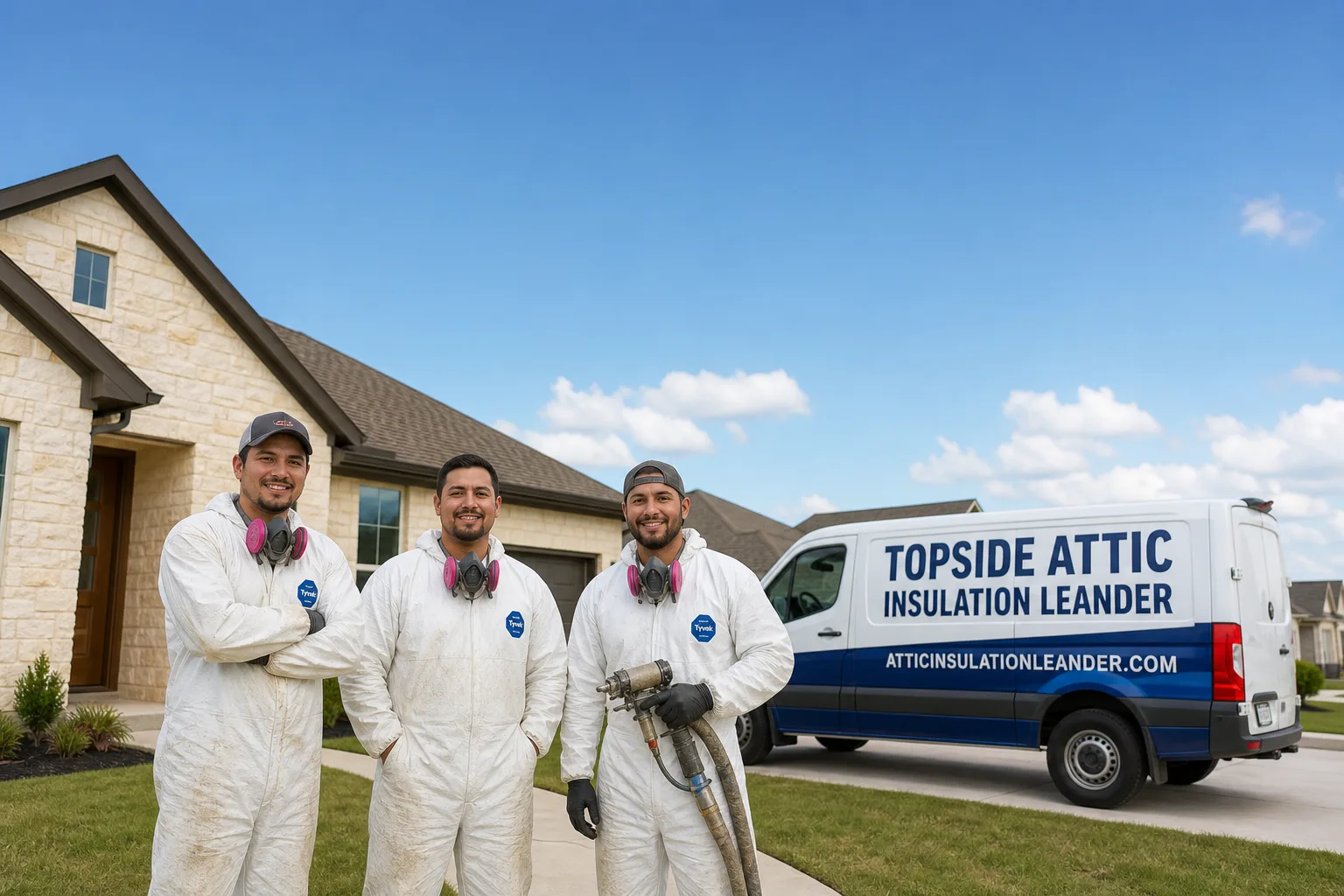
Fast, Reliable Attic Insulation Across Lost Creek
Most attic insulation jobs in Lost Creek run $1,800-$4,500 depending on whether we’re topping up existing material or pulling failed insulation and starting fresh. Our crews are on the road daily to the western Travis County hills, and we stock enough Owens Corning, Johns Manville, and GreenFiber material to complete full retrofits on acreage properties with long service drives in a single trip. Call (737) 252-7159 for a written price before anyone lifts a tool - that’s Haven Standard Clause 1, no exceptions.
Lost Creek sits on the Balcones Escarpment where 1970s-1990s custom homes with complex rooflines and cathedral ceilings dominate the landscape. We’ve worked enough of these properties to know that a flat-lot insulation playbook fails here. The dense live oak and cedar elm canopy traps humidity against attic decks while misleading homeowners into thinking their roofs “run cool.” They don’t. Attic temperatures in Lost Creek routinely hit 140-160°F in summer, and the same homes saw single-digit freezes during Winter Storm Uri. Dual extremes demand insulation spec’d for both, not just R-value on a label.
Why Topside Attic Insulation Leander Is Lost Creek’s Preferred Attic Insulation Company
We’ve sealed and insulated over 9,000 homes since 2016, and a significant cluster sits in the Lost Creek hills off Lost Creek Boulevard, Cuernavaca Drive, and the winding streets around the golf course. Our Lost Creek customers leave reviews that mention the same thing: we show up with the right equipment for acreage access, we don’t try to sell insulation over unsealed air leaks, and we hand them blower-door numbers they can read.
Response time to Lost Creek is typically same-day or next-morning, depending on whether we’re dispatching from our Dallas-Fort Worth coordination office or already west of MoPac on another job. The crew texts when they’re thirty minutes out. Background-checked, uniformed technicians. Live person answers the phone 24/7.
What builds trust here is documentation. Every job gets a Documented Photo Record. Every applicable job gets before-and-after blower-door readings - a pressurization measurement that shows, in one number, how much conditioned air your home was losing before and after the work. Under Haven Standard: Have it in writing. Written price, written scope, written warranty before anyone starts.
Our Attic Insulation Services in Lost Creek
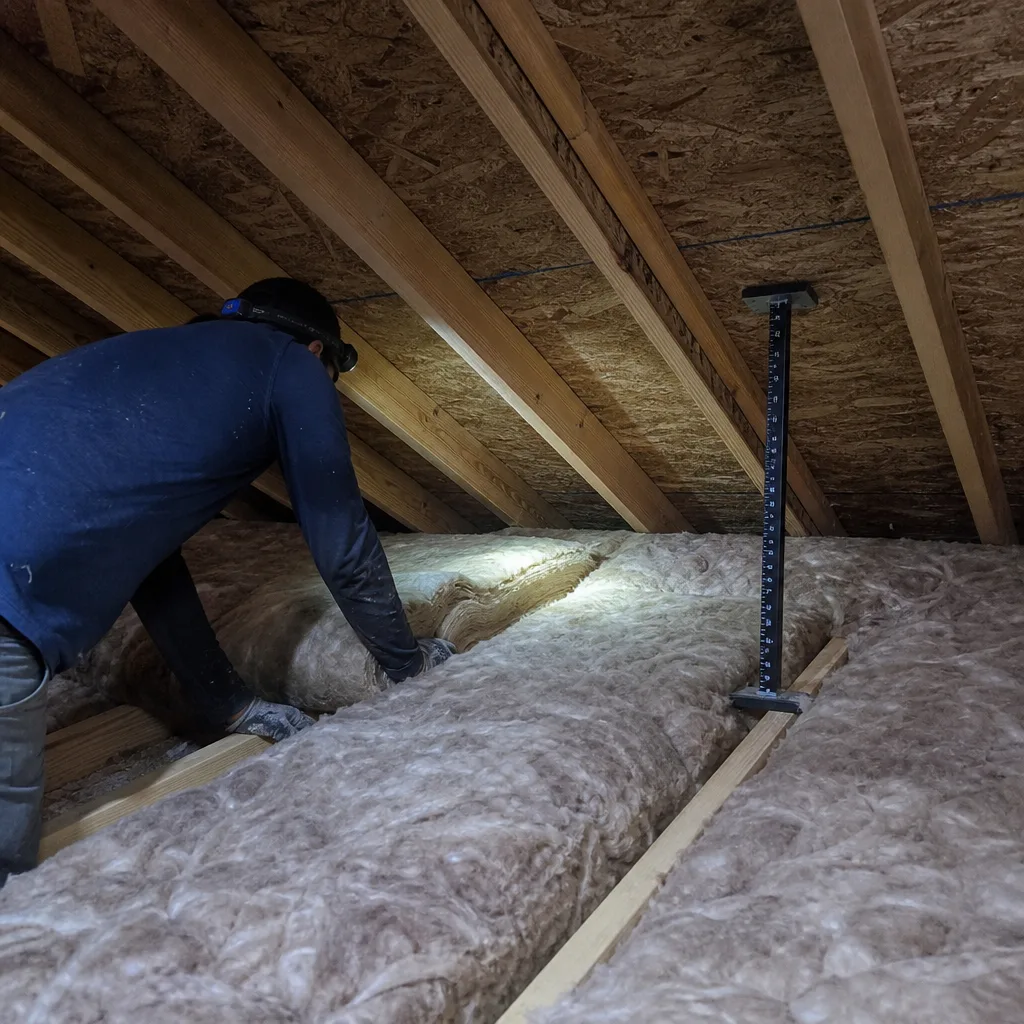
Blown-In Attic Insulation
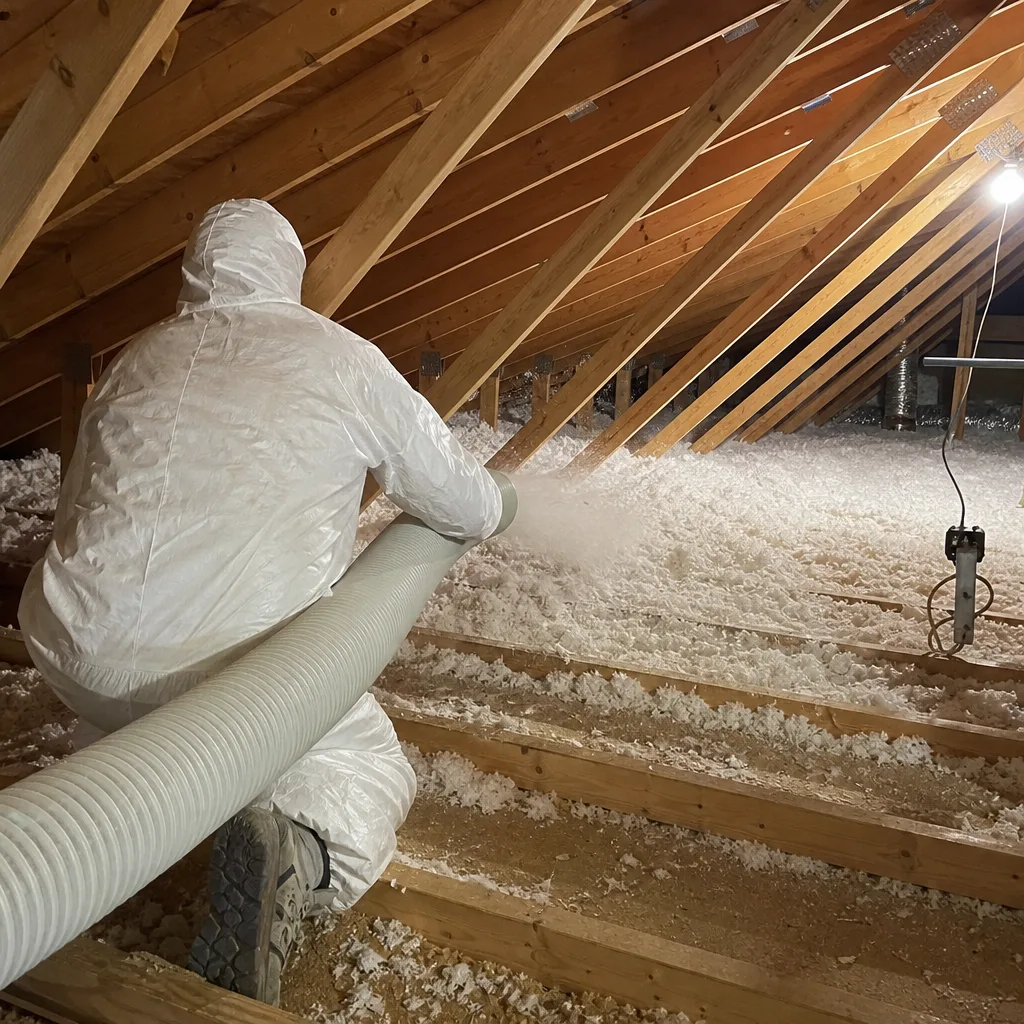
Blown-In Insulation - Lost Creek is our primary method for Lost Creek’s irregular attic geometries. We use loose-fill fiberglass or cellulose - GreenFiber cellulose performs well in our humidity-trapping canopy - blown to uniform depth across complex cavities. On a 1980s split-level custom home off Lost Creek Boulevard with cathedral ceilings and a stepped-slab foundation, we found the original R-11 blown fiberglass compacted to roughly half its depth and soaked from canopy-trapped humidity. Our techs pulled the failed material, sealed the irregular multi-level attic cavities, and brought the assembly up to a modern R-value with blown-in Owens Corning Fiberglas. Because this was an acreage property with a detached workshop and a long service drive, we loaded the heavier-duty equipment and fully stocked the truck so the entire retrofit - baffles, air sealing, and top-up - went in one trip. Most full blown-in retrofits in Lost Creek run $2,800-$4,500.
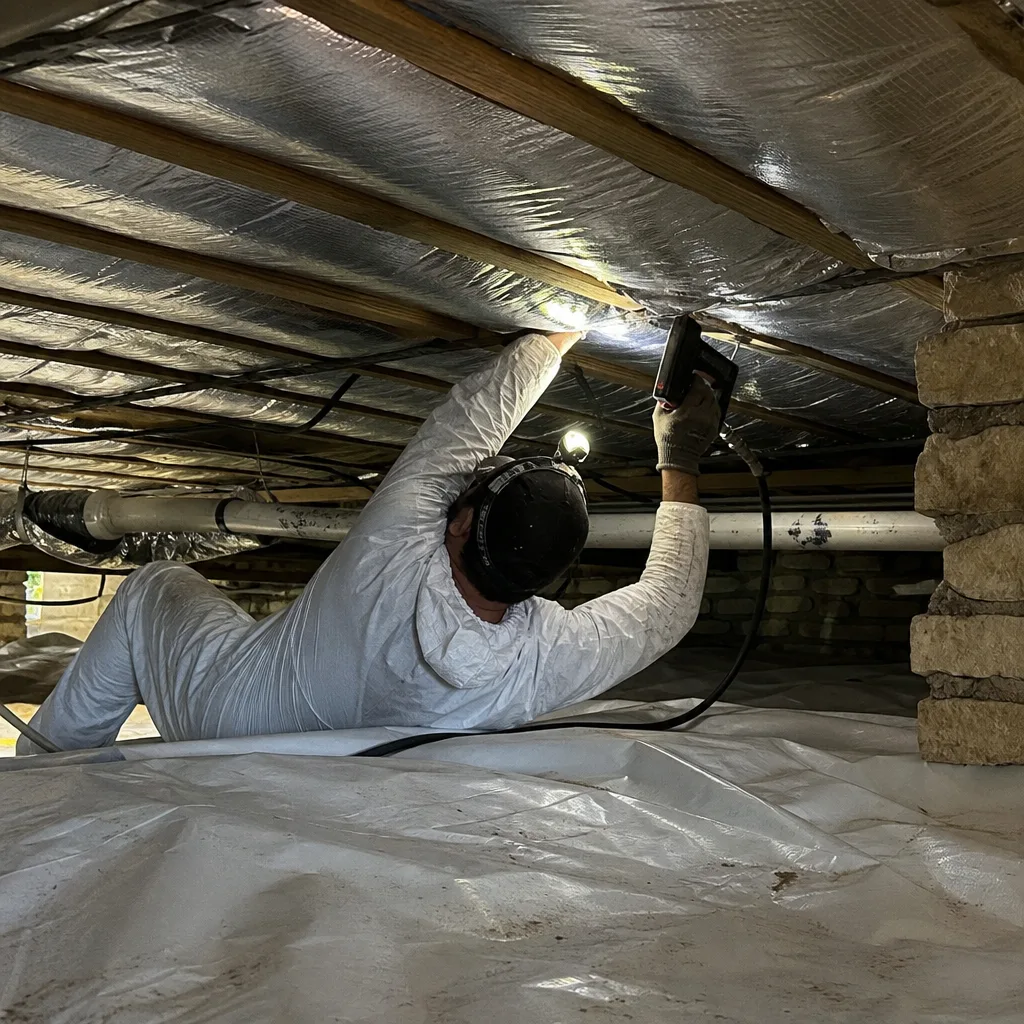
Attic Batt Insulation
Batt insulation - pre-cut fiberglass or mineral wool panels - works in Lost Creek homes with standard joist bays and accessible attic floors, typically in the flatter sections of split-levels or over garage ceilings. We source Johns Manville batts when the job calls for them. The limitation in Lost Creek is geometry: cathedral ceilings and multi-level attic cavities leave few flat surfaces where batts lay properly. We rarely recommend batt as a standalone solution here, but we’ll use it where it fits and blown-in everywhere else. Batt sections typically add $800-$1,400 to a mixed-method job.
Attic Insulation Top-Up
Top-up is our most common Lost Creek service, and it’s where homeowners get misled most often. The canopy shades your roof. You assume the attic is fine. But the original blown fiberglass from 1985 has settled, compacted, and often absorbed moisture through unsealed penetrations. We don’t blow new material over failed old material - that’s insulating over a problem. Our Attic Insulation team tests existing depth and condition first. If the old insulation is structurally intact but thin, we air-seal the deck, install baffles for ventilation, and blow to full depth. If it’s compromised, we quote removal and replacement. Top-ups in Lost Creek typically run $1,800-$2,800.
Attic Insulation Replacement
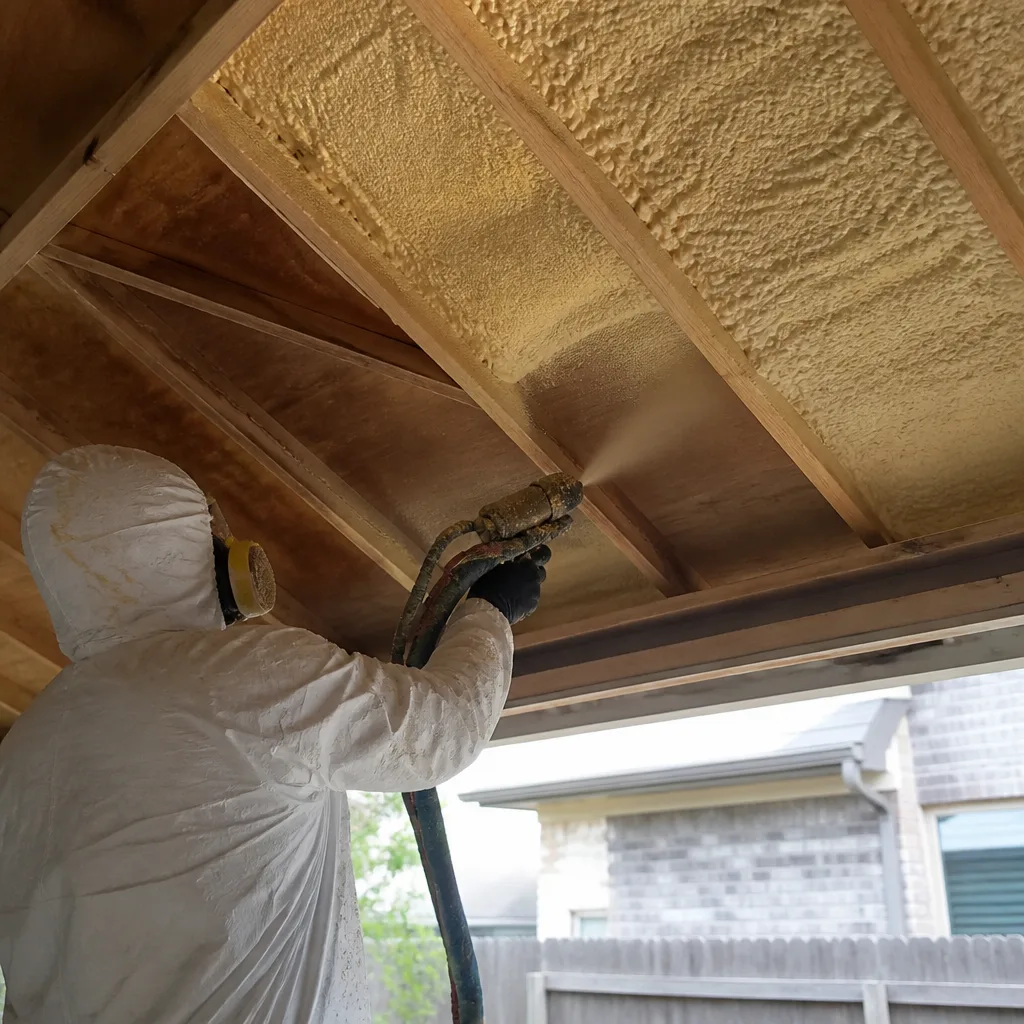
Full replacement means removal of failed material, remediation of any deck mold or rodent damage, air sealing of all top plates, can lights, and penetrations, then fresh insulation to modern R-value. This is the post-Uri reality for many Lost Creek homes: freeze-cracked plumbing runs in attics where R-11 had degraded to effective R-5, followed by humidity damage the next summer. Replacement jobs start around $3,200 and run to $5,500 for larger homes with complex geometry. We publish blower-door numbers on every replacement so you see the air-leakage reduction you paid for.
Attic Baffles & Ventilation Prep
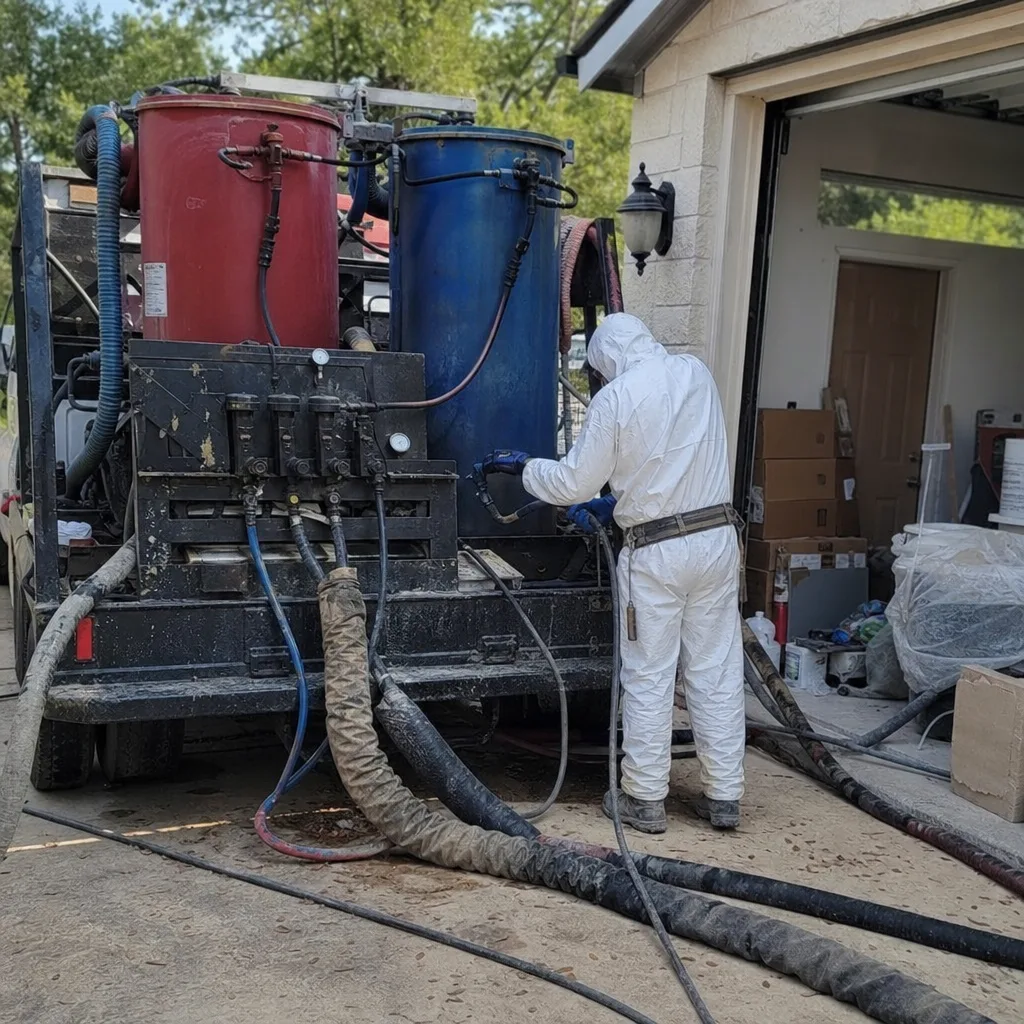
Baffles - properly, attic ventilation baffles or rafter vents - maintain airflow from soffit to ridge vent even after insulation is blown deep. In Lost Creek’s humid canopy environment, baffles are non-negotiable. Without them, blown insulation blocks soffit intake, humidity stagnates, and mold follows. We install baffles as standard on every blown-in and top-up job, not as an upsell. Baffle and ventilation prep is included in our quoted price, not added later.
What happens when you call
- 1
A real person answersNo phone trees - you reach a local pro.
- 2
You get an upfront price rangeHonest numbers before anyone is dispatched.
- 3
A background-checked tech heads outLicensed & insured, dispatched right away.
- 4
You approve before work beginsNothing starts until you say go.
 Before
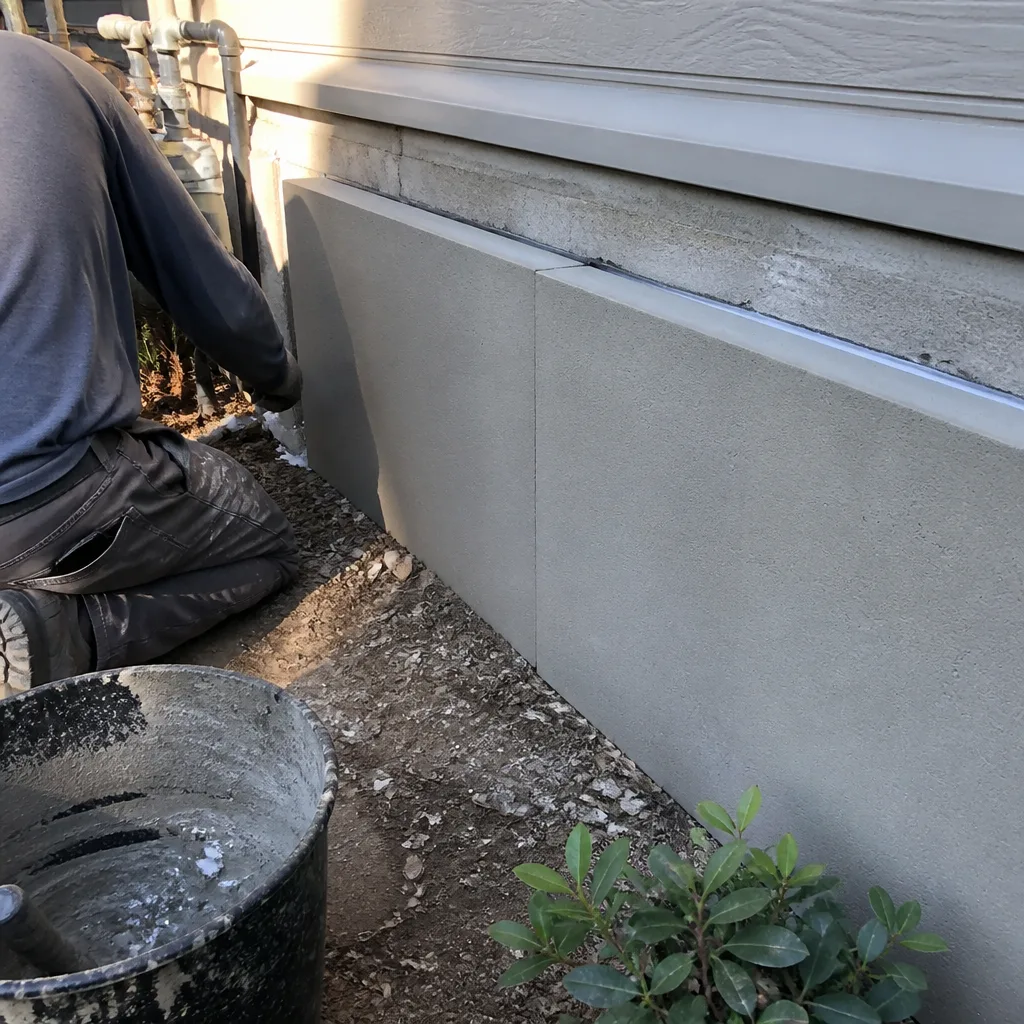 After
AfterTrusted Brands We Service in Lost Creek
We source from Owens Corning, Johns Manville, Knauf, Rockwool, CertainTeed, Icynene, Demilec, and GreenFiber - no proprietary lock-in, no house brand pushed for margin. For Lost Creek’s specific conditions, we often spec Owens Corning Fiberglas loose-fill for thermal performance in high heat, GreenFiber cellulose where humidity management and sound dampening matter, and Johns Manville batts for targeted cavity work. We stock enough material locally to avoid supply delays on acreage jobs where a second trip costs half a day. Your written quote names the specific product and R-value target, not “or equivalent.”
Common Attic Insulation Problems We See in Lost Creek Homes
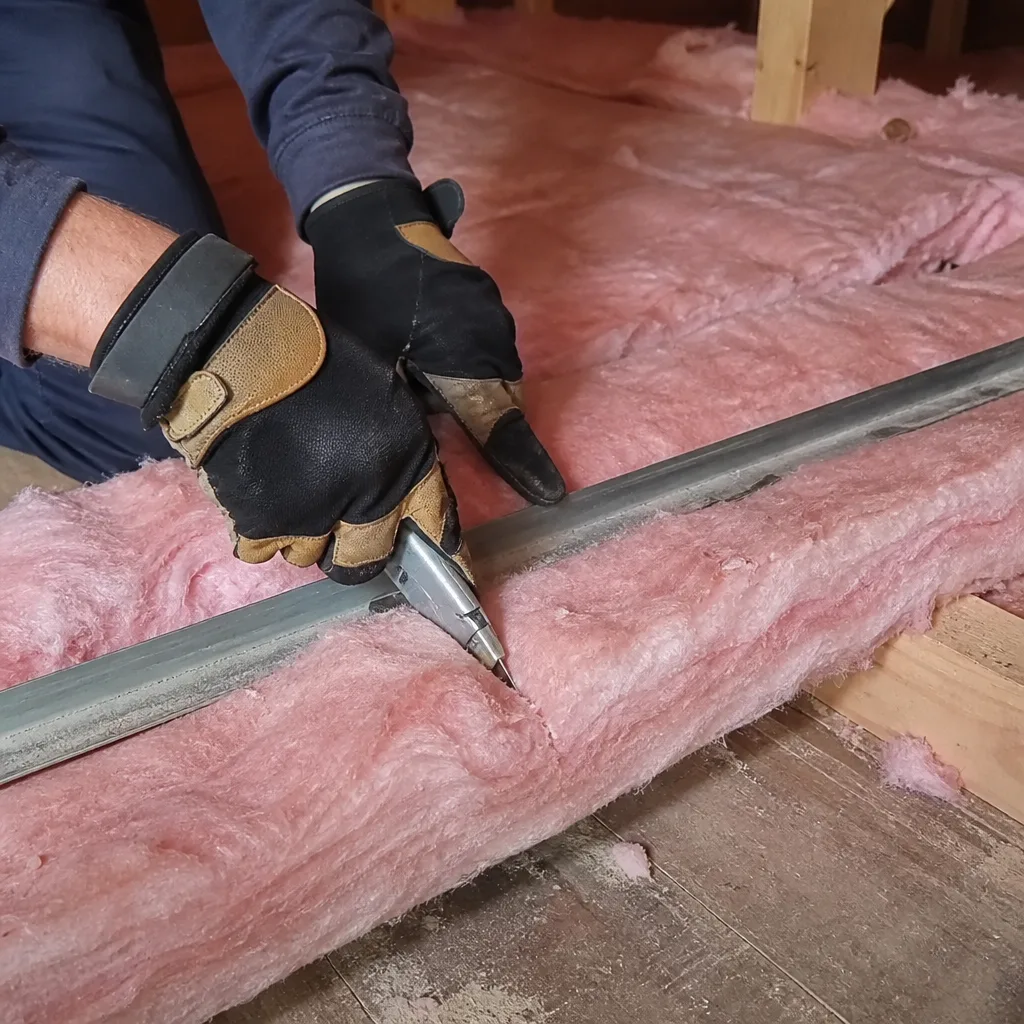
- Canopy-trapped humidity settles original blown fiberglass. The live oak and cedar elm canopy that defines Lost Creek’s character traps moisture against roof decks. Homeowners feel shade and assume cool attics. The reality: humidity accelerates fiberglass compaction and can foster mold on unsealed attic decks. We’ve pulled material compressed to half its labeled depth in otherwise well-maintained homes.
- Cathedral ceilings and split-level geometry create coverage gaps. Standard blown-in application from a single attic hatch misses hard-to-reach cavities in multi-level attics. Thermal gaps persist directly above living space. We map these geometries during inspection and use specialized hose extensions to reach them.
- Post-Uri freeze cycles exposed degraded insulation’s second failure mode. February 2021 dropped single-digit temperatures across Lost Creek. Homes with R-11 or R-19 that had already settled to effective R-6 or R-8 saw attic plumbing runs freeze and crack. The same attics then failed again the following summer when humidity entered through the same unsealed penetrations. Dual extremes, two failures, one root cause.
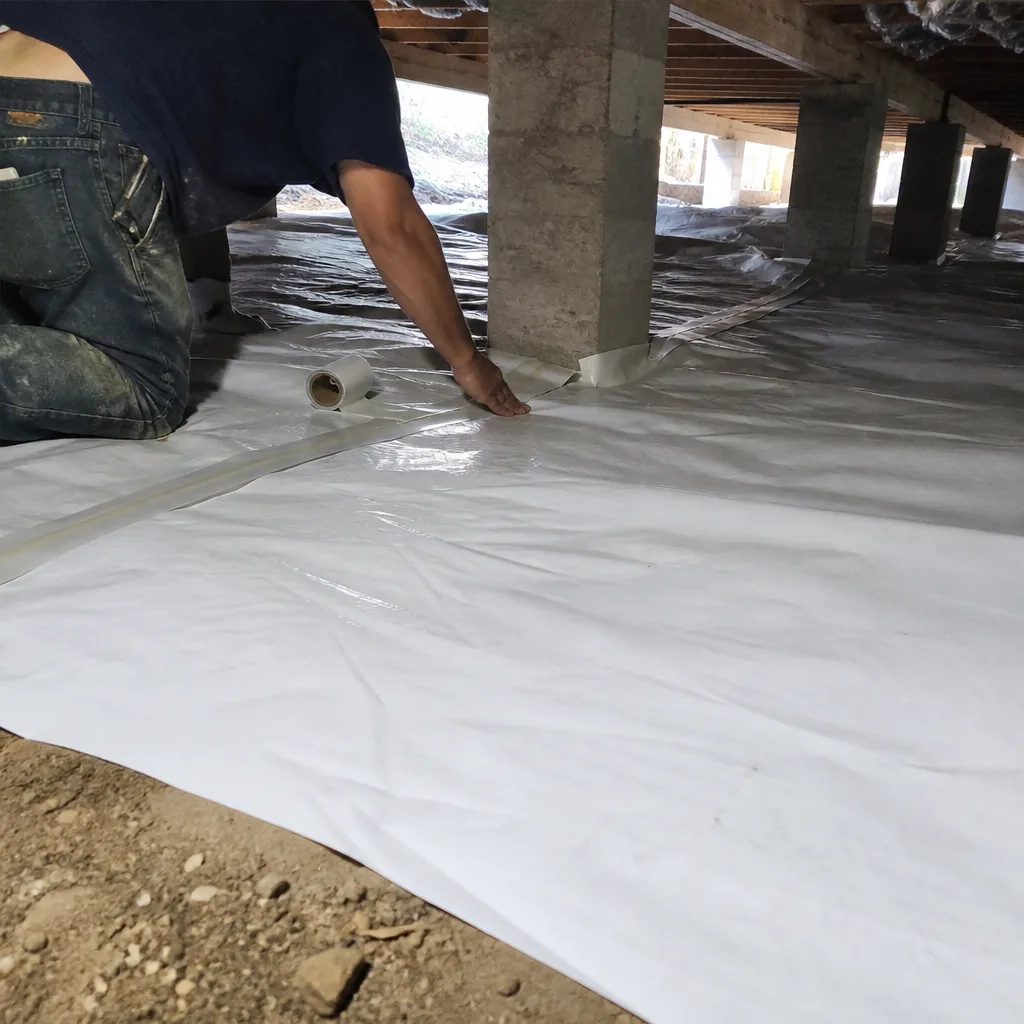
- Pier-and-beam and stepped-slab foundations introduce under-floor needs. Hillier Lost Creek lots on limestone often use foundation types rare in flat eastern Austin subdivisions. Crawl space or under-floor insulation and vapor barrier work becomes part of the envelope solution, not just the attic. We assess this during our initial inspection and include it in scope if needed.
Pricing for Attic Insulation in Lost Creek, TX
Here is what attic insulation costs in Lost Creek’s market as of 2025:
| Service | Typical Range |
|---|---|
| Attic Insulation Top-Up (air seal + blow to depth) | $1,800 - $2,800 |
| Blown-In Attic Insulation (full install, standard geometry) | $2,200 - $3,600 |
| Blown-In with Complex Geometry (cathedral, split-level) | $2,800 - $4,500 |
| Attic Insulation Replacement (remove, remediate, reinstall) | $3,200 - $5,500 |
| Baffles & Ventilation Prep (included in blown/top-up quotes) | Included |
| Free Written Estimate | $0 |
What moves the number: attic square footage, existing material condition, accessibility (standard hatch vs. multiple small accesses), whether removal is required, and whether air sealing reveals unexpected penetrations. We don’t guess. We inspect, measure, and deliver a written price before any work starts. Free Second Opinion on any written estimate from another contractor - bring us their scope and we’ll read it with you. Call (737) 252-7159 to schedule.
We Also Serve Cities Near Lost Creek
Our crews work daily across the northern and western Austin metro, including Attic Insulation in Lost Creek and surrounding areas: Leander, Cedar Park, Brushy Creek, and Jollyville. Dispatch is coordinated from our Dallas-Fort Worth office, but the trucks serving Lost Creek are stocked and routed locally.
Serving Lost Creek, TX - Our Local Coverage Area
We’re based in the Lost Creek area and know this community well. Use the map below to see our service coverage - if you’re nearby, we can almost certainly help.
FAQs - Attic Insulation in Lost Creek
Tree canopy shades your roof surface but does not stop solar radiation from heating the roof deck, and it traps humidity that makes the attic feel worse than open-lot homes with better airflow. Lost Creek attics routinely reach 140-160°F in July regardless of shade. The canopy also accelerates fiberglass settling and can foster mold on unsealed decks. We measure actual attic temperature and humidity during inspection, not guess from curb appeal. Call (737) 252-7159 for a free estimate - we’ll show you the numbers.
Yes, if we stock for the complexity. Split-levels with cathedral ceilings require specialized hose extensions, extra baffle material for irregular cavities, and often heavier-duty blowing equipment for the longer runs. On acreage properties with long service drives, we load for a full retrofit - removal, sealing, baffles, and blow - so we’re not making a second trip. Your written scope specifies the equipment and crew size, and the price is fixed before we start. Call (737) 252-7159 to schedule an inspection.
Uri exposed that R-value alone doesn’t protect plumbing in unsealed attics. Lost Creek homes with original R-11 or R-19 that had settled to effective R-6 or R-8 saw freeze damage even where heat was running. The correct spec now is air-sealed attic assemblies with insulation depth sufficient to maintain deck temperatures above freezing during extreme events - not just code minimum. We engineer for the dual extreme: 140°F summer and single-digit winter. Call (737) 252-7159 and we’ll show you the blower-door and thermal calculations.
Top-up works when existing material is structurally intact - not mold-compromised, not rodent-contaminated, not compressed to half-depth. In Lost Creek, we find this most often in homes where the original blown fiberglass has settled but the deck is clean and the humidity damage is recent. We air-seal first, install baffles, then blow to full depth. It’s less disruptive and costs $1,800-$2,800 versus $3,200-$5,500 for full replacement. If inspection shows the material is compromised, we’ll quote replacement and explain why. No work starts without a written price. Call (737) 252-7159 for an inspection.
Multi-level attic cavities, stepped slabs creating partial floors, cathedral ceiling channels that terminate in inaccessible corners, and pier-and-beam sections with no attic access at all. Flat-lot tract homes from the 2000s have uniform joist bays and a single hatch. Lost Creek’s 1970s-1990s custom builds are architectural individuals. We map each cavity with a camera, mark thermal gaps, and write a scope specific to your geometry - never a square-footage formula. Call (737) 252-7159 for a documented inspection.
Written by Wes Okafor, Owner at Envelope Insulation Co., serving Lost Creek under The Haven Standard since 2016.