

Fast, Reliable Blown-In Insulation Across Austin
Blown-in insulation in Austin typically runs $1.80 to $3.20 per square foot of attic floor, with most complete attic retrofits falling between $2,400 and $5,800 depending on the target R-value and whether air sealing is needed first. Most jobs our Blown-In Insulation crew completes in Austin are finished in a single day, and we dispatch from our Austin office to keep response times tight across the metro. We answer calls at (737) 252-7159 live, 24/7.
Austin’s not a generic Texas market. The city sits under its own energy code, enforced by Austin Energy, and the housing stock splits sharply between century-old pier-and-beam bungalows in the central neighborhoods and slab-on-grade construction from the 1980s outward. That split changes everything about how we scope a blown-in job, what materials we specify, and whether the estimate holds up once we open the attic hatch.
Why Topside Attic Insulation Leander Is Austin’s Preferred Blown-In Insulation Company
We’ve sealed and insulated more than 9,000 homes since 2016, and a growing share of that work is inside Austin city limits where the municipal energy code exceeds state minimums. Our crews know the difference before they unload the truck. A spec that passes inspection in Cedar Park can fail in Allandale. We build to the stricter standard from the first measurement so the homeowner doesn’t learn about the gap at final inspection.
Our Austin customers leave reviews that mention the blower-door numbers specifically, not vague comfort improvements. They describe getting a written price before anyone started, photos of every stage, and a documented record at closeout. The 365-Day Done Right Promise applies here the same as everywhere we work: if it’s not right, we make it right.
Response time to Austin neighborhoods runs same-day to next-day for standard bookings, and our scheduling desk texts the homeowner when the technician is en route. Under Haven Standard: Arrive on schedule, you get a named technician and a text when they are on the way.
Our Blown-In Insulation Services in Austin
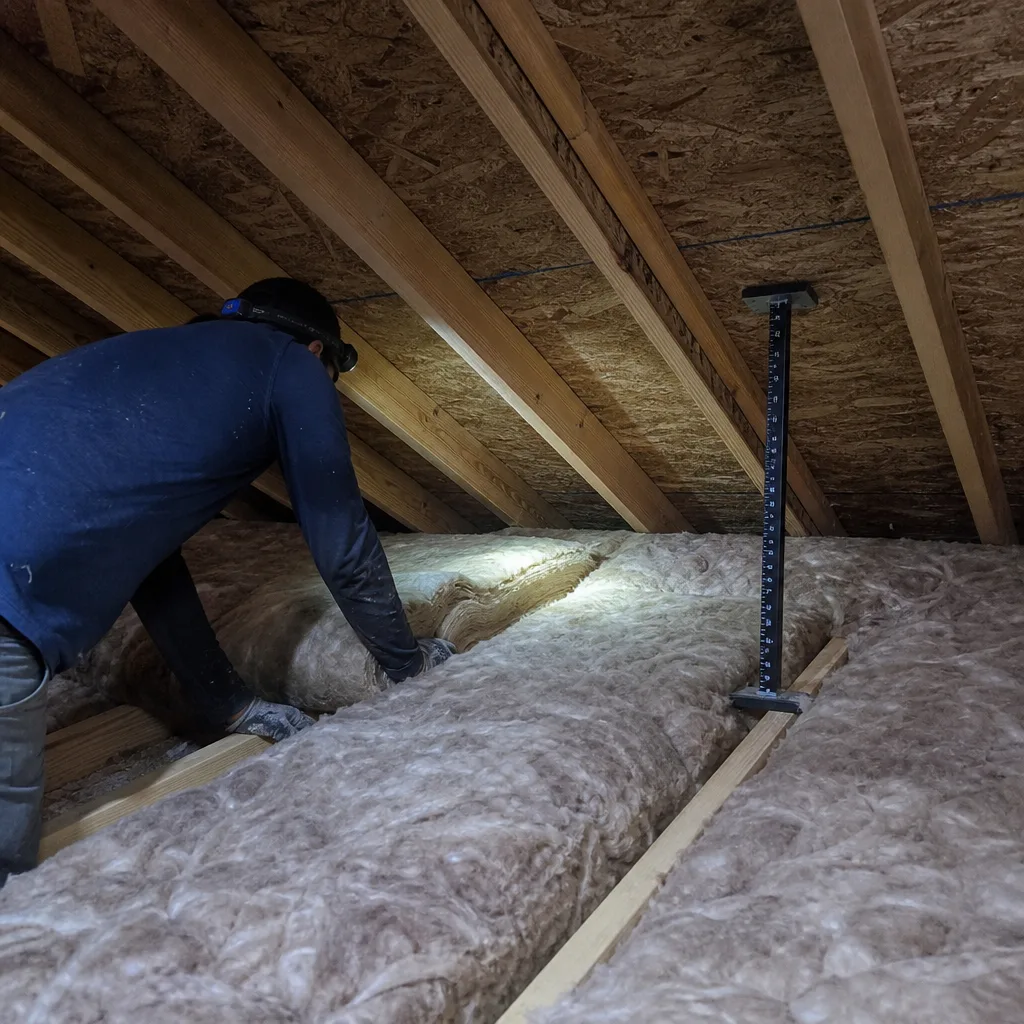
Blown-In Cellulose
We use GreenFiber cellulose on a significant share of our Austin dense-pack and attic jobs. Cellulose handles Austin’s humidity well when the attic is properly vented and the air sealing is done first, but it settles over time, especially under the 140-160°F peak attic temperatures we see through July and August. On a typical Austin attic blow, we account for settling in our depth calculation and specify a post-settlement R-value, not just the installed depth. For pier-and-beam homes in Hyde Park and Cherrywood, we often dense-pack cellulose into open wall cavities after sealing the top plates to Austin Energy’s air-leakage standard.
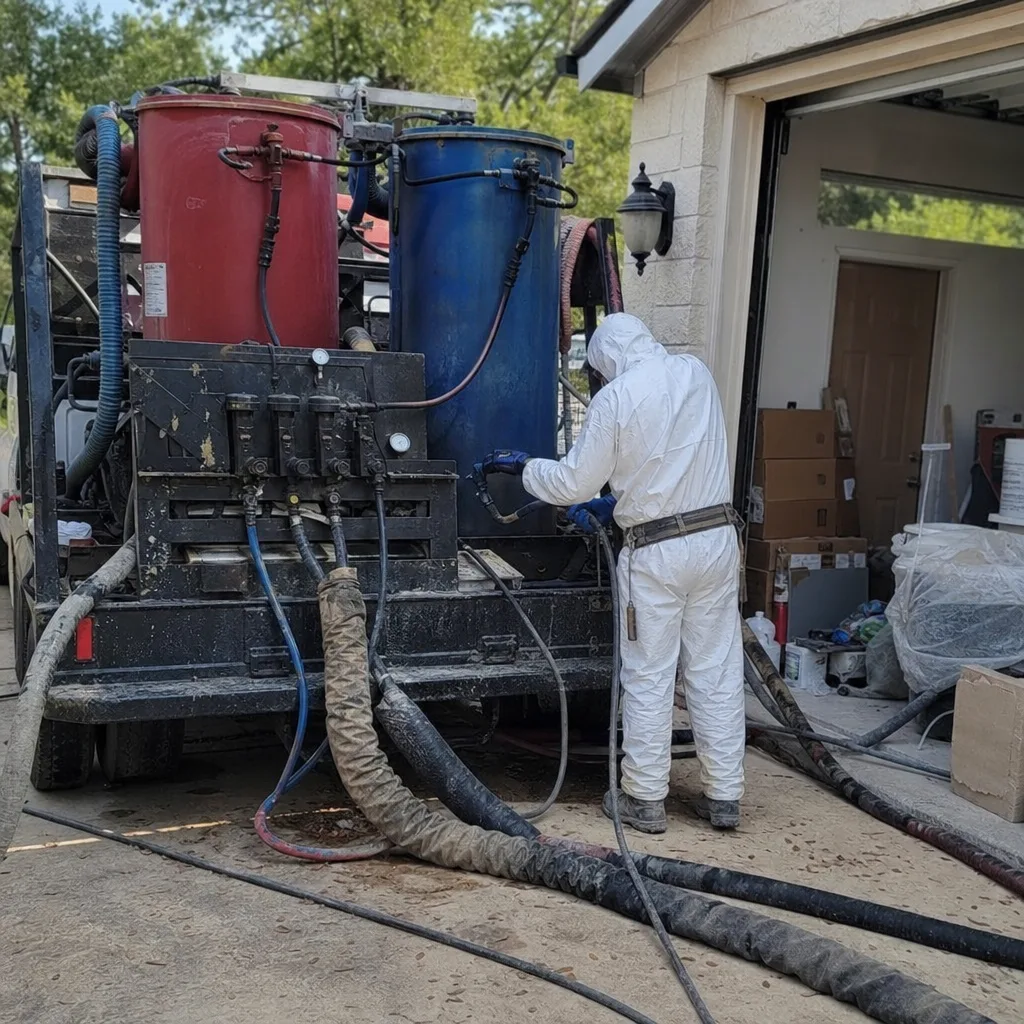
Blown-In Fiberglass
Our crews blow Owens Corning fiberglass in Austin attics where the homeowner wants a material that won’t settle appreciably and where the attic geometry favors loose-fill over batts. Fiberglass doesn’t hold moisture the way cellulose can, which matters in Austin’s spring and fall when Gulf humidity pushes in and the attic ventilation has to carry it back out. We still seal first, then insulate. No exceptions.
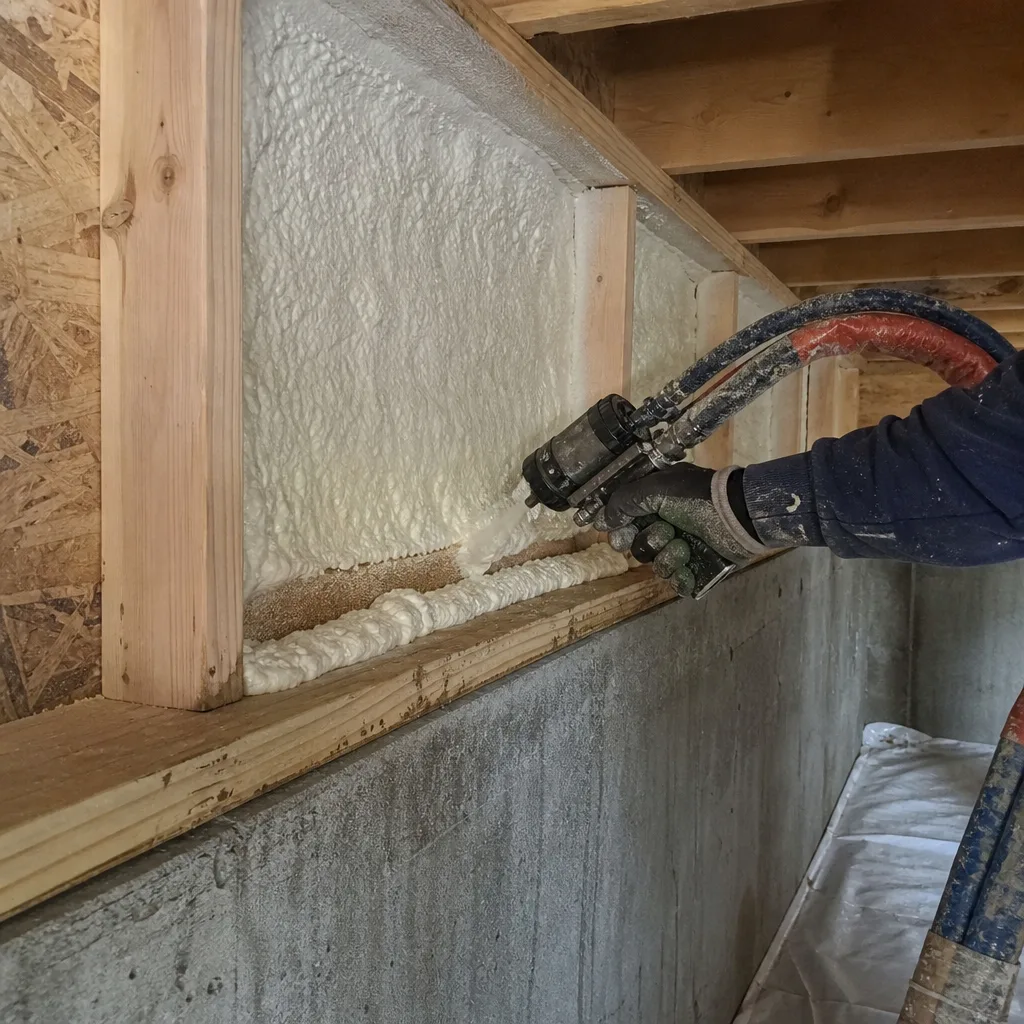
Dense-Pack Wall Insulation
This is where Austin’s older housing stock drives our schedule. In 1920s-1960s pier-and-beam bungalows throughout Crestview, Allandale, and the neighborhoods east of I-35, crews open wall cavities and find nothing, or compressed rock wool from the Truman administration, or batts that have fallen to the bottom of the stud bay. Dense-packing with GreenFiber cellulose at 3.5 pounds per cubic foot fills the cavity completely and slows air migration through the wall. Because Austin Energy requires more aggressive air sealing than the state code, we seal every penetration, electrical box, and top plate before the hose goes in. The result is a wall assembly that meets municipal inspection and performs like it.
Blown-In Top-Up
Homeowners in Austin’s 1980s-and-newer suburbs, the slab-on-grade ring around the central core, often call for a top-up when they notice the second floor running hot or the AC cycling longer. We measure existing depth, calculate the gap to target R-value, and blow Owens Corning fiberglass to fill it. But we also run a blower-door test first. A top-up over a leaky attic floor is wasted money. If the house is losing conditioned air through can lights, top plates, and duct chases, we quote the sealing work separately and in writing before we add a single bag of insulation.
What happens when you call
- 1
A real person answersNo phone trees - you reach a local pro.
- 2
You get an upfront price rangeHonest numbers before anyone is dispatched.
- 3
A background-checked tech heads outLicensed & insured, dispatched right away.
- 4
You approve before work beginsNothing starts until you say go.
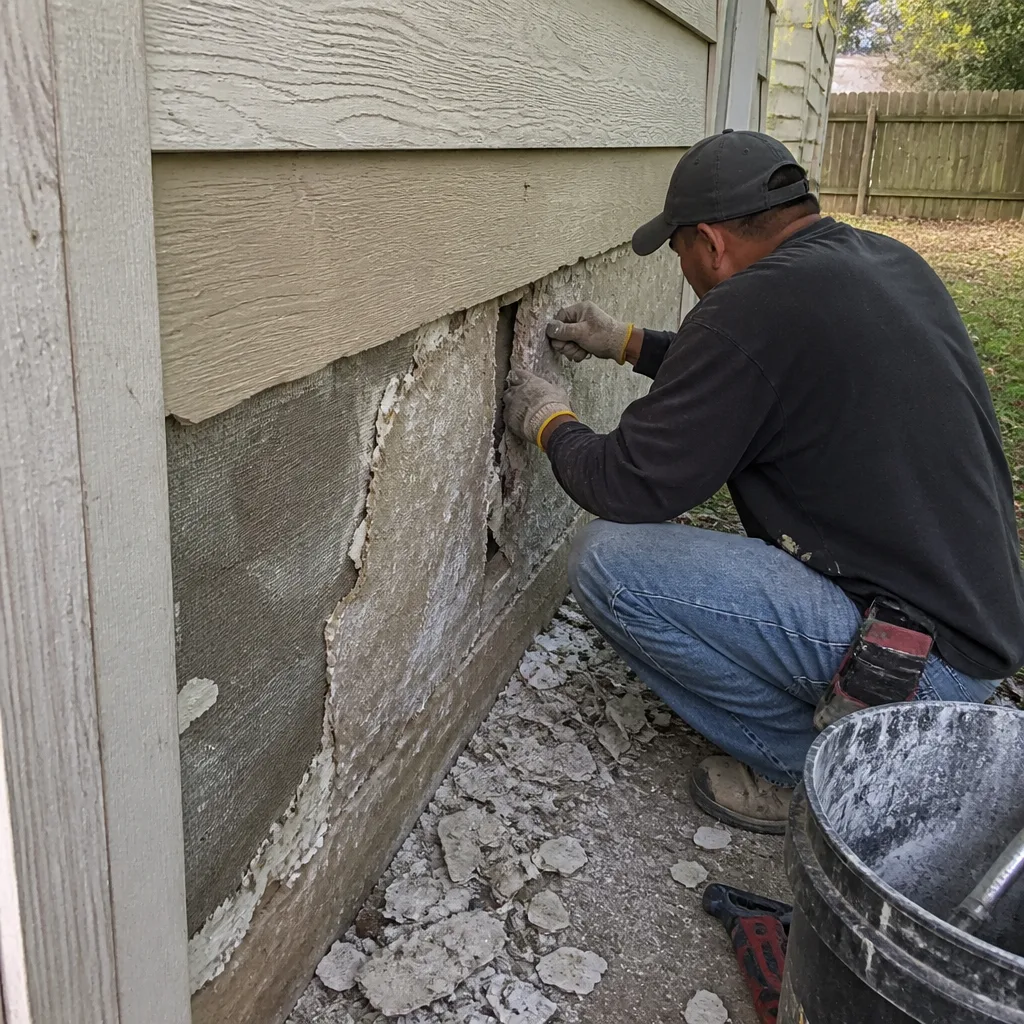 Before
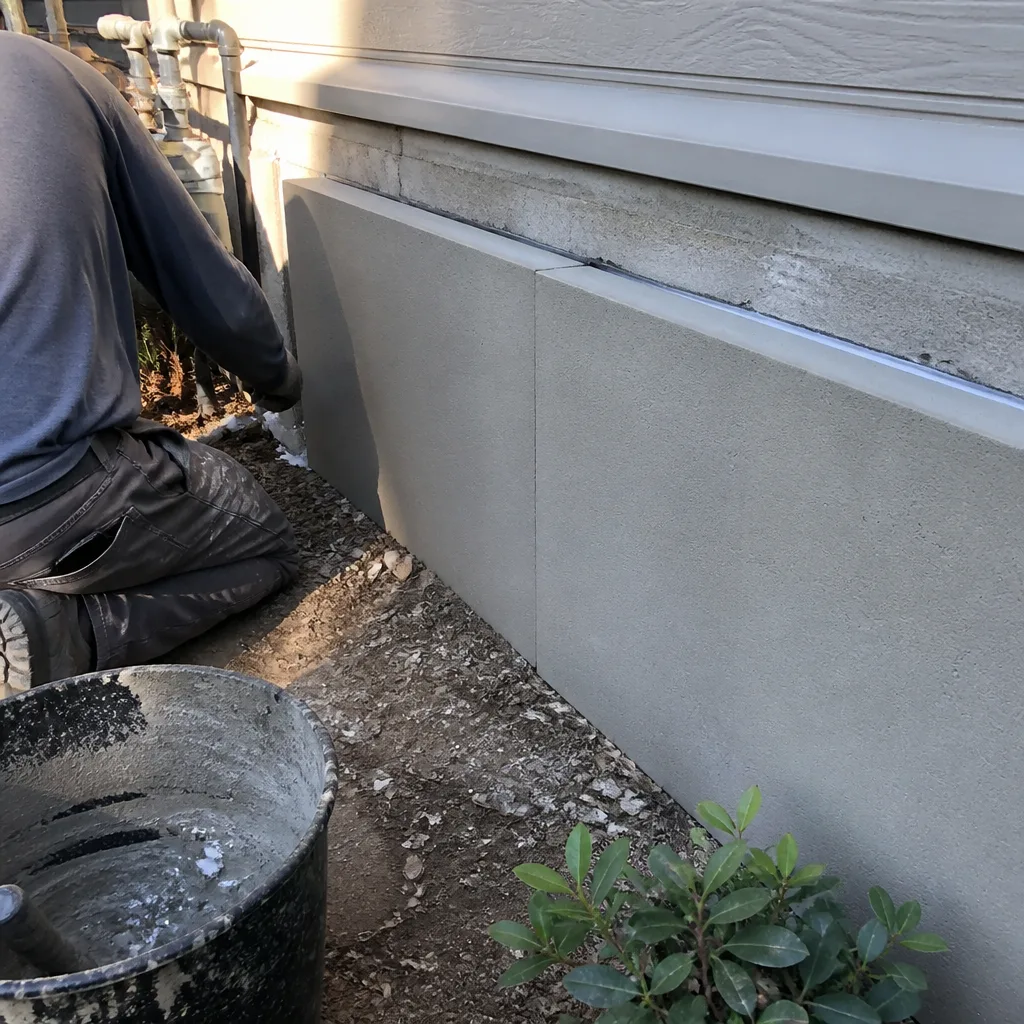 After
AfterTrusted Brands We Service in Austin
We source blown-in materials from Owens Corning, Johns Manville, GreenFiber, and Demilec, among others. No proprietary lock-in. For Austin jobs, this means we can match the material to the building, not force the building to match whatever product we stock. Our Austin warehouse carries Owens Corning fiberglass and GreenFiber cellulose in bulk, so most standard jobs don’t wait on delivery. When a Hyde Park retrofit calls for dense-pack cellulose and we need extra bags, we pull from local supply rather than shipping from a distant hub. The brands are named on the written scope before work starts, so the homeowner knows exactly what is going in.
Common Blown-In Insulation Problems We See in Austin Homes
- Settled cellulose under extreme attic heat. Blown-in cellulose that looked generous in October has compressed to a thin cap by the following August, leaving cold spots on the ceiling plane and forcing the AC to run longer. We see this most in Austin attics that hit 150°F regularly and in jobs where the original contractor didn’t account for settling in the depth spec.
- Missing air sealing in pier-and-beam construction. In Hyde Park and Cherrywood, Gulf-humidity air migrates through gaps around plumbing stacks, electrical penetrations, and unsealed top plates, degrading the blown-in fill and creating moisture issues in wall cavities. The insulation can’t do its job if the air is moving through it.
- State-minimum specs failing Austin Energy inspection. A retrofit designed to Texas state minimum R-value and air-sealing standards gets red-tagged in Austin because the municipal code demands more. We see this on transferred estimates from contractors based in Pflugerville, Round Rock, or Cedar Park who didn’t account for the stricter standard inside city limits.
- Original rock wool collapsed in floor cavities. On pier-and-beam homes off Avenue G, North Loop, and the streets around Cherrywood Coffeehouse, crews lift subfloor access and find 1940s-1950s rock wool batts disintegrated into the joist bays, with no attic insulation above. The homeowner called for an attic top-up. The scope tripled.
Pricing for Blown-In Insulation in Austin, TX
Most blown-in attic jobs in Austin run between $2,400 and $5,800 for a complete retrofit to Austin Energy’s R-value requirements, with blown-in top-ups on newer homes starting around $1,200 and dense-pack wall insulation in older bungalows adding $1,800 to $4,200 depending on cavity count and access difficulty. Here’s how Austin pricing breaks down by what we actually scope:
| Service | Typical Range in Austin |
|---|---|
| Blown-in fiberglass attic (complete, to Austin Energy R-value) | $2,400 - $4,800 |
| Blown-in cellulose attic (complete, with air sealing) | $2,800 - $5,400 |
| Blown-in top-up (existing attic, adding R-value) | $1,200 - $2,600 |
| Dense-pack wall insulation (pier-and-beam, per floor) | $1,800 - $4,200 |
| Attic air sealing + blower-door verification | $800 - $1,800 |
What moves the number: attic square footage, current insulation depth, whether air sealing is required to pass Austin Energy code, access difficulty in tight pier-and-beam crawl spaces, and whether we find surprises once we open the cavity. Every estimate is a written price before any work starts, with the scope, the warranty, and the material brand named in writing. No exceptions. Call (737) 252-7159 and we’ll schedule a free estimate, or bring us a competing written quote for a free second opinion.
We Also Serve Cities Near Austin
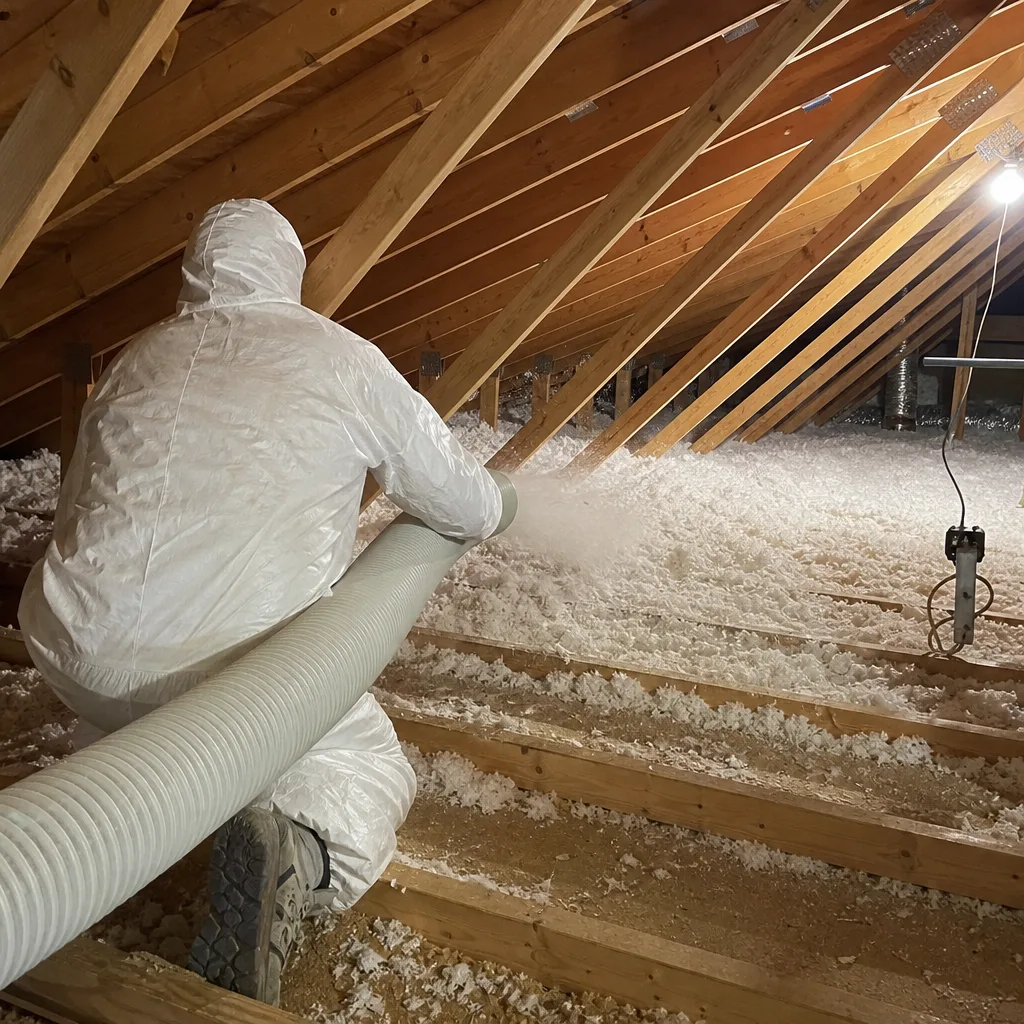
Our Austin office dispatches crews throughout the metro, including Pflugerville, Cedar Park, Round Rock, and Hutto. Work in those cities follows Texas state energy code rather than Austin Energy’s stricter municipal standard, so the same house on opposite sides of the city limit can require different specs. We scope accordingly.
Serving Austin, TX - Our Local Coverage Area
We’re based in the Austin area and know this community well. Use the map below to see our service coverage - if you’re nearby, we can almost certainly help.
FAQs - Blown-In Insulation in Austin
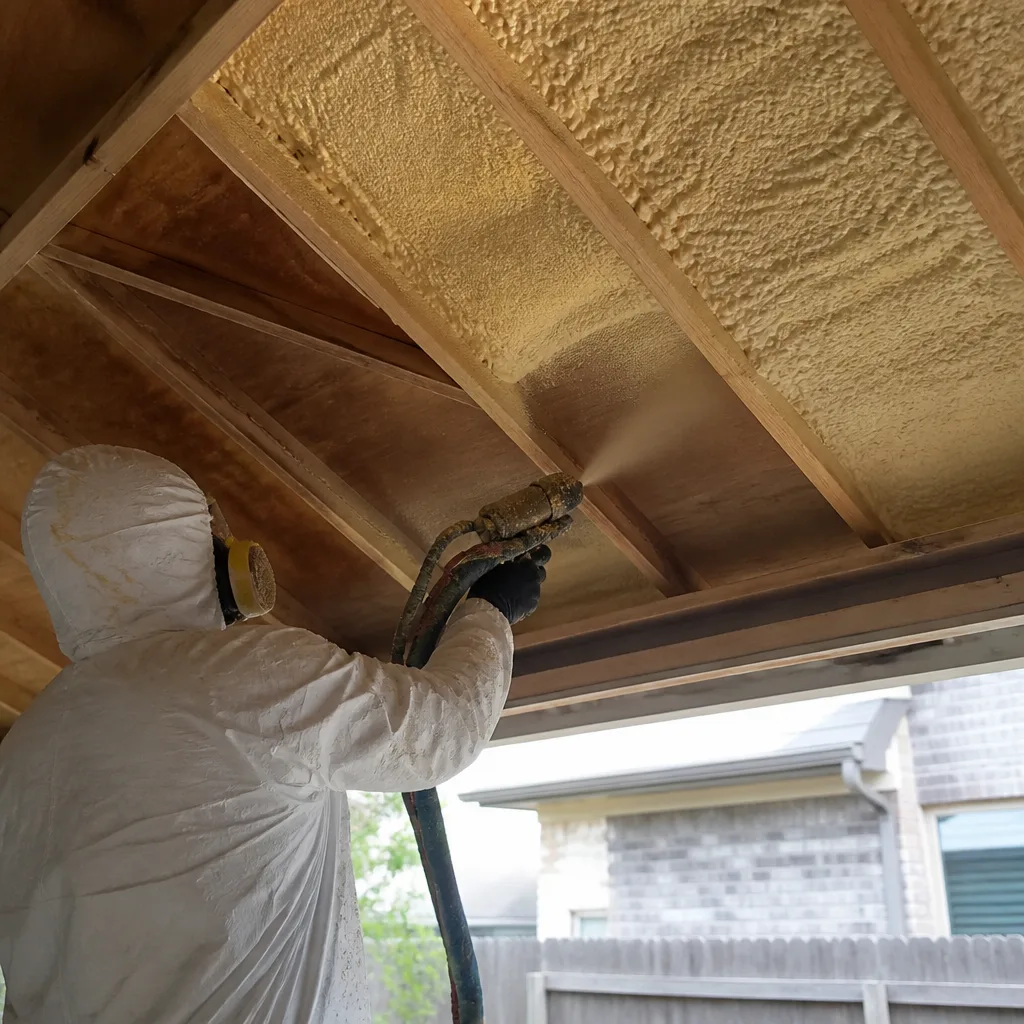
Austin Energy enforces its own building energy code that exceeds Texas state minimums on both R-value and air-sealing requirements. A blown-in attic spec that passes inspection in Pflugerville or Round Rock can fail inside Austin city limits, typically on attic R-value and the completeness of air sealing around penetrations. We build to the stricter Austin Energy standard on every job inside city limits, and we verify with a blower-door test when applicable. Call (737) 252-7159 for a written estimate that specifies which code standard applies to your address.
On pier-and-beam homes built from the 1920s through the 1960s in Hyde Park and Cherrywood, we find collapsed original insulation or empty cavities roughly half the time we open a floor or wall. On a 1950s bungalow off Avenue G in Hyde Park, our crew pulled subfloor access and found original rock wool batts collapsed into the joist bays with no attic insulation above. Because Austin Energy code requires air-sealing beyond the state minimum, we dense-packed the wall cavities with GreenFiber cellulose, sealed every top plate and penetration, then blew Owens Corning fiberglass across the attic to the stricter municipal R-value - turning what the estimate called an attic top-up into a full multi-zone retrofit. We always price the full scope in writing before starting, so the homeowner sees the real number, not a low opener with surprises later.
Fiberglass settles less than cellulose under sustained extreme heat, so Owens Corning blown-in fiberglass tends to maintain its installed depth longer in Austin’s peak summer attics. Cellulose performs well when properly specified with settling allowance and adequate ventilation, and we often prefer it for dense-pack wall cavities where the temperature swing is narrower. The material choice depends on the specific assembly and the performance target, not a one-size-fits-all rule. We name the brand and type on the written scope before work starts.
Blown-in insulation alone does not handle Austin’s humidity. The city sits at the seam between Gulf Coast moisture and the drier Edwards Plateau, so vapor management and air sealing are year-round concerns, not seasonal afterthoughts. Unsealed top plates, can lights, and duct chases let humid air migrate into cavities, degrading the insulation and creating conditions for mold. We seal first, then insulate. Every time. The blower-door test before and after shows the difference in a single number.
We use Owens Corning and Johns Manville for blown-in fiberglass, GreenFiber for cellulose dense-pack and attic blow jobs, and Demilec for spray-foam applications where the assembly calls for it. No proprietary lock-in, no mystery materials. The brand and product are named on the written scope before anyone starts, and we source from local supply to avoid delivery delays on Austin jobs. Call (737) 252-7159 if you want a specific brand or have questions about what performs best in your building type.
Ready to get a written price before any work starts? Call (737) 252-7159 for a free estimate on blown-in insulation in Austin. We’ll schedule a site visit, run the diagnostics, and deliver a flat price with the scope, warranty, and material brand in writing. Free second opinions on any competing written quote.
Written by Wes Okafor, Owner at Topside Attic Insulation Leander, serving Austin since 2016 under The Haven Standard.