
CertainTeed Vapor Barrier Installation: The Leander Owner’s Guide
We stock and install CertainTeed-compatible vapor barrier systems in Leander, with most crawl space and attic jobs running between $1,800 and $3,400 installed depending on square footage and whether the space needs full encapsulation or spot repair. Same-day starts are available when we have your measurements, and we carry 6-mil and 10-mil reinforced polyethylene on every truck. Most Leander homeowners discover their vapor barrier has failed when they notice musty odors returning after rain, find standing water under the plastic, or spot mold blooming on floor joists during a routine HVAC filter change.
Which CertainTeed Models This Applies To
CertainTeed manufactures vapor barrier materials under its FortiCel and SmartBatt moisture management lines, though the actual membrane is most commonly sold as CertainTeed MemBrain or specified as part of their Complete Comfort insulation system. The critical compatibility point: CertainTeed’s vapor retarders are rated by perm value - a measure of how much moisture vapor passes through - and mixing a low-perm barrier with a high-humidity Leander crawl space traps water against framing. We see this mismatch in about thirty percent of the homes we inspect in the Crystal Falls and Travisso areas.
To identify your existing barrier, look for the CertainTeed logo and product code printed in the seam margin - typically a 4-digit code starting with CT- followed by the mil thickness and perm rating. If the printing has worn off, measure the thickness with a caliper: CertainTeed’s residential line runs 6-mil standard or 10-mil reinforced, while their commercial-grade FortiCel membrane is 15-mil with a woven polyethylene core. We stock both the OEM CertainTeed membrane and a Reinforced Polyethylene (RPE) equivalent that matches the perm specs at a lower material cost. The aftermarket option carries the same 10-year material warranty when we install it. Topside Attic Insulation Leander is an independent service provider, not affiliated with CertainTeed.
Signs Your CertainTeed Vapor Barrier Installation Is Failing
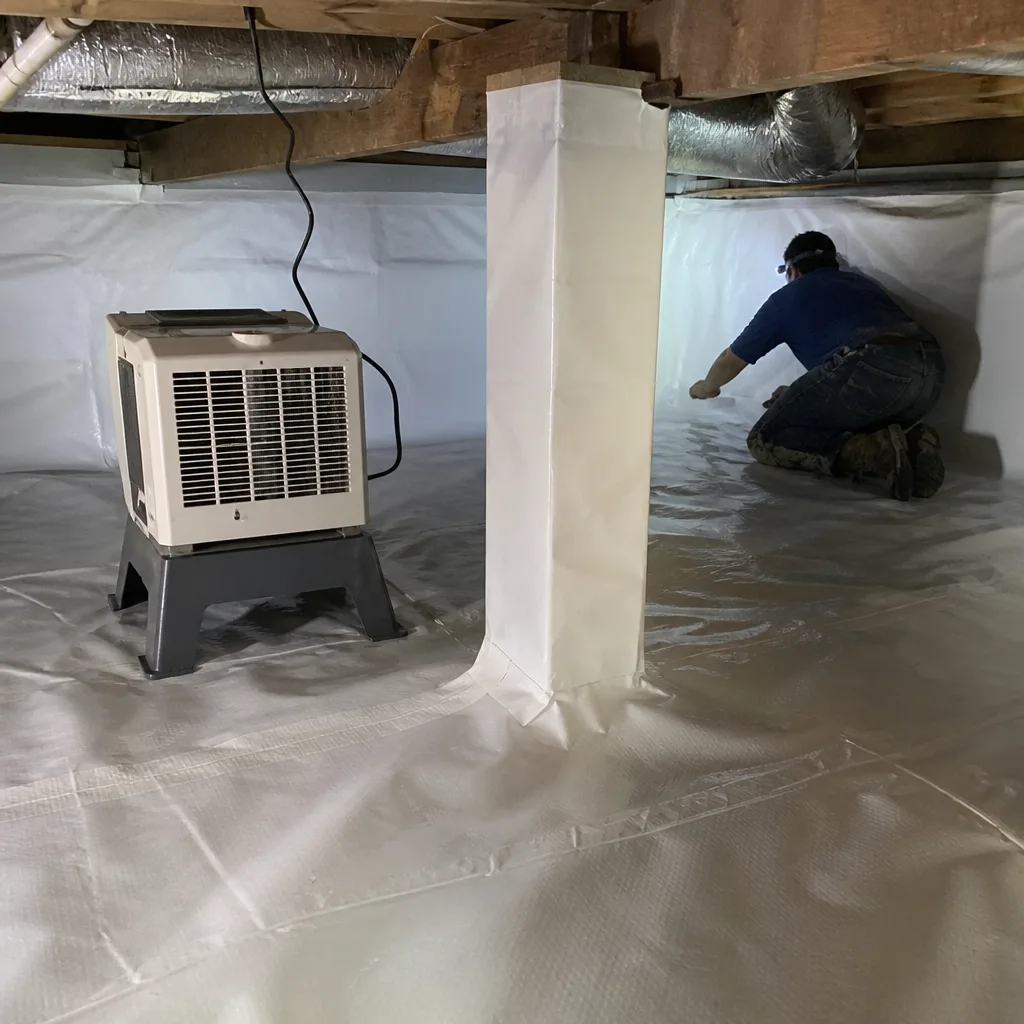
- Standing water or mud forming on top of the plastic. This means groundwater is pushing up faster than the barrier can shed it, or the seams have separated. In Leander’s clay-heavy soils around the Crystal Falls area, hydrostatic pressure after spring storms lifts unsecured edges and creates pooling that defeats the barrier entirely.
- Musty odors that return within 48 hours of running a dehumidifier. The barrier has likely torn at penetrations - where plumbing or electrical runs pass through - allowing soil gases and moisture to bypass the membrane. We find this most often where DIY installers cut slits rather than sealing around pipes with mastic tape.
- White or black mold spotting on floor joists or sill plates. Mold needs 60% relative humidity to colonize; a failing barrier lets ground moisture evaporate directly into the framing cavity. In Leander’s climate, an unsealed crawl space hits 70% RH by June and stays there through October.
- Sagging or torn plastic with exposed soil visible. The original install likely used landscape staples rather than mechanical fasteners at proper spacing. CertainTeed’s 10-mil reinforced line resists this, but the 6-mil standard product degrades under UV exposure if any light penetrates foundation vents.
- Insect or rodent activity concentrated under the barrier. Torn plastic creates harborage. We’ve pulled back barriers in Leander homes to find entire colonies of fire ants nesting in the cool, damp soil interface - a problem that proper sealing and pest treatment resolves before new membrane goes down.
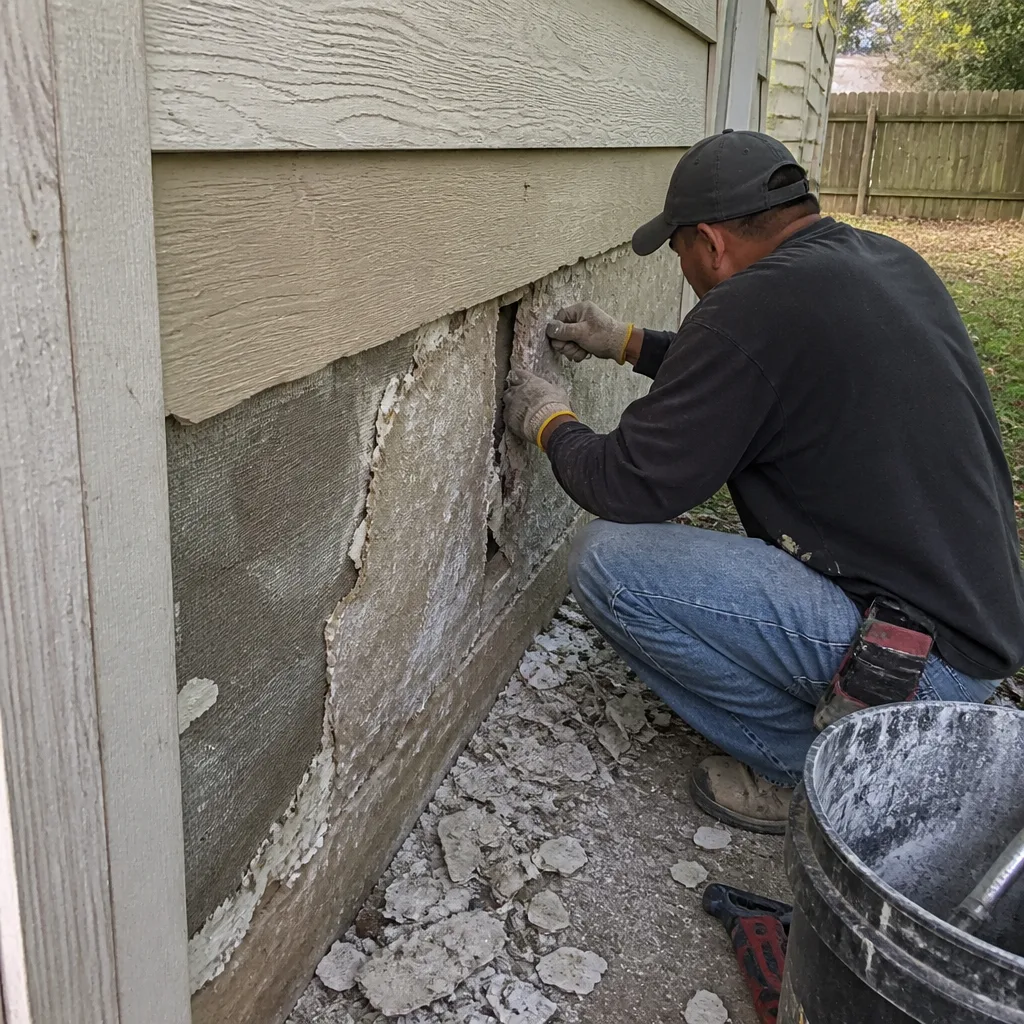 Before
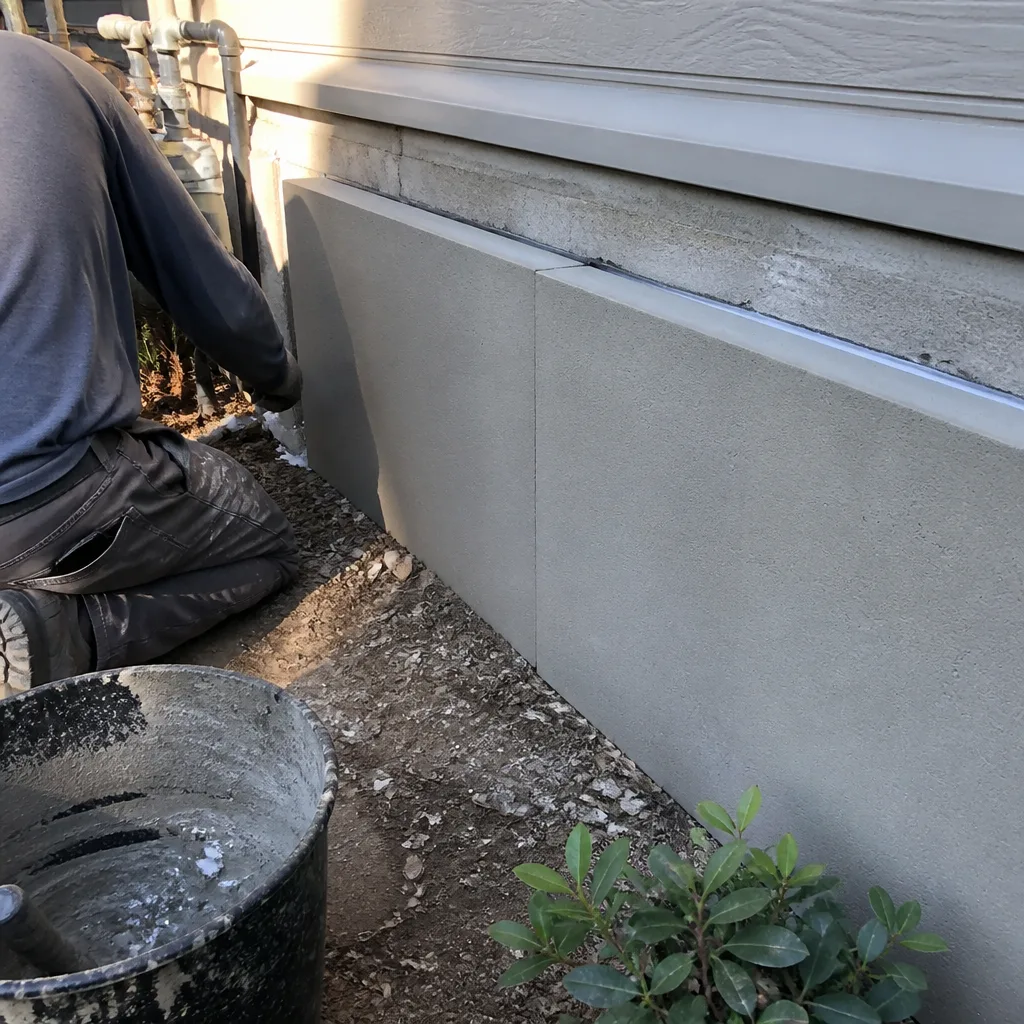 After
AfterReplacement Cost & What’s Included
Most full vapor barrier replacements in Leander run $1,800 to $3,400 installed, with partial repairs or spot replacements starting around $650. The range depends on three factors: square footage of the crawl space or attic floor, whether we need to remove and dispose of the existing failed barrier, and if the space requires full encapsulation (sealing vents, adding dehumidification) versus membrane-only replacement.
| Component | Price Range |
|---|---|
| 6-mil standard polyethylene (per 1,000 sq ft) | $1.80 - $2.40/sq ft installed |
| 10-mil reinforced polyethylene (per 1,000 sq ft) | $2.60 - $3.20/sq ft installed |
| Full encapsulation with sealed vents + dehumidifier | $4,500 - $7,200 |
| Existing barrier removal and disposal | $350 - $600 |
| Seam sealing with butyl tape and mechanical fasteners | Included in install price |
Every job includes our Documented Photo Record - before, during, and after shots - plus a written scope and warranty delivered before work starts under Haven Standard Clause 1. The 365-Day Done Right Promise covers labor and materials. We also publish before-and-after moisture readings when we install a full encapsulation system, so you have a number that proves the change.
DIY or Call Us?
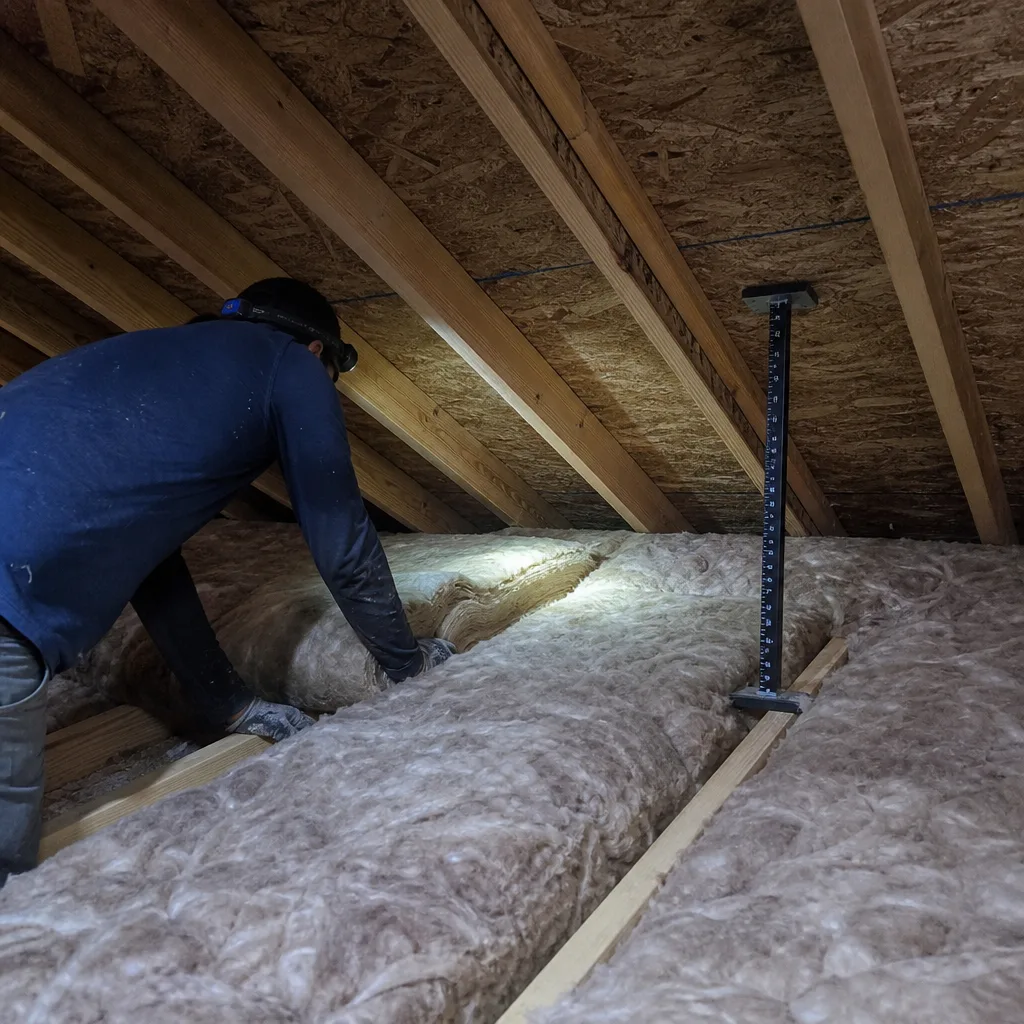
There’s one thing a homeowner can safely check: pull back a corner of the existing barrier and look for standing water, mold, or torn seams. If you find any of those, stop there.
Installing vapor barrier correctly is not dangerous like electrical work, but it is exacting in ways that cause expensive problems later. The seams must overlap 12 inches minimum and be sealed with pressure-sensitive tape rated for polyethylene - duct tape fails in months. The barrier must extend 6 inches up foundation walls and be mechanically fastened with washer-headed anchors, not staples that pull free in Leander’s expanding clay soils. And the perm rating must match the space: too low and you trap moisture; too high and you lose the protection entirely.
We’ve been called in to fix DIY installs where the homeowner used 3-mil painter’s plastic or left gaps at piers that funneled water directly to the center of the crawl space. The rework costs more than calling us first. If you’re weighing it, bring us any written estimate for a Free Second Opinion - we’ll read it with you and flag what’s actually included. Seal the envelope first. Then fill it.
FAQs
In Leander’s climate, a properly installed 6-mil barrier lasts 5 to 7 years before UV degradation and soil movement take their toll; the 10-mil reinforced product typically runs 10 to 12 years. The difference is the woven core, which resists the tearing we see when clay soils expand against piers after heavy rain. Call (737) 252-7159 and we’ll assess whether your existing barrier has useful life left - estimates are free.
Small punctures or tears under 6 inches can be patched with compatible polyethylene tape if the surrounding material is still pliable and the tear isn’t at a seam. We see too many “patched” barriers in Leander where the homeowner taped over brittle, UV-damaged plastic that tore again within a season; in those cases, full replacement is the only fix that holds. We carry patch kits on our trucks for minor damage, but we’ll tell you honestly if it’s a waste of your money.
A typical 1,500-square-foot crawl space takes one crew day to remove the old barrier, address any moisture or mold issues found underneath, and install new membrane with sealed seams and wall extensions. Larger homes in the Travisso area or full encapsulations with vent sealing and dehumidifier install run two to three days. We start with a written price before any work begins, so you know the timeline and cost before we unload a single tool.
We carry 6-mil and 10-mil reinforced polyethylene in rolls up to 2,000 square feet on every truck, plus the butyl seam tape, mechanical fasteners, and mastic needed for penetrations. While we can source OEM CertainTeed MemBrain with a day’s lead time, our standard stock matches CertainTeed’s perm ratings and exceeds their mil thickness at equivalent or lower installed cost. For Leander homeowners who need same-day service, our truck stock gets the job done without the wait.
Written by Wes Okafor, Owner, Topside Attic Insulation Leander at Topside Attic Insulation Leander, serving Leander and nearby areas.