
Icynene Attic Air Sealing: The Leander Owner’s Guide
Most Icynene attic air sealing jobs in Leander run between $1,800 and $3,400 installed, depending on attic square footage and how many top plates, can lights, and penetrations need sealing. We stock Icynene-compatible open-cell foam, gasketed covers, and fire-rated caulk on every truck, and we can usually inspect and seal the same day you call. Homeowners typically figure out something’s wrong when their summer electric bill jumps $80-$150, rooms stay hot despite the AC running nonstop, or they feel a draft pulling from recessed lights in the ceiling below the attic.
Which Icynene Models This Applies To
Icynene produces several foam formulations, but attic air sealing in Leander homes most commonly involves Icynene Classic Plus (open-cell, 3.5 lb density) and Icynene ProSeal (closed-cell, 2.0 lb density) applied to top plates, electrical penetrations, and chase openings. The part you actually need replaced isn’t always foam itself. Often it’s the gasketed light covers (Tenmat or equivalent), fire-rated caulk around flues, or the foam dam at attic access hatches that has cracked or pulled away from the substrate.
To identify what you’ve got, look for the Icynene batch label on any exposed foam. It’ll show a date code, density spec, and installer certification number. If your home was built between 2015 and 2022 in Leander’s Crystal Falls, Travisso, or Bryson neighborhoods, there’s a fair chance we sealed it originally. We can cross-check our records. For aftermarket versus OEM: Icynene does not manufacture gasketed covers or fire caulk themselves. We source compatible Tenmat covers, 3M Fire Block Foam, and Hilti CFS-S SIL silicone from the same distributors Icynene-certified installers use. The compatibility gotcha is can light diameter. Tenmat covers come in 6-inch, 7-inch, and 8-inch nominal sizes, but the actual cutout in your drywall determines fit, not the housing label. We measure with a sizing ring before quoting.
Signs Your Icynene Attic Air Sealing Is Failing
- Hot rooms directly below the attic, especially in afternoon sun. Air leaks bypass the insulation entirely. In Leander, where attic temperatures hit 140°F by July, a 200 CFM50 leak path at a top plate dumps that heat straight into your conditioned space faster than R-38 fiberglass can stop it.
- Dust streaking around ceiling registers or can light trim. This is the “filter” effect. Your attic is pulling conditioned air up through gaps, and the drywall edge traps airborne particles. We see this most in newer Leander builds where the builder skipped sealing before blowing cellulose.
- Ice damming or condensation on roof decking in winter. Warm, moist interior air hits cold sheathing. The moisture condenses, then freezes. Icynene foam itself doesn’t fail here; the failure is at the foam-to-substrate bond or at unsealed penetrations the original crew missed.
- Spikes in electric usage that track with outdoor temperature, not occupancy. Your HVAC runs longer to replace air that’s already been cooled. A blower-door test - a pressurization reading that shows, in one number, how much air your building envelope is losing - will typically show 3,500 CFM50 or higher in a Leander home with failed attic sealing.
- Can lights that flicker or have short bulb life. Heat from the attic overloads the LED driver or trim thermal protector. The root cause is almost always an unsealed housing leaking 120°F air downward, not an electrical fault.
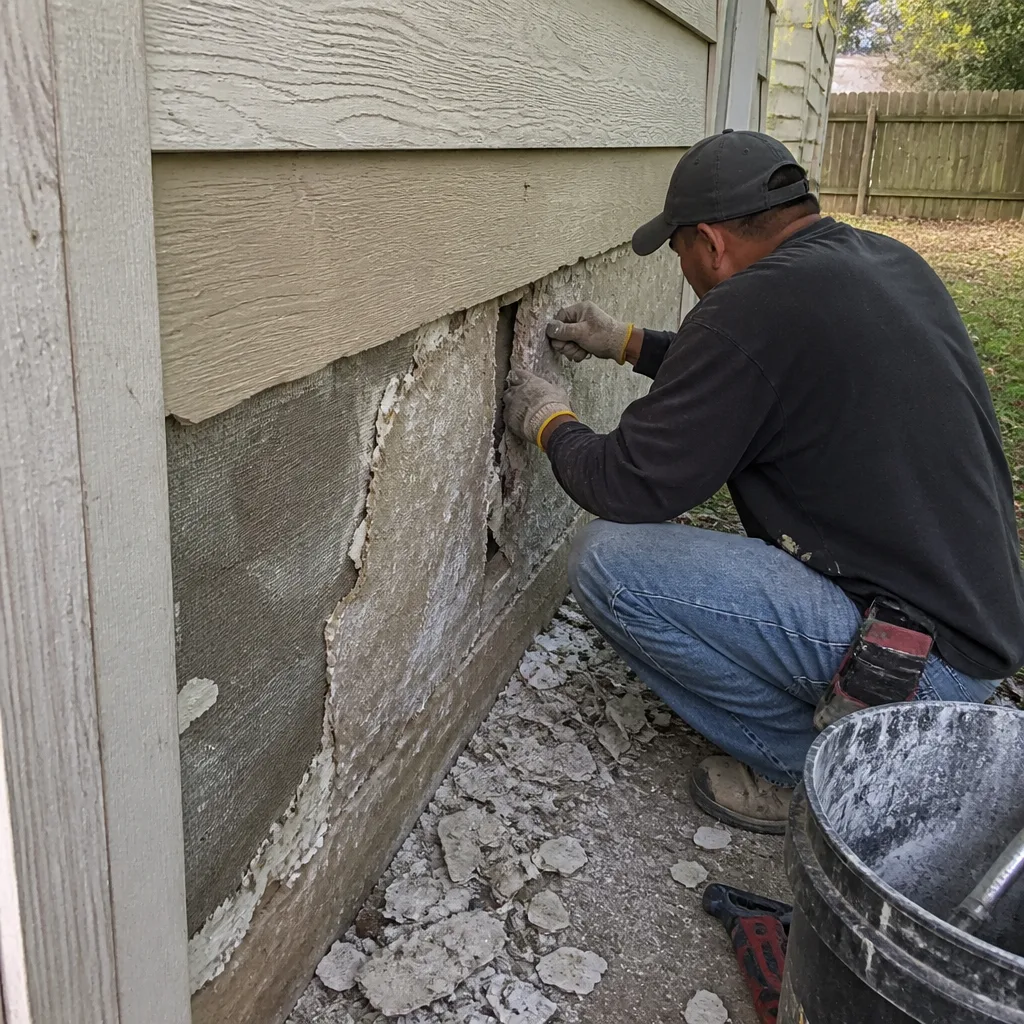 Before
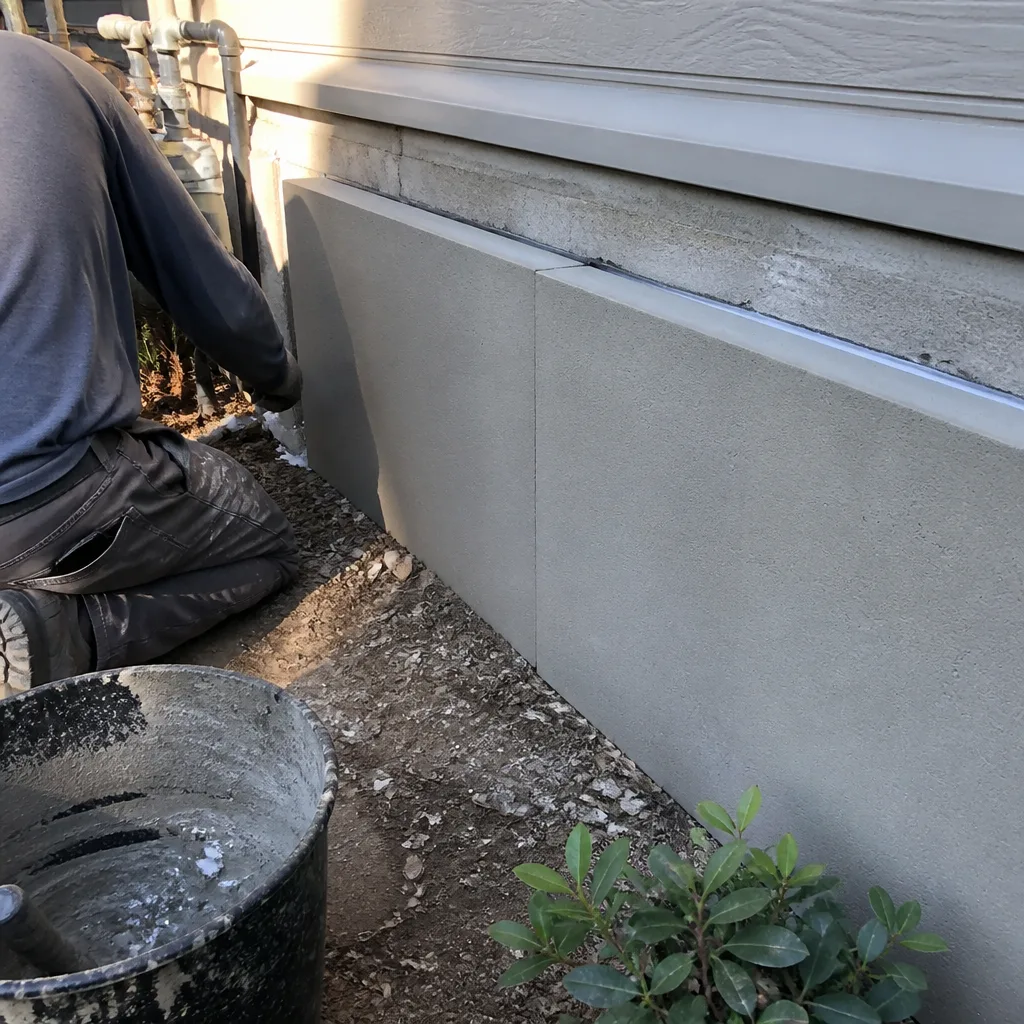 After
AfterReplacement Cost & What’s Included
| Scope | Typical Range in Leander |
|---|---|
| Attic air sealing only, up to 1,500 sq ft attic | $1,800 - $2,600 |
| Attic air sealing, 1,500-2,500 sq ft | $2,400 - $3,400 |
| Can light gasketed covers (per unit, installed) | $45 - $85 |
| Fire-rated caulk at flue/chase (per penetration) | $120 - $200 |
| Attic access hatch rebuild with foam dam | $280 - $450 |
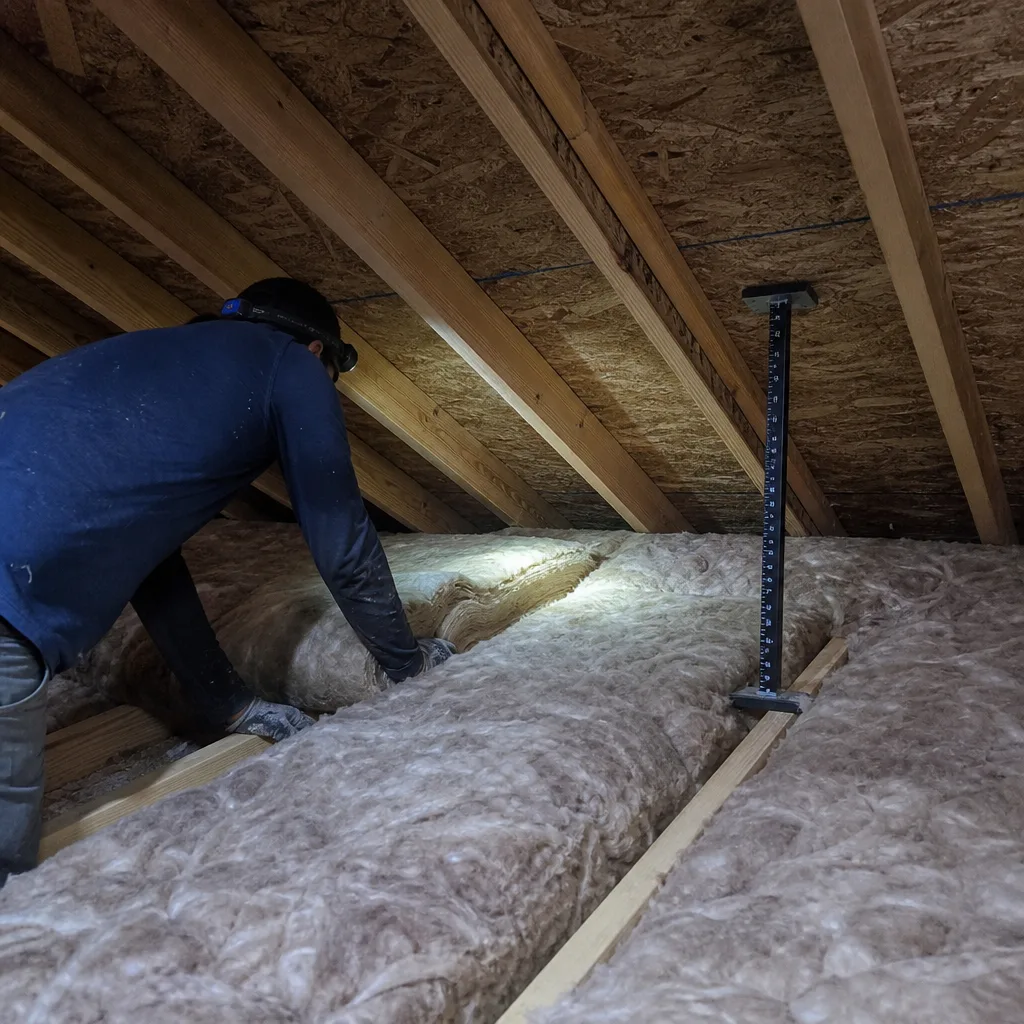
What drives the range: attic square footage, accessibility (truss height, existing insulation depth), and how many penetrations need individual treatment. A 2018 Leander build with blown cellulose already in place takes longer because we move material, seal, then replace it to original depth. We verify that depth with a calibrated ruler card on every job. Every quote is a written price before any work starts, per Haven Standard Clause 1. The 365-Day Done Right Promise covers labor and materials. You also get a Documented Photo Record and, on applicable jobs, before-and-after blower-door readings so you can verify the performance change.
DIY or Call Us?
Here’s what you can safely check yourself. Turn off your HVAC fan, close all windows, and hold a lit incense stick near can lights, attic hatches, and top plate seams. A steady pull toward the ceiling means a leak. You can also visually inspect foam dams for cracking or detachment. What you should not do: apply new foam over old without diagnosing why the original seal failed (moisture, incompatible substrate, or thermal cycling). And do not remove old foam from around active flues or recessed housings without confirming power is off and clearances are maintained. Fire-rated assemblies are exactly that for a reason.
The real risk in DIY attic air sealing isn’t injury; it’s spending a Saturday and $400 in materials to achieve a 5% reduction in leakage when a blower-door-guided approach would have found the actual dominant leak paths. We’ve been called in after DIY jobs in Leander where the homeowner sealed every visible crack but missed the balloon-framing chase that was moving 40% of the total air. Seal the envelope first. Then fill it. Call (737) 252-7159 and we’ll run the diagnostics before quoting.
FAQs
Properly applied Icynene foam itself is stable for decades, but the air seal depends on the full assembly. In Leander’s heat-cycling climate, gasketed covers and fire caulk typically need inspection at 10-15 years, and foam dams at attic hatches can crack from repeated foot traffic in 5-8 years. We check these during any service call and note condition in your documented record. Call (737) 252-7159 for a no-charge visual inspection if you’re unsure.
Patching works for small, isolated gaps in otherwise sound foam, but not for failed adhesion across a top plate or degraded gasketed covers. A patch in the wrong place can trap moisture or create a hard spot that cracks again in the next thermal cycle. We assess whether repair or full replacement makes sense during our inspection, and we tell you which before writing the price. Call (737) 252-7159 for an exact recommendation.
Most attic air sealing jobs in Leander finish in one day. A typical 2,000 square foot attic with 8-12 can lights, two flue penetrations, and an access hatch takes 6-8 hours of crew time. We run the blower-door test before and after so you see the CFM50 drop in real numbers. Same-day start is usually available if you call before noon.
We stock Icynene-compatible open-cell and closed-cell foam, Tenmat gasketed covers in all common sizes, fire-rated caulk and foam, and gasket material for hatch rebuilds. We are an independent service provider, not affiliated with Icynene, and we also stock Reflectix radiant barrier products. If your job requires a specific Icynene formulation we don’t carry, we source it for next-day install. Call (737) 252-7159 to confirm what’s on the truck today.
Topside Attic Insulation Leander is independently owned and operated under The Haven Standard since 2016. We also carry Reflectix parts and materials.
Written by Wes Okafor, Owner, Topside Attic Insulation Leander at Topside Attic Insulation Leander, serving Leander and nearby areas.