
Johns Manville Attic Air Sealing: The Leander Owner’s Guide
We stock and install Johns Manville-compatible attic air sealing components in Leander, with most repair or replacement jobs running between $280 and $650 installed. Same-day service is available when the part is on our truck, which it usually is for the common JM top-plate gasket, penetration seal, and attic hatch weatherstrip sizes. Most Leander homeowners discover a failure when their upstairs rooms won’t hold temperature despite good insulation depth, or when they spot daylight through the attic floor during a routine storage trip.
Which Johns Manville Models This Applies To
Johns Manville doesn’t sell attic air sealing as a standalone branded system the way they sell batts or blown-in fiberglass. What we’re talking about are the JM-compatible sealing components used in attics where JM insulation is already in place: poly gasket material for top plates, acoustical sealant for electrical and plumbing penetrations, rigid foam plugs for can light housings, and weatherstripping for attic access hatches. The compatibility question isn’t about a model number on a sticker; it’s about matching the material to the existing JM insulation type and depth.
If your attic has JM Spider blown-in fiberglass at R-38 or R-49 depth, the top-plate gasket needs to compress to roughly 3/8-inch finished thickness without displacing the insulation above it. JM’s batts, particularly the formaldehyde-free line, run a half-inch thicker per labeled R-value than Owens Corning equivalent, so the gasket selection changes. We carry both the gray JM-spec closed-cell gasket and the aftermarket equivalent from Reflectix; the aftermarket saves about $40 on material but we default to JM-spec on jobs where the existing insulation is still in warranty. Check the insulation bag remnants in your attic for the “JM” logo and R-value stamp, or look for the pinkish-white Spider product versus the yellow tone of competing brands.
Topside Attic Insulation Leander is an independent service provider, not affiliated with Johns Manville.
Signs Your Johns Manville Attic Air Sealing Is Failing
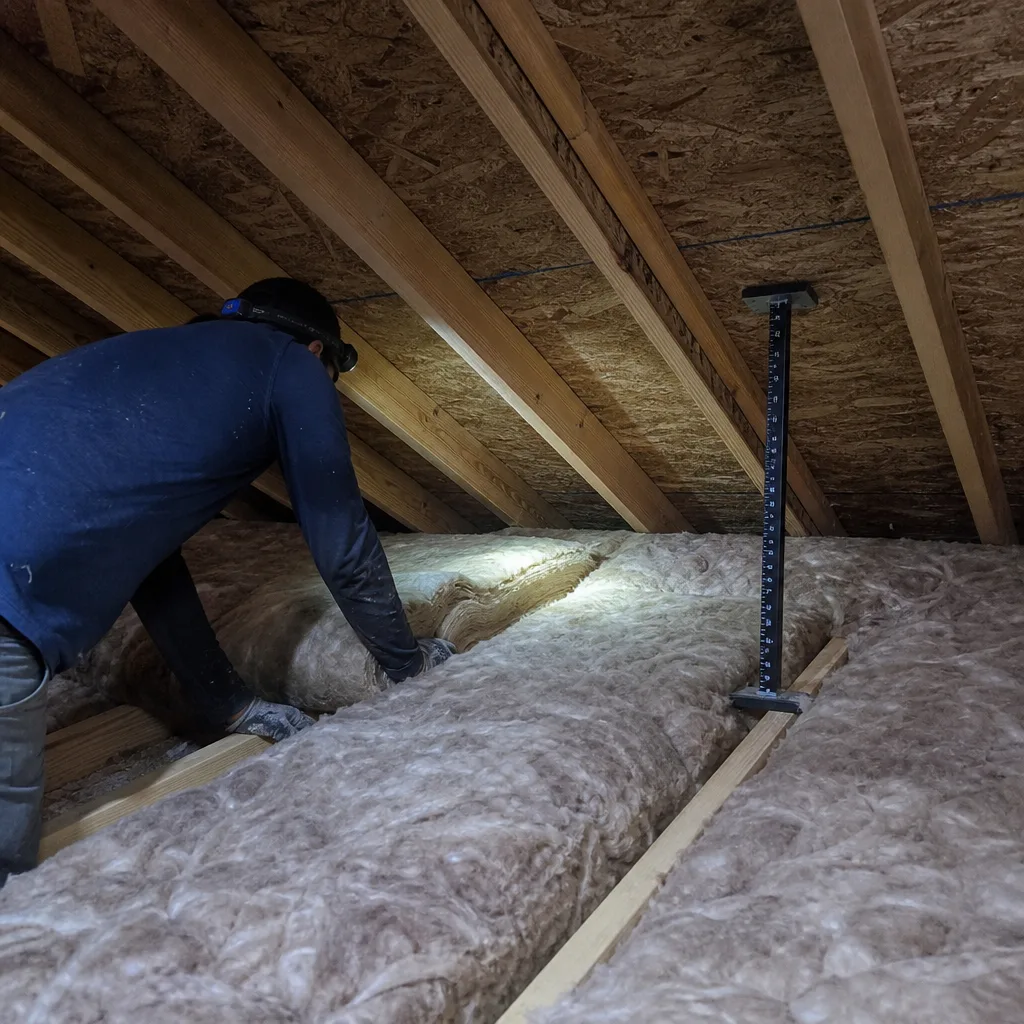
- Upstairs rooms heat up by 2 p.m. and don’t recover until after dark. This is the thermal bypass pattern. Conditioned air leaks out through the attic floor faster than your HVAC can replace it, and the leak path is almost always at the top plates or penetrations where the original sealant has shrunk or the gasket has compressed past recovery. We see this in Leander’s Crystal Falls neighborhood on homes built 2015-2019 where the builder used the minimum code air sealing and the Texas sun has cooked it brittle.
- Dust streaks on ceiling drywall near interior walls. Those streaks are filtration marks. Air is moving through the drywall-to-top-plate gap, carrying attic dust with it. The JM gasket or caulk bead that should block that path has failed. In Leander’s wind-exposed hills, the pressure differential across the envelope is higher than in sheltered Austin neighborhoods, so the streaking shows up faster and darker.
- Can lights flicker or hum when the attic gets hot. The IC-rated housing has a thermal cutoff that trips when attic air leaks around the housing instead of being blocked by a rigid foam seal. JM-compatible foam plugs are spec’d to 1/2-inch thickness for 4-inch housings and 3/4-inch for 6-inch; if yours has fallen out or was never installed, the cutoff cycles and the light misbehaves. This is a fire-safety issue as much as a comfort issue.
- Attic hatch condensation or mold on the pull-down ladder frame. The weatherstripping on the hatch perimeter has compressed or the JM-compatible foam tape has lost its adhesion. Attic air, which in Leander July runs 130-140°F with humidity from duct leakage, drops through the gap and hits the cooler frame. We replace with silicone bulb gasket rated for 200°F continuous, not the big-box adhesive foam that turns to tar in two summers.
- Blower-door test shows no improvement after new insulation was added. This is the tell we hate to see. A previous contractor blew JM Spider over an unsealed attic floor, and now the new insulation is filtering the air leak instead of stopping it. The fix is removal of insulation in the leak zones, sealing, then replacement. We document the before-and-after with blower-door numbers so you can see the actual change.
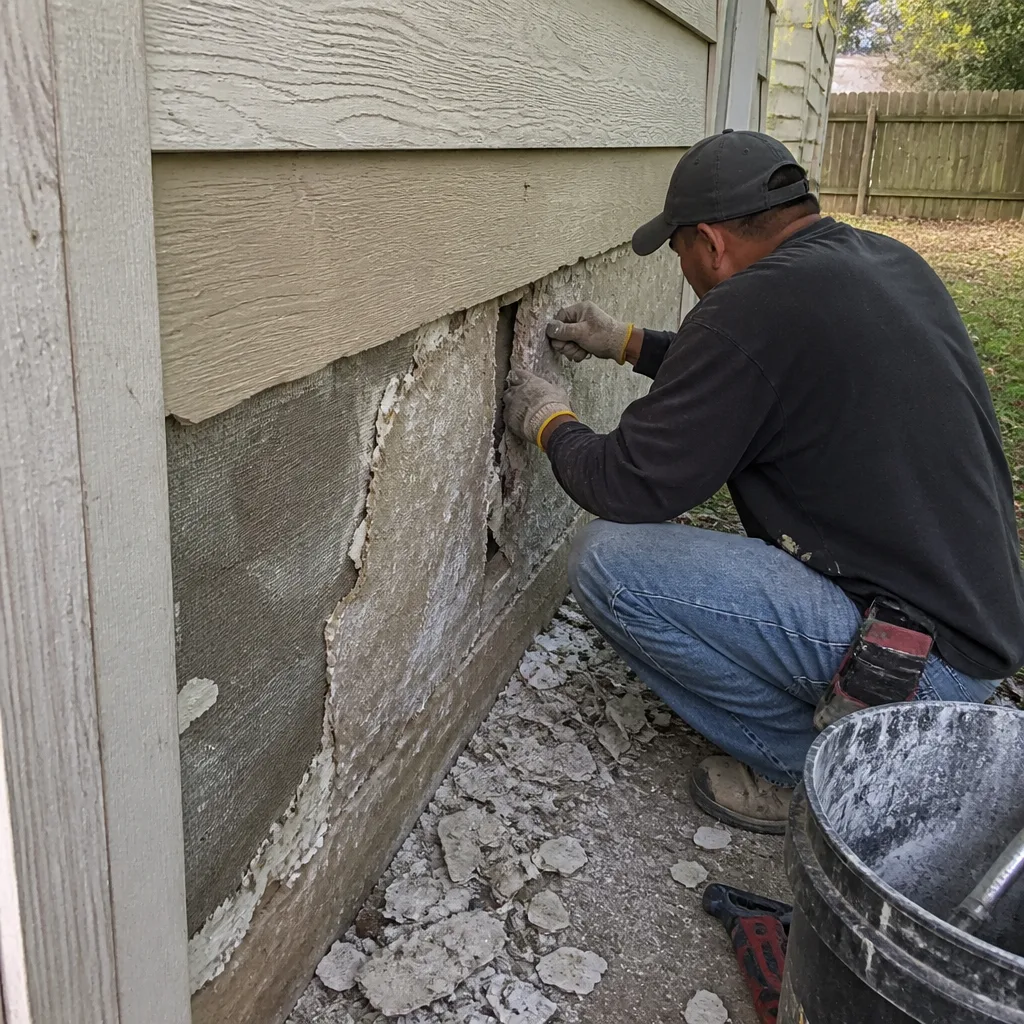 Before
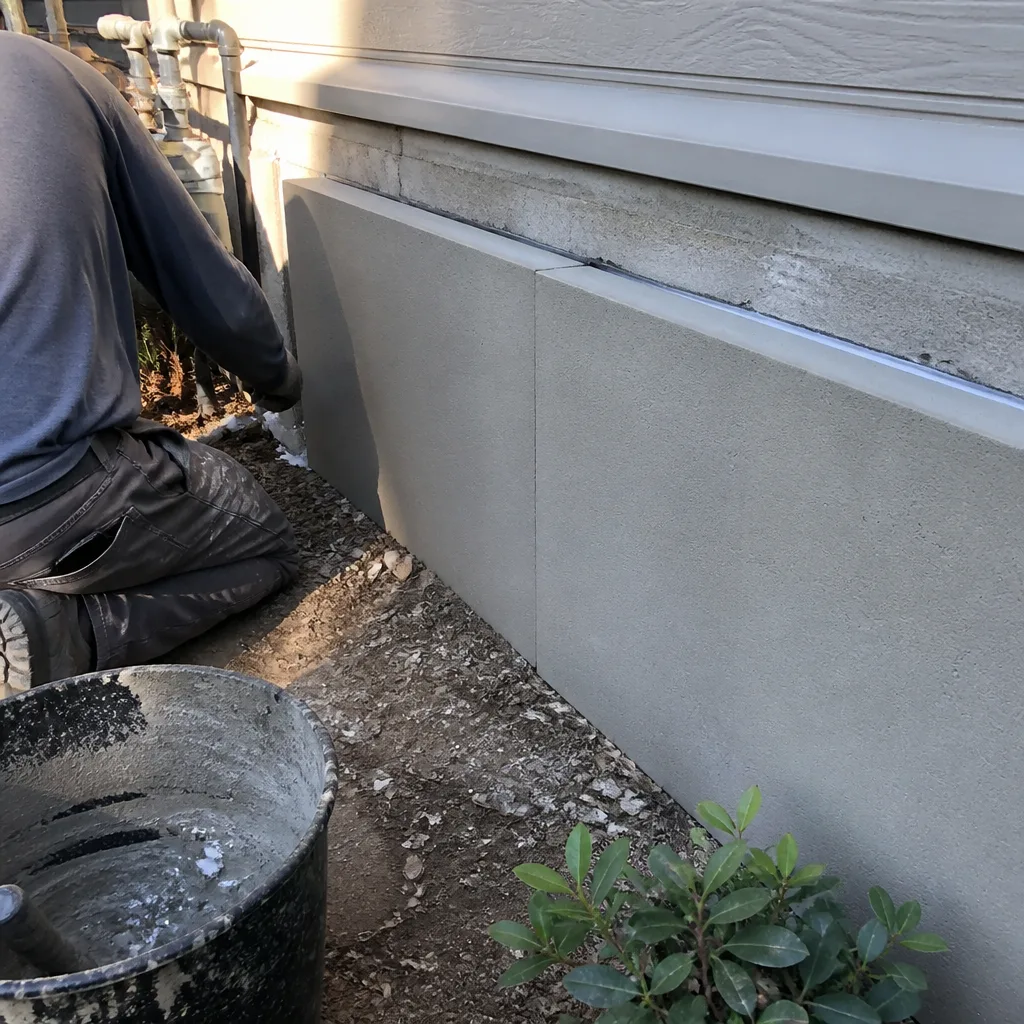 After
AfterReplacement Cost & What’s Included
Most Johns Manville-compatible attic air sealing jobs in Leander run $280-$450 for partial sealing (hatch, penetrations, and accessible top plates in a single attic zone) and $450-$650 for full attic floor sealing with blower-door verification. The range depends on attic square footage, accessibility, and whether we’re working around existing JM insulation or removing and replacing it to get to the leaks.
Every job includes: written scope and flat price before work starts (Haven Standard Clause 1), JM-spec or equivalent gasket/foam/sealant material, labor, and a Documented Photo Record of the sealed areas. On jobs where blower-door testing applies, we provide the pre- and post-sealing CFM50 reading. The 365-Day Done Right Promise covers all workmanship; material defects fall to the manufacturer’s warranty, which we help file if needed.
We don’t charge separately for the second opinion if you bring us a competing estimate. We’ll read it with you and tell you where the scope differs from what we’d propose.
DIY or Call Us?
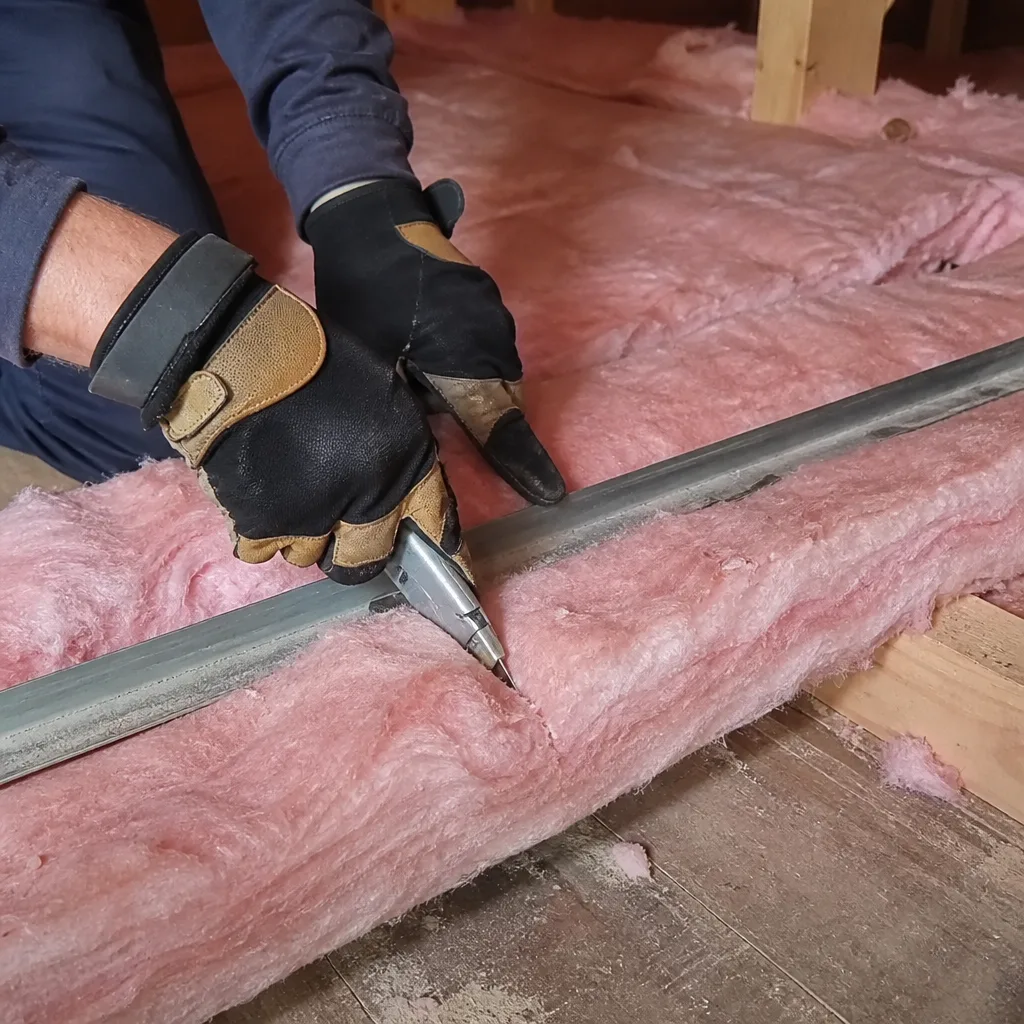
Here’s what you can safely check yourself: look at your attic hatch weatherstripping for compression or crumbling, shine a flashlight at the attic floor on a bright day to spot daylight at top plates and wire holes, and note any can light housings without foam plugs. Don’t remove the plugs if they’re present; just verify they’re there.
Here’s where DIY goes wrong. Attic air sealing requires working at height on joists or decking of uncertain strength, in heat that hits 140°F in Leander summers. The sealant and gasket materials need to be applied to clean, dry surfaces at temperatures within manufacturer spec, or they fail prematurely. And without a blower-door test, you’re guessing at whether you found the leaks that matter. We’ve re-done homeowner sealing jobs where the owner sealed the wrong holes and missed the bypasses that were actually driving the energy loss.
Seal the envelope first. Then fill it. Call (737) 252-7159 for a written price before any work starts.
FAQs
Properly installed JM-compatible gasket and sealant lasts 15-20 years in Leander’s climate, but the attic hatch weatherstripping typically needs replacement every 5-7 years due to compression cycling. The 140°F July peaks in Leander’s exposed hill country locations accelerate adhesive failure on generic foam tape, which is why we spec silicone bulb gasket instead. Call (737) 252-7159 for an exact quote on your hatch condition - estimates are free.
Partial repair is possible if the failure is isolated to the attic hatch or a few penetrations, but top-plate gasket that has compressed past recovery or sealant that has shrunk and cracked needs complete replacement. We don’t patch over failed material; it fails again in two years and the homeowner pays twice. Call (737) 252-7159 and we’ll scope what’s actually needed.
Most partial sealing jobs take 2-3 hours; full attic floor sealing on a 2,500-square-foot home runs 4-6 hours plus blower-door test time. We schedule morning starts in Leander during July and August to beat the worst attic heat, and we bring our own lighting and ventilation. Call (737) 252-7159 to check same-day availability.
We carry JM-spec top-plate gasket in 3/8-inch and 1/2-inch thickness, acoustical sealant for penetrations, 4-inch and 6-inch rigid foam can light plugs, and silicone bulb hatch gasket in standard lengths. Reflectix-compatible equivalents are also stocked for homeowners who prefer that route. For uncommon JM legacy products or specialized commercial specs, we can source within 24-48 hours. Call (737) 252-7159 to confirm we have your size on the truck today.
Written by Wes Okafor, Owner, Topside Attic Insulation Leander at Topside Attic Insulation Leander, serving Leander and nearby areas.