
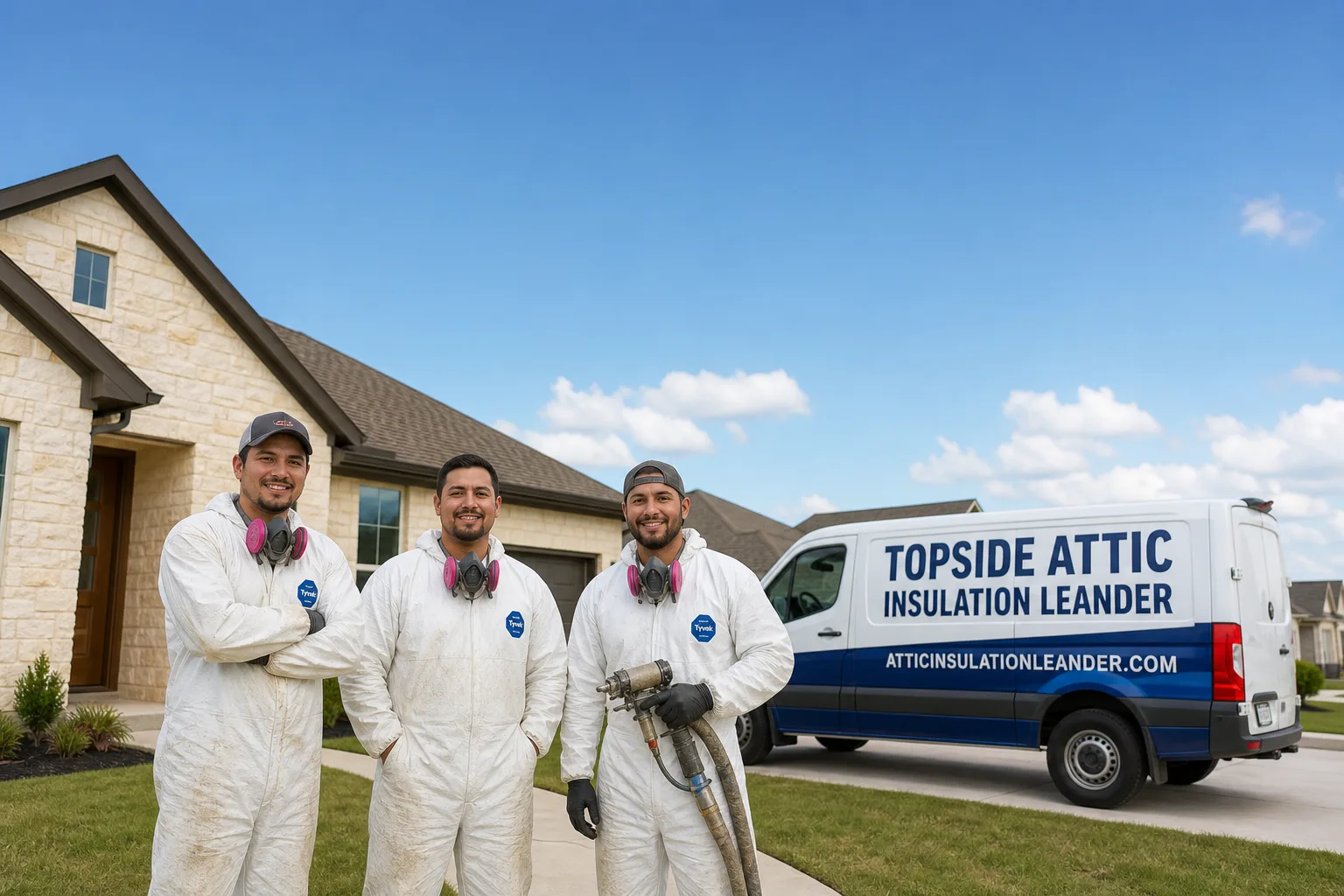
Fast, Reliable Spray Foam Insulation Across Lakeway
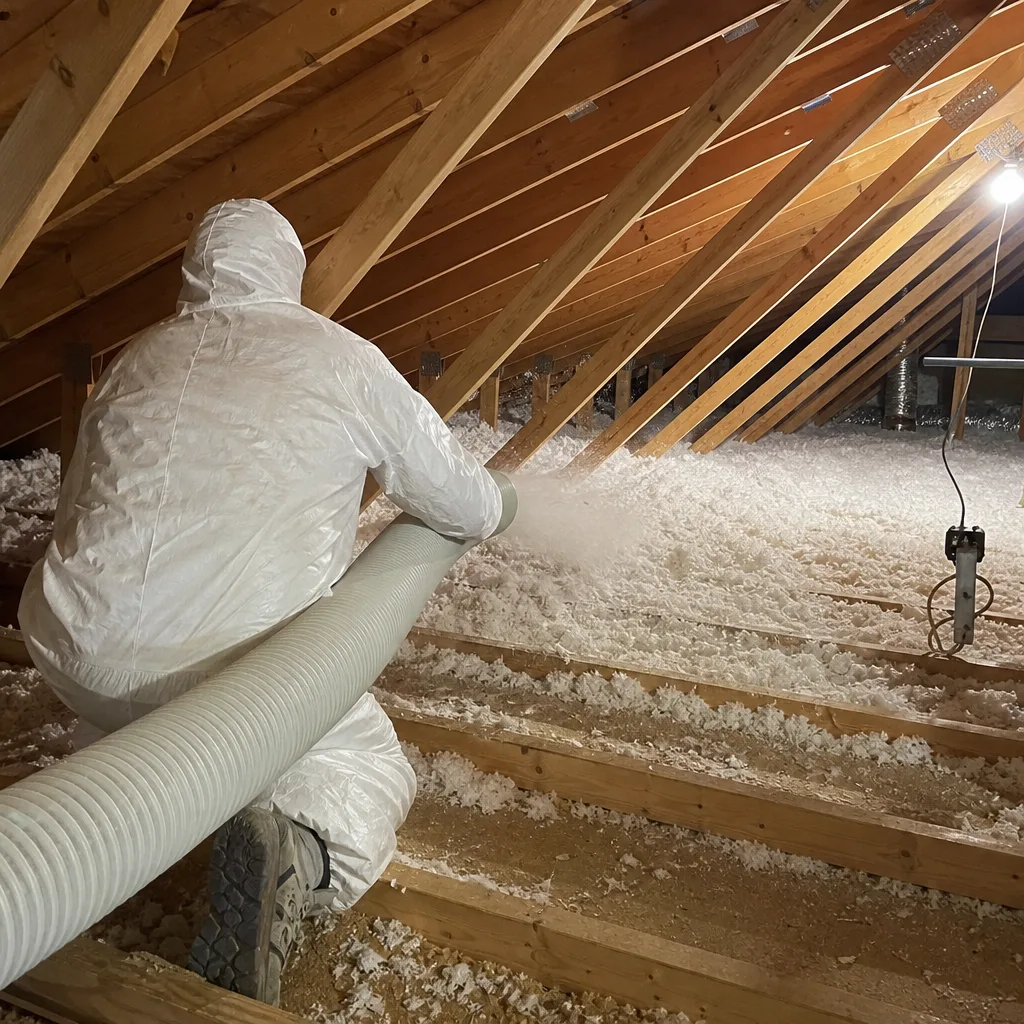
Spray foam insulation in Lakeway typically runs $2.80-$6.50 per board foot depending on open-cell or closed-cell product, and most residential jobs are completed in one to two days with crews dispatched from our Austin office. We’re familiar with the specific challenges of Lakeway homes, from the 1960s vacation cabins off Lakeway Boulevard to the newer builds in Rough Hollow and Serene Hills, and we carry the full range of closed-cell and open-cell products needed for Hill Country retrofit work. Call (737) 252-7159 for a written price before any work starts.
Why Topside Attic Insulation Leander Is Lakeway’s Preferred Spray Foam Insulation Company
We’ve worked the original Lakeway subdivision enough to know which homes have pier-and-beam foundations on sloped limestone, where the roof deck hits 152°F in August, and why a 1970s weekend cabin needs a different approach than a 2015 custom build. Our crews understand that getting material up narrow, winding Hill Country driveways takes planning, and that working around live oak root systems and setback restrictions is part of the job.
Our response time to Lakeway is same-day or next-day for most calls, with scheduling coordinated from our Austin office. We don’t ask you to wait for a callback window. A live person answers (737) 252-7159 24/7, and you’ll get a text when your technician is on the way.
Reviews from Lakeway customers consistently mention the blower-door numbers we publish, the photo documentation we leave behind, and the fact that we air-seal before we insulate. That’s Haven Standard practice, not an upgrade.
Our Spray Foam Insulation Services in Lakeway
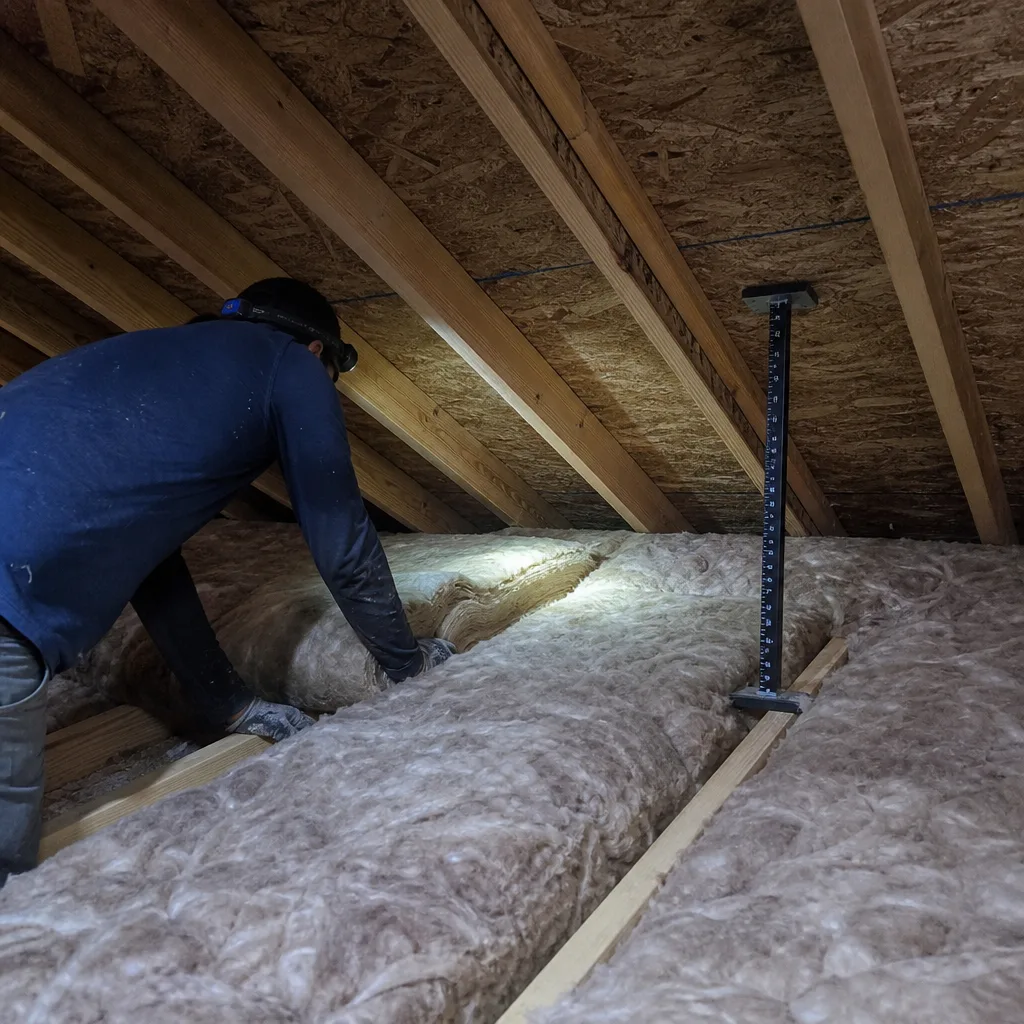
Closed-Cell Spray Foam
Closed-cell spray foam is our go-to for Lakeway’s older vacation-era homes with cedar-shake or tile roof decks that bake to 150°F+. At 2.0 lbs per cubic foot and R-6.5 per inch, it creates a rigid, vapor-resistant barrier that doesn’t compress or sag. In the original Lakeway subdivision, we use closed-cell on roof decks and unvented attics where humidity from Lake Travis could otherwise migrate into the assembly. We source closed-cell products from Demilec and Johns Manville, and we always pair roof-deck foam with air sealing of top plates and can-light penetrations first.
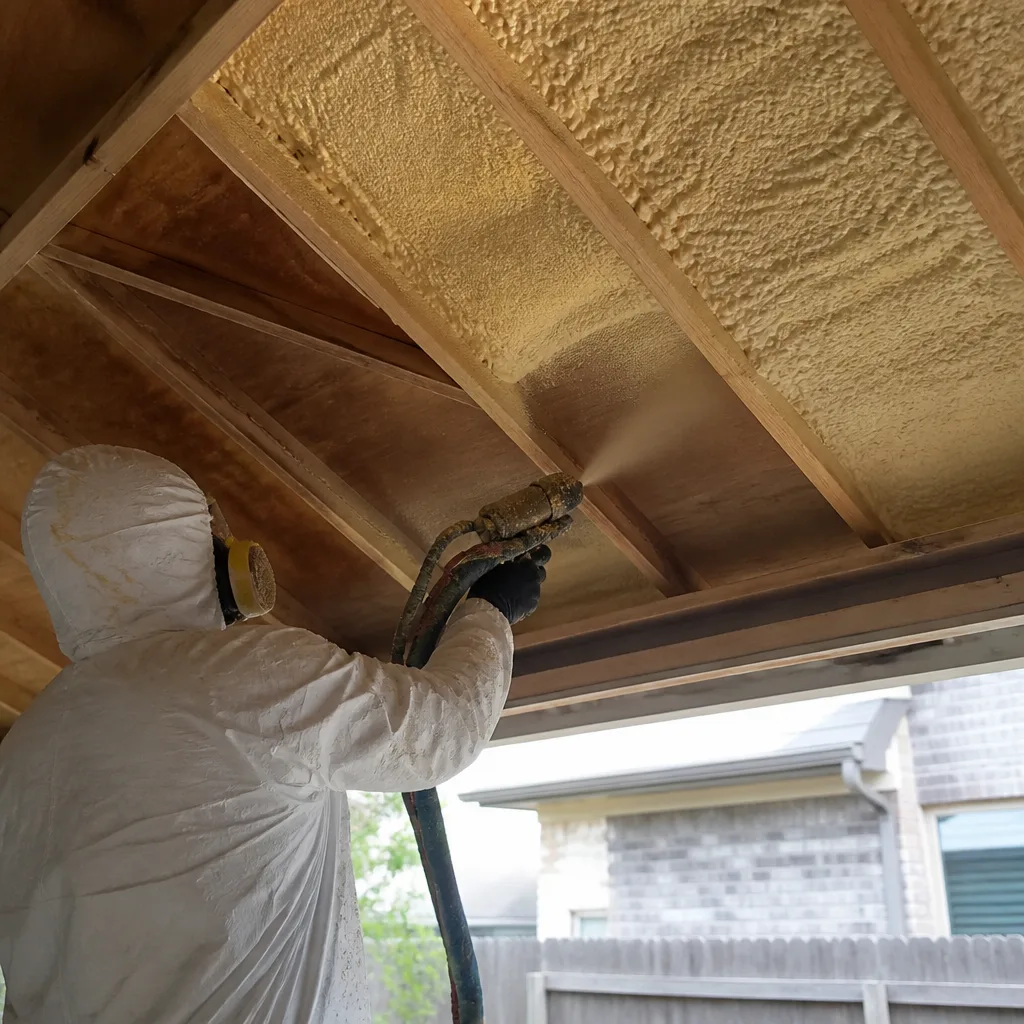
Open-Cell Spray Foam
Open-cell foam runs lighter at 0.5 lbs per cubic foot and R-3.6 per inch, and it’s cost-effective for conditioned attic floors and interior wall cavities in Lakeway’s post-2000 homes in Serene Hills and Rough Hollow. It breathes more than closed-cell, so we don’t specify it for roof decks without a verified vapor-retarder strategy. In Lakeway’s climate, open-cell works well when the building envelope is already tight and the primary goal is sound dampening and thermal performance at a lower per-board-foot cost.
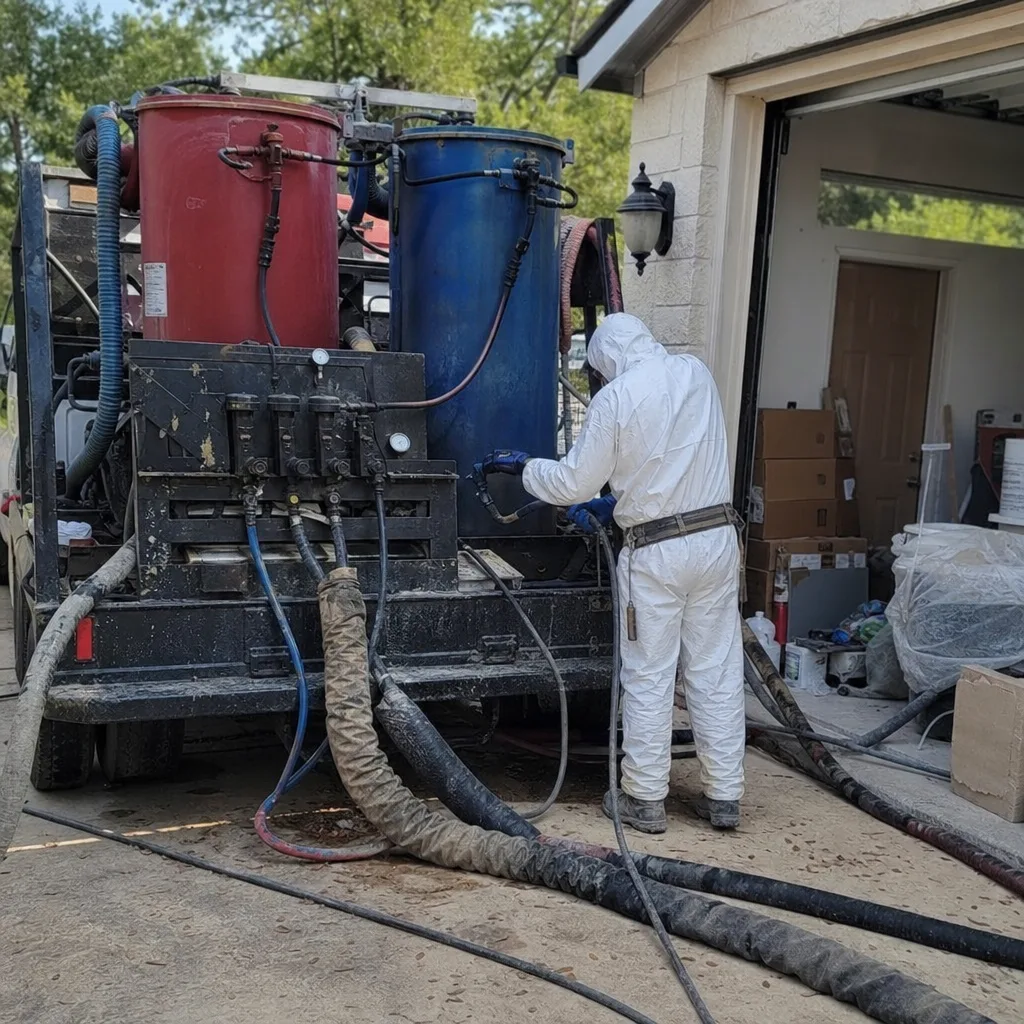
Rim Joist Spray Foam
Rim joists are the horizontal boards where your floor framing meets the foundation, and in Lakeway’s pier-and-beam homes on sloped limestone lots, they’re often completely exposed. Unsealed rim joists act like open windows between conditioned space and the crawl space beneath. We spray closed-cell foam here to block thermal bridging and stop air infiltration. On Lakeway’s hillside lots, this is non-negotiable work, the stem walls and pier foundations create too many gaps for batts to perform.
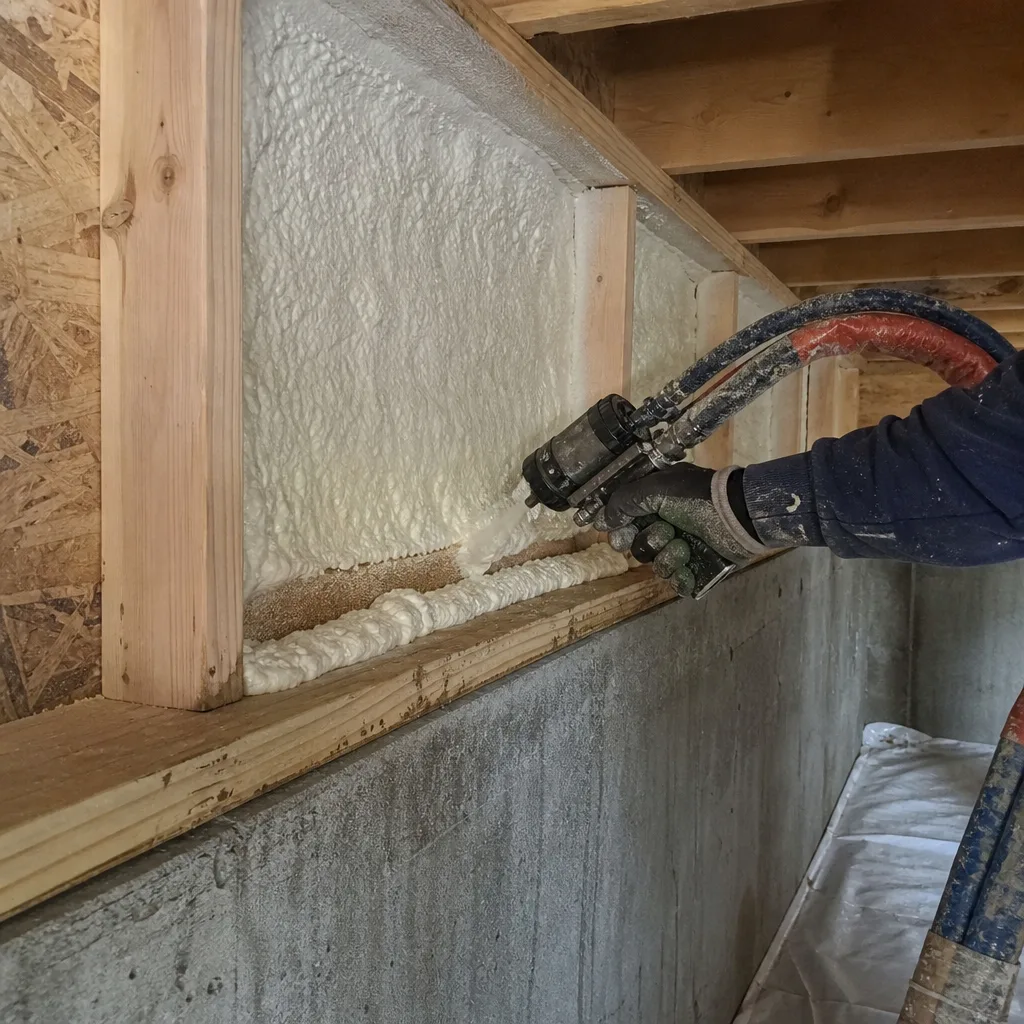
Garage Ceiling Spray Foam
Attached garages in Lakeway’s newer developments often have bonus rooms or conditioned space above them, and the garage ceiling is a common thermal bypass. We spray open-cell or closed-cell foam depending on whether the garage is conditioned and what the fire-separation requirements are. In Lakeway, where summer attic temperatures exceed 150°F, an uninsulated garage ceiling transfers that heat directly into bedrooms above.
Spray Foam Roof Deck
Spray foam applied directly to the underside of the roof deck converts a vented attic into conditioned space, and it’s the most effective retrofit for Lakeway’s 1960s-1980s homes with zero original insulation. We air-seal first, then foam the deck and rim joists as a system. In the original Lakeway subdivision, this is often the only way to achieve a continuous thermal barrier without tearing out finished ceilings below. We document before-and-after blower-door readings on every roof-deck job so you can verify the air-leakage reduction.
What happens when you call
- 1
A real person answersNo phone trees - you reach a local pro.
- 2
You get an upfront price rangeHonest numbers before anyone is dispatched.
- 3
A background-checked tech heads outLicensed & insured, dispatched right away.
- 4
You approve before work beginsNothing starts until you say go.
 Before
 After
AfterTrusted Brands We Service in Lakeway
We stock and install spray foam systems from Owens Corning, Johns Manville, and Demilec, with no proprietary lock-in that limits your options. For Lakeway homes with specific vapor-management needs due to Lake Travis humidity, we match the product to the assembly, closed-cell from Demilec for roof decks and rim joists, open-cell from Johns Manville for interior applications where breathability is preferred. Material is ordered to job specs, not pushed from inventory, and we carry common densities and chemistries for fast turnaround on Lakeway projects.
Common Spray Foam Insulation Problems We See in Lakeway Homes
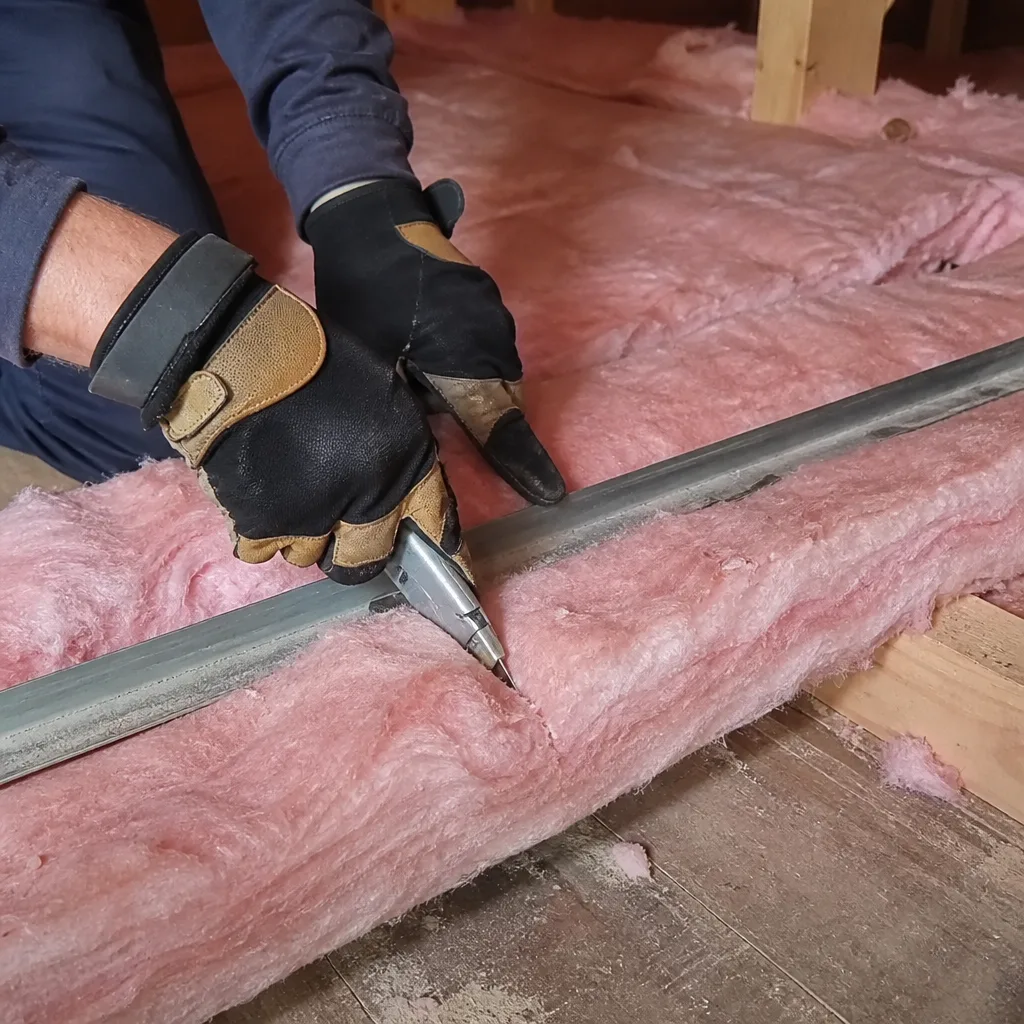
- 1970s fiberglass batts compressed to nothing in original vacation cabins. We regularly pull out batts that have sagged into 3-inch gaps, creating voids where conditioned air escapes straight into the attic. Spray foam must fully fill these cavities to perform, and we photograph the before condition so you see what was there.
- Dark cedar-shake and tile roofs cooking the ceiling plane to 150°F+. These roof assemblies were never designed for year-round occupancy. Without spray foam on the roof deck or a complete attic-floor seal, your HVAC is fighting a losing battle every afternoon from June through September.
- Thermal bridging through exposed pier-and-beam stem walls on sloped lots. The limestone topography in Lakeway forces many older homes onto irregular grades, and the exposed concrete or block stem walls transfer heat directly into conditioned space. Rim joist foam is required, not optional, in these assemblies.
- Moisture accumulation in roof decks where open-cell foam was installed without vapor analysis. Lake Travis adds enough ambient humidity that we always verify dew-point calculations before specifying open-cell on an unvented roof deck. Closed-cell is our default for these applications in Lakeway.
Pricing for Spray Foam Insulation in Lakeway, TX
Most spray foam jobs in Lakeway fall in these ranges: open-cell attic floor, $2.80-$3.80 per board foot; closed-cell roof deck or rim joist, $4.50-$6.50 per board foot; garage ceiling, $3.20-$4.80 per board foot depending on thickness and access. A typical 1,800-square-foot original Lakeway subdivision home with roof-deck foam, rim joist treatment, and attic air sealing runs $4,200-$7,800. Post-2000 homes in Rough Hollow with simpler attic-floor applications often land at $2,800-$5,200.
What moves the number: roof-deck access (steep pitches and cedar-shake tear-off add labor), the extent of air sealing required before foam can go in, and whether we’re working around live electrical or HVAC ducts in a tight attic. We give you a written price before any work starts, Haven Standard Clause 1, and we offer a Free Second Opinion on any written estimate you’ve already received. Call (737) 252-7159 for an exact quote on your Lakeway home.
We Also Serve Cities Near Lakeway
Our Spray Foam Insulation crews work throughout the Austin metro, including Lakeway and nearby Leander, Cedar Park, Brushy Creek, and Jollyville. Dispatch and scheduling are coordinated from our Austin office, with technicians routed daily to Hill Country and northern metro jobs.
Serving Lakeway, TX - Our Local Coverage Area
We’re based in the Lakeway area and know this community well. Use the map below to see our service coverage - if you’re nearby, we can almost certainly help.
FAQs - Spray Foam Insulation in Lakeway
Yes. Spray foam, particularly closed-cell on the roof deck and rim joists, is the most effective retrofit for converting these resort-era homes to year-round use. We air-seal first, then foam the roof deck and any accessible wall cavities, and we document the blower-door improvement so you can verify the result. Call (737) 252-7159 for a written price and free estimate.
We do, which is why we default to closed-cell foam for roof decks and unvented assemblies in Lakeway. Closed-cell at 2.0 lbs density is a Class II vapor retarder; open-cell requires a verified vapor-retarder strategy before we’ll install it on a roof deck here. We calculate dew-point and assembly drying potential on every job.
Yes, rim joist spray foam is specifically designed for this condition. We spray closed-cell foam across the rim joist and down the interior of stem walls to block thermal bridging and air infiltration. Without this treatment, your crawl space is effectively an open window beneath your floor.
Spray foam doesn’t degrade in temperature extremes; it performs by eliminating air movement, which is what actually causes heat loss and gain. After Winter Storm Uri, we saw a significant increase in Lakeway homeowners requesting whole-envelope upgrades because foam-insulated homes maintained livable temperatures far longer during the freeze. The product is stable; the question is whether your assembly was completely sealed.
Yes. We spray foam in all Lakeway neighborhoods, from the 1960s-1980s original subdivision off Lakeway Boulevard to the post-2000 builds in Rough Hollow and Serene Hills. Each era of construction has different envelope challenges, and we adjust the product spec and scope accordingly. Call (737) 252-7159 to schedule a walkthrough.
Written by Wes Okafor, Owner at Envelope Insulation Co., serving Lakeway under The Haven Standard since 2016.