
Last updated September 24, 2026
Seasonal Insulation Care for Leander: Year-Round Homeowner’s Guide
During the February 2021 freeze event, the homes that lost pipes soonest weren’t necessarily the ones with the least insulation - they were the ones where insulation had been installed without sealing the air path that let -5°F wind reach interior cavities. Insulation slows conductive heat loss; it does almost nothing against air infiltration. In Leander, where summer attic temperatures exceed 140°F and winter can still deliver hard freezes, your insulation’s performance depends less on how thick it is and more on whether the building envelope around it is intact. This guide maps the actual stress calendar for Leander homes - the two real danger windows, not four arbitrary seasons - and gives you specific checks, tests, and documentation habits that protect your investment and your comfort. For a deeper dive, see The Complete Guide to Insulation in Leander.
Quick Answer
Leander homeowners should focus insulation maintenance on two high-risk windows: the 10-week summer peak (June-August), when attic heat gain overwhelms poorly sealed envelopes, and the narrow freeze events (December-February), when air-leak paths destroy pipe protection regardless of insulation depth. The most effective seasonal care is checking attic air sealing in April-May and October, documenting findings with dates and photos, and addressing degradation before stress arrives - not adding insulation over problems that sealing should fix first. For a full task breakdown, see our Attic Insulation Maintenance Checklist for Leander Homeowners.
Table of Contents
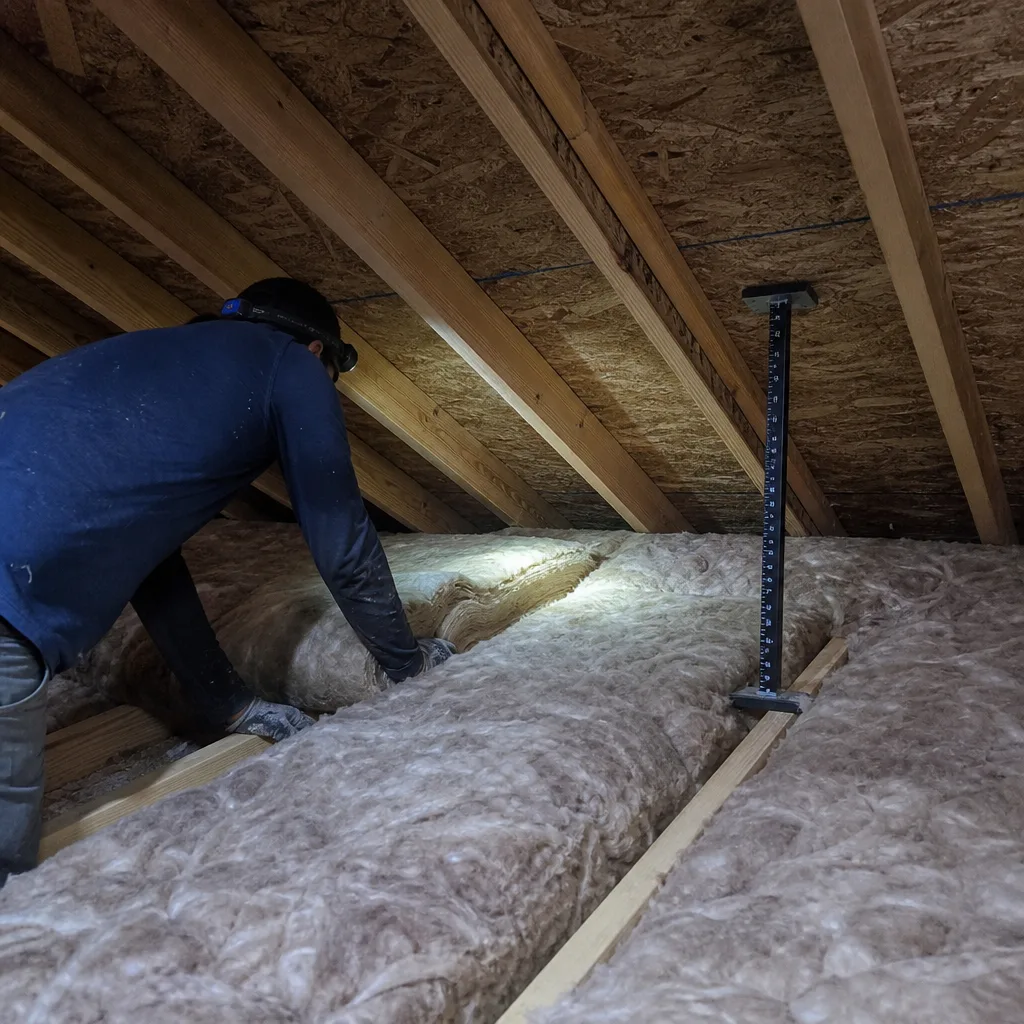
- Why Leander’s Insulation Stress Calendar Differs from Four-Season Guides
- Pre-Summer Action Window (April-May): Humidity Degrades Seals Faster Here
- Post-Summer Check: What HVAC Duct Sweating Does to Attic Insulation
- Pre-Freeze Checklist (October): The Three Air-Sealing Points That Protect Pipes
- Post-Freeze Inspection: Separated Foam vs. Topped-Up Insulation
- How to Log Seasonal Observations in a Format Contractors and Buyers Actually Use
- Common Mistakes to Avoid
- When to Call a Professional
- Frequently Asked Questions
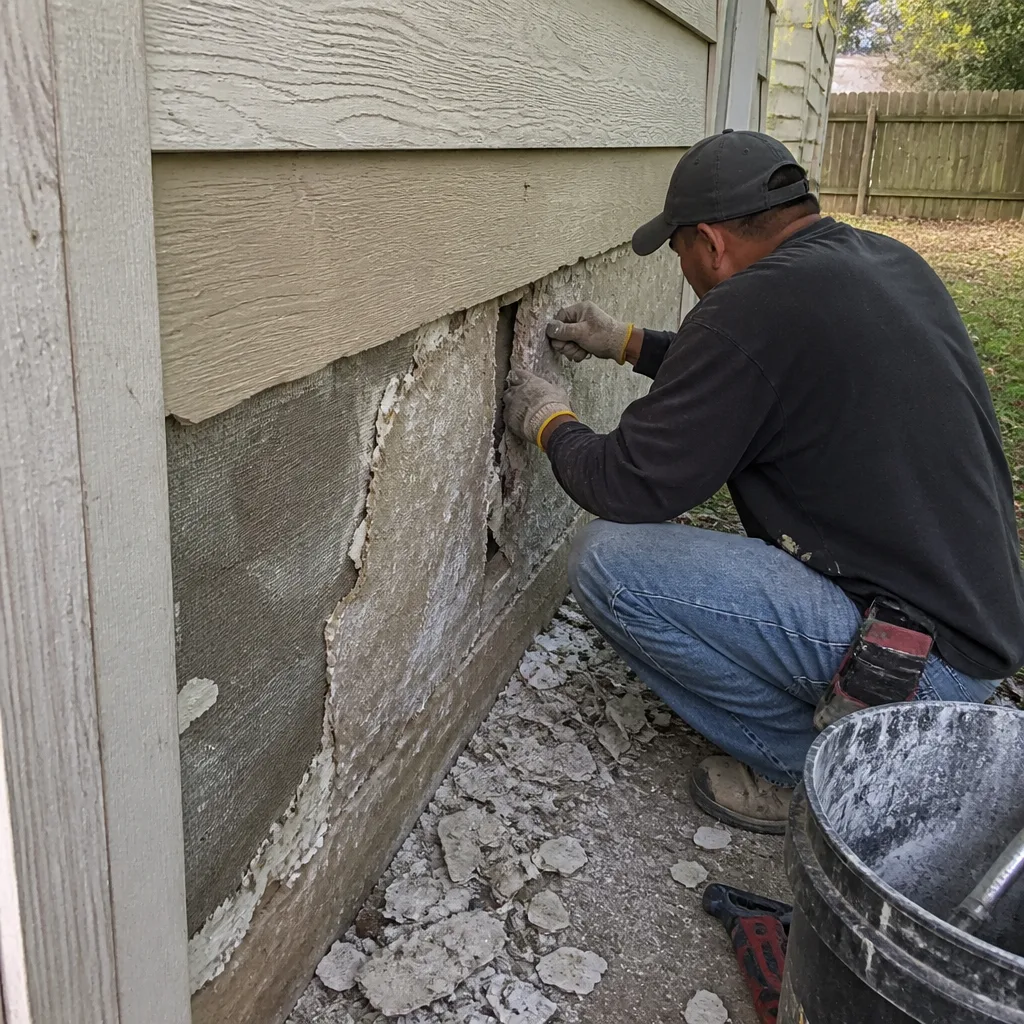 Before
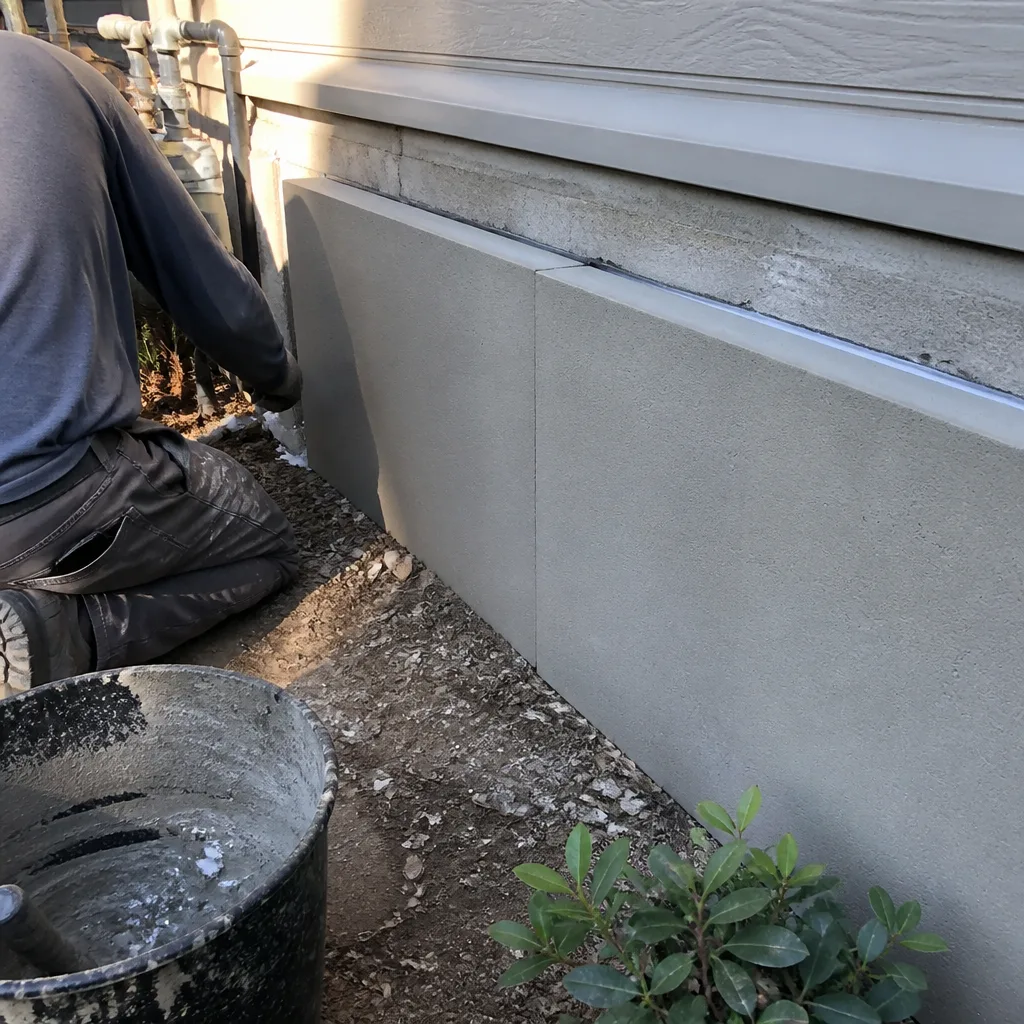 After
AfterWhy Leander’s Insulation Stress Calendar Differs from Four-Season Guides
Most seasonal home maintenance content assumes four equal quarters of risk. That model fails in Central Texas. Leander sits at the edge of the Hill Country with 33 inches of annual rainfall concentrated in spring and fall, summer attic temperatures that match Phoenix, and winter lows that - while brief - can match the northern plains when arctic air pushes through.
The real pattern is two asymmetric stress windows separated by mild shoulder seasons:
- Summer peak (roughly June 1-August 15): Attic temperatures in Leander routinely reach 140-150°F. Your insulation’s R-value degrades under this thermal load, but more critically, the temperature differential between attic and conditioned space drives air infiltration through every unsealed gap. A 30°F attic in Minneapolis creates less stack effect pressure than a 145°F Leander attic.
- Freeze events (typically 2-4 discrete events, December-February): These are narrow but severe. The February 2021 event brought -5°F actual temperature and -20°F wind chill to Leander. Homes with intact air sealing survived; homes with bypass paths - even those with deep insulation - lost pipes in exterior walls and bonus rooms.
The shoulder seasons (March-May, September-November) are when you act, not when you suffer. This guide structures every task around that reality.
We’ve sealed and insulated over 9,000 homes since 2016, and the pattern holds: Leander homeowners who maintain air sealing in April and October avoid the emergency calls that dominate our summer and winter queues. The ones who wait until the HVAC can’t keep up or the pipes freeze are paying for urgency, not just repair.
Pre-Summer Action Window (April-May): Humidity Degrades Seals Faster Here
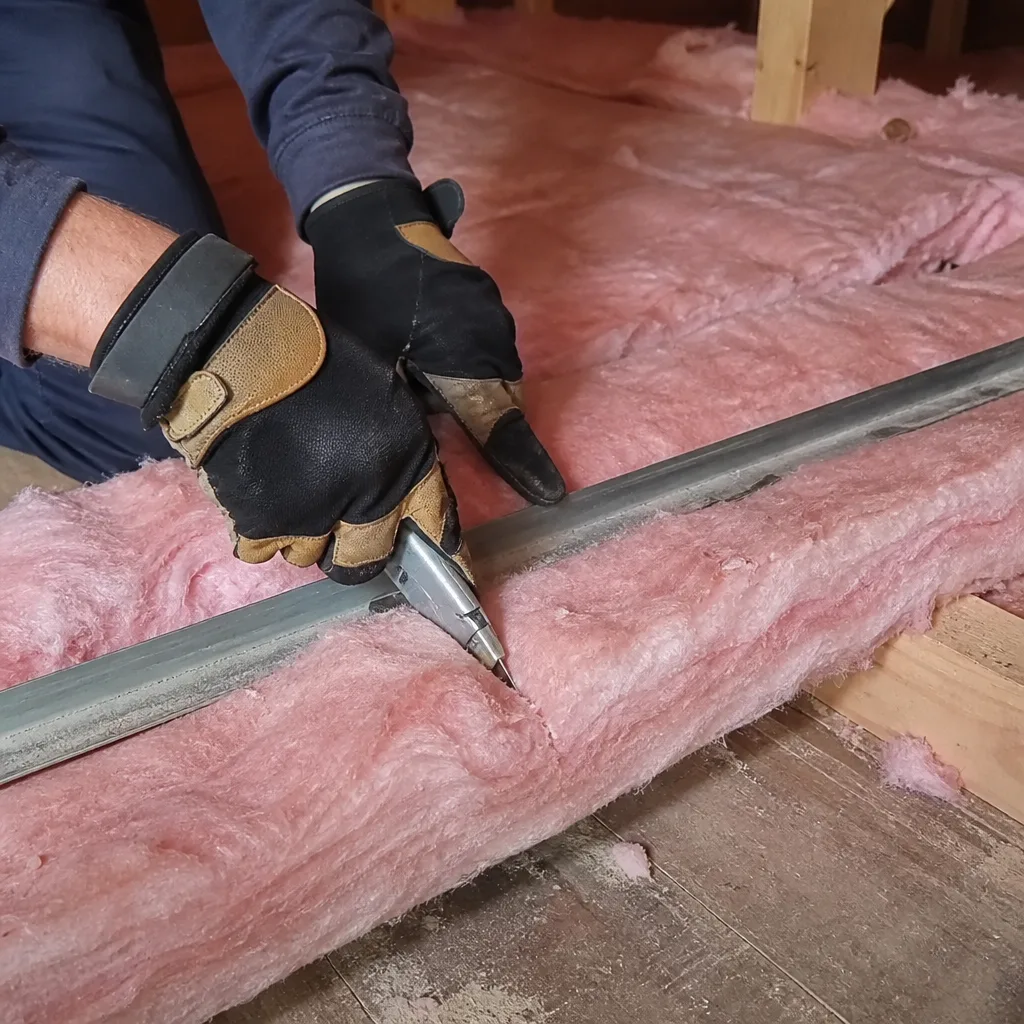
Leander’s spring humidity cycle is more destructive to attic air sealing than the drier climate of West Texas or the Panhandle. Relative humidity in April and May regularly hits 80%+, and that moisture migrates into attic assemblies through pressure differentials. When it encounters the temperature gradient at the ceiling plane, it condenses on framing and sealant surfaces. The result: weatherstripping around attic hatches swells and loses compression; acrylic latex caulk at top plates re-emulsifies; and the foam gaskets on can lights degrade faster than product specifications suggest.
Here’s the test we teach homeowners to run themselves - no equipment needed beyond a stick of incense and a calm morning:
- Close all windows and doors. Turn on all exhaust fans (bath, kitchen, laundry) and the HVAC air handler. This creates negative pressure inside the house, which pulls attic air inward through leaks.
- Light the incense and hold it near suspect points: the attic hatch perimeter, can-light trim rings, electrical boxes, and the gap where interior walls meet the ceiling. A steady inward drift of smoke indicates an active leak path.
- Mark locations with painter’s tape and photograph each one with your phone. Note the date and outdoor conditions.
In Leander specifically, check these three points that fail earlier here than in drier markets:
- Attic hatch weatherstripping: The compression seal around pull-down stairs or scuttle hatches absorbs spring humidity, then dries and cracks by June. Replace with closed-cell foam tape rated for 200°F - standard household weatherstripping melts in Leander attics by July.
- Can-light gaskets: IC-rated can lights in Leander attics see 140°F ambient plus the fixture’s own heat load. The OEM foam gaskets harden in 18-36 months. We replace them with silicone gaskets or retrofit airtight LED housings.
- Top plate seams at interior walls: These are the horizontal framing members where wall studs meet the ceiling drywall. In Leander’s humidity cycle, the gap between top plate and drywall opens as framing cycles. Seal with fire-rated acrylic or, for larger gaps, packed backer rod plus sealant.
Under Haven Standard Clause 1, we provide a written price before any work starts on these repairs. Most pre-summer air-sealing tune-ups in Leander run $400-$900 for a typical 2,000-square-foot home, depending on access and the number of can lights. The blower-door test - a pressurization reading that shows, in one number, how much air your building envelope is losing - is included on applicable jobs so you can verify the result.
Post-Summer Check: What HVAC Duct Sweating Does to Attic Insulation
September in Leander is still hitting 95°F, but by October you can safely enter the attic for inspection. The damage pattern we see most often isn’t insulation compression from foot traffic - it’s localized collapse from duct condensation.
Here’s the mechanism: Your HVAC supply ducts run 55°F air through a 140°F attic. If the duct insulation has gaps, tears, or inadequate R-value, the outer surface of the duct drops below the dew point. Water forms, drips onto surrounding insulation, and saturates it. Fiberglass batts lose 40-60% of their effective R-value when compressed by moisture. Blown cellulose mats down. And the moisture creates a feedback loop: wet insulation conducts more heat, the duct works harder, sweating increases.
After a Leander summer, inspect these specific indicators:
- Discoloration on insulation surrounding flex-duct runs: Look for gray or brown staining on fiberglass, or darkening on cellulose. This is dried condensation residue, often with dust accumulation.
- Insulation that pulls away from duct boots: The metal collar where duct meets ceiling register should be fully surrounded by insulation. Gaps here are common failure points.
- Collapsed sections in blown insulation: Cellulose or fiberglass that has formed a crusted depression, typically directly below a duct run.
The fix depends on whether the problem is the duct insulation or the attic insulation around it. Duct insulation in Leander should be minimum R-8 flex with intact vapor barrier; many older homes have R-4 or R-6 with torn jackets. We don’t blow new attic insulation over compromised ductwork - that’s sealing failure into the assembly. The proper sequence, which we follow on every attic insulation in Leander job, is: repair or replace duct insulation first, then address attic insulation.
Document what you find with dated photos from multiple angles. If you call us for a free second opinion on any written estimate, these photos let us assess whether the quoted scope addresses the actual problem or just adds insulation over it.
Pre-Freeze Checklist (October): The Three Air-Sealing Points That Protect Pipes
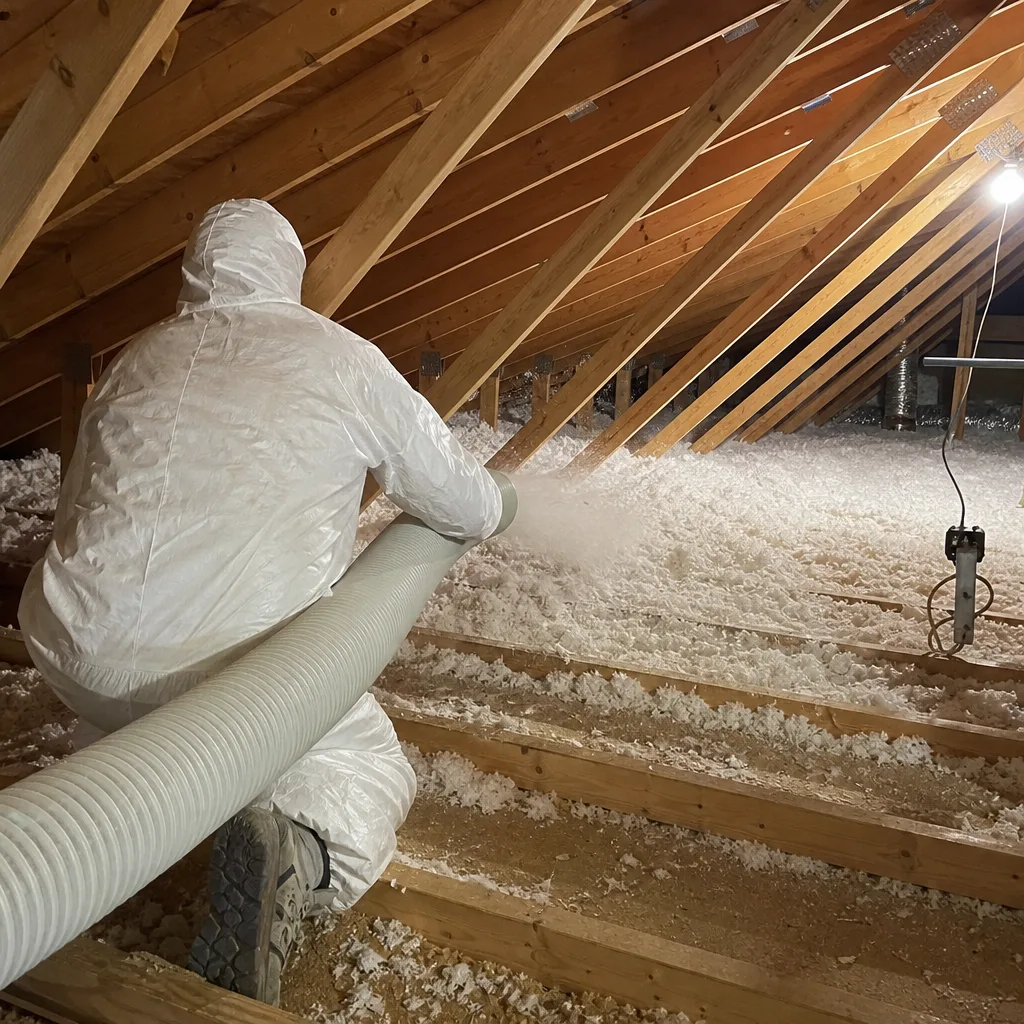
Pipe freeze protection in Leander is an air-sealing problem disguised as an insulation problem. The February 2021 event proved this: homes with R-30 in the attic but open bypass paths at plumbing chases lost pipes. Homes with modest insulation but intact air sealing did not. The wind found the path; the pipe froze where the wind reached it.
Three air-sealing points matter more than insulation depth for freeze protection:
- Plumbing chase penetrations: The vertical channels that carry pipes from basement or crawl space to upper floors are often open to attic air at the top. In Leander, these chases are frequently framed with no top plate or with a cut-out for pipe clearance. Seal the attic-side opening with rigid foam cut to fit, sealed with fire-rated caulk. Do not stuff fiberglass into the gap - it filters air, it doesn’t stop it.
- Knee-wall and bonus-room bypasses: Leander’s 1990s-2010s builds often have bonus rooms over garages with knee walls. The framing creates a triangular attic space behind the knee wall that’s “insulated” with a fiberglass batt tacked to the studs. That batt does nothing when wind pressurizes the space. The air path runs: attic → behind knee wall → floor cavity → exterior wall → pipe location. Seal the knee-wall sheathing to the floor deck with rigid foam and canned foam, or convert to a conditioned attic.
- Exterior wall top plates under insulated rooflines: In homes with spray foam or raised-heel trusses, the wall top plate may sit below the insulation plane. Wind can track along the top plate, through electrical penetrations, and into the wall cavity. A bead of sealant along the top plate, accessible from the attic, closes this path.
These three checks take 30-45 minutes in a typical Leander attic and cost $200-$600 to address professionally. Compare that to the average pipe freeze repair: $1,500-$4,000 for accessible pipes, $5,000+ for concealed damage with drywall and flooring. The economics are straightforward, but only if you act in October, not after the forecast drops.
We provide before-and-after blower-door numbers on every applicable job so you can see the quantified reduction in air leakage. A typical Leander home tests at 3,500-5,000 CFM50 before sealing and 2,000-3,000 after addressing these three points. The number is your proof, not our claim.
Post-Freeze Inspection: Separated Foam vs. Topped-Up Insulation
After a hard freeze, Leander homeowners often assume they need more insulation. Sometimes they do. More often, they need repaired air sealing that the freeze exposed.
Thermal cycling - the rapid swing from heated interior to subzero exterior and back - causes differential movement between framing members and the sealants applied to them. Spray foam, in particular, can pull away from studs or top plates, creating a gap that didn’t exist in October. Acrylic caulk can crack. Foam gaskets can harden and lose compression.
Here’s how to distinguish separated foam from insufficient insulation:
| Sign | Separated Air Sealing | Insulation Needs Topping Up |
|---|---|---|
| Visual | Visible gap between foam/sealant and framing; light visible through crack | Insulation level below joist tops or settled below desired depth |
| Location pattern | At joints, corners, penetrations; follows framing geometry | Uniform across attic floor; low in center or near eaves |
| Performance symptom | Drafty rooms, cold spots at outlets/switches, pipes froze in specific wall | Uniformly high bills, slow recovery after setback, entire zone struggles |
| Seasonal timing | Worse after freeze event; may not have been present in fall | Gradual decline over multiple seasons |
If you find separated foam, the repair is targeted: cut back failed material, clean the substrate, and reapply compatible sealant. Do not spray new foam over failed foam - the bond between layers is unreliable. If you find cracked caulk at top plates, remove and replace.
Insulation that simply needs topping up is a different scope. In Leander, we typically see this in homes with pre-2012 fiberglass batts that have settled 10-20%, or cellulose that has degraded from roof leaks or duct sweating. Topside Attic Insulation Leander home assessments include depth measurement at multiple points, photography, and a written scope with flat pricing before any work starts.
The critical distinction: adding insulation over failed air sealing wastes material and money. The new insulation covers the gap visually but doesn’t close the air path. We’ve removed jobs where previous contractors blew 12 inches of GreenFiber cellulose over unsealed can lights - the homeowner paid for R-38 and got R-10 performance because the air washed through.
How to Log Seasonal Observations in a Format Contractors and Buyers Actually Use
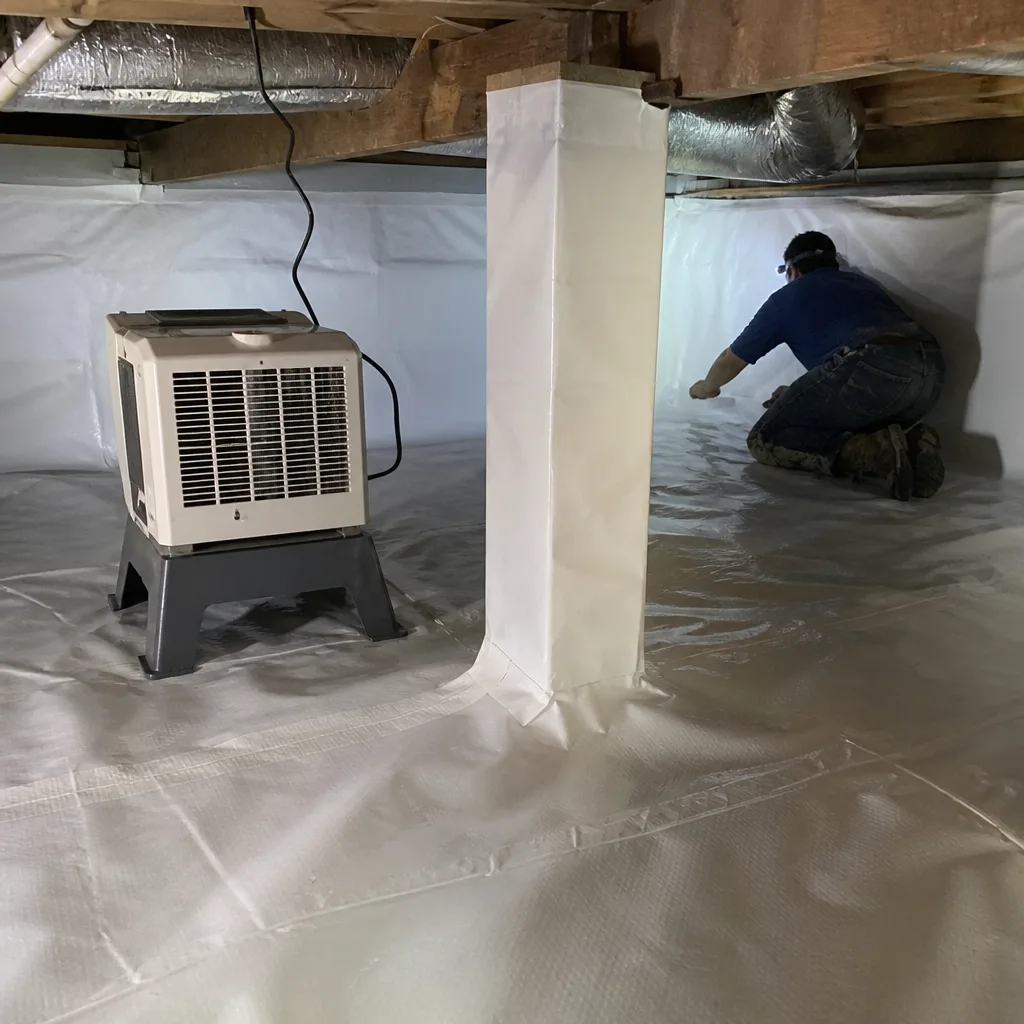
Adjective-heavy notes (“attic looks okay,” “some drafts in master”) are useless to the next person who needs them. A documented record - photos with dates, measurements with locations, and sequential notes - protects your investment and transfers value at sale.
Here’s the format we recommend, and the format we deliver on every job under our Documented Photo Record:
- Date and conditions: “October 14, 2024, 78°F outside, attic temp 94°F, RH 62%”
- Location grid: Use compass directions and fixed references (“northeast corner, above guest bath,” “center bay, west of HVAC unit”)
- Measurable observations: “Insulation depth 8 inches at center, 4 inches at eave over garage,” “Blower door 4,200 CFM50,” “Hatch gap 3/8 inch visible light”
- Photos: Wide context shot, detail of concern, measurement tool in frame for scale
- Actions taken or needed: “Replaced hatch weatherstripping, sealed two can lights with silicone gaskets, noted low insulation at north eave - scope for future”
Store this in cloud format with sharing access. When you sell, the documented maintenance history is a transferable asset. When you call for service, the log eliminates diagnostic time. When you get a second opinion on a written estimate, the log lets us verify whether the proposed scope matches observed conditions.
Under Haven Standard, every job we complete adds to this record. You don’t request it; we deliver it. The written scope, the written warranty, the blower-door numbers, and the photo documentation are your property from day one.
Common Mistakes to Avoid
- Blowing insulation over unsealed attic floors: This is the most common error we correct in Leander. The insulation hides the air leaks, making them harder and more expensive to fix later. Seal first, then insulate - in that order, always.
- Using recessed can-light covers without checking the housing rating: Non-IC (insulation contact) housings require 3 inches of clearance to combustibles. In Leander’s heat, even IC-rated housings benefit from airtight LED retrofits that eliminate the penetration entirely.
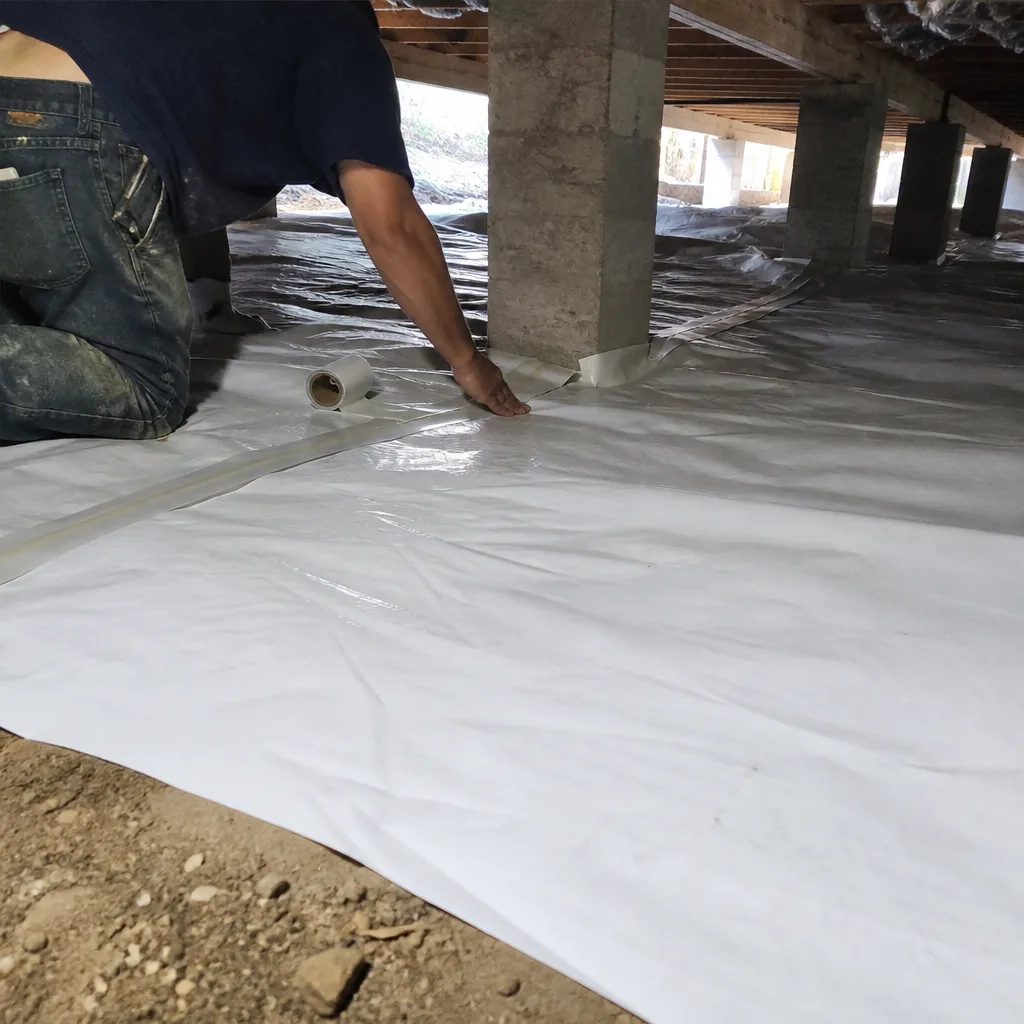
- Ignoring the crawl space while focusing on the attic: Leander’s clay soils and seasonal moisture create crawl-space humidity that migrates upward through floor assemblies. Crawl space encapsulation and vapor barrier in Leander homes is often the missing piece in a comfort complaint that attic work alone won’t solve.
- Assuming spray foam is maintenance-free: Even high-quality Icynene or Demilec open-cell foam can shrink or pull away from framing after thermal cycling. Inspect annually, especially after hard freeze events.
- Measuring insulation depth at the access hatch only: The hatch area is often the highest point in the attic due to installer convenience. Measure at eaves, corners, and center - the low points determine actual performance.
- Waiting for a comfort emergency to act: The homeowners who call us in July or January pay urgency pricing and wait in queue. The ones who schedule in April or October get faster turnaround and often smaller scopes.
- Accepting verbal estimates for envelope work: Without a written scope, you can’t verify what was promised versus delivered. Haven Standard Clause 1 requires a written price before any work starts for this reason.
When to Call a Professional
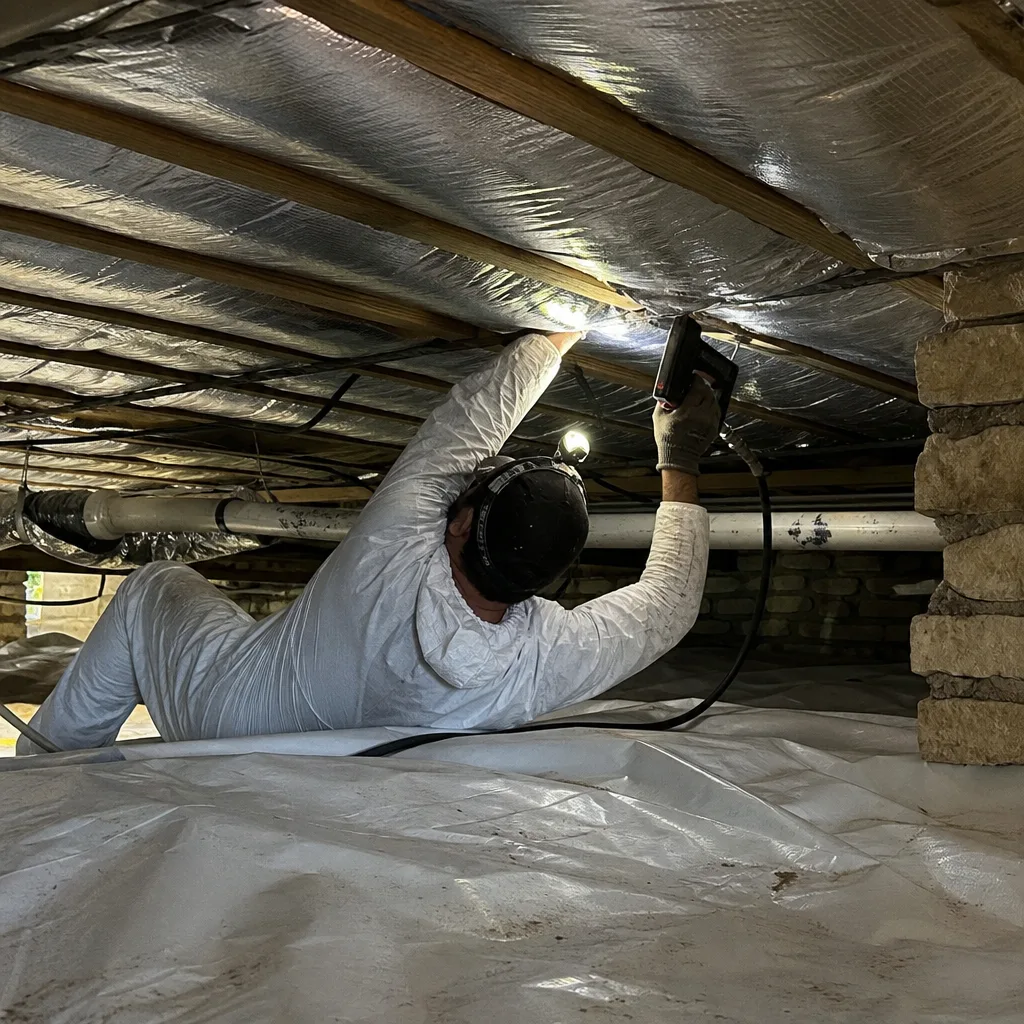
Call for assessment when you find separated foam after a freeze, when duct sweating has saturated insulation, when your blower-door test (or incense test) shows multiple leak paths you can’t safely reach, or when you’re considering adding insulation and need verification that the air sealing beneath it is intact. In Leander’s climate, the cost of professional air sealing is typically recovered in 2-4 years through HVAC load reduction - faster if your system is aging and replacement is approaching.
Topside Attic Insulation Leander offers free estimates in Leander - call (737) 252-7159. Every estimate includes a written scope and flat price before any work starts, plus a free second opinion on any competing written estimate you bring us. Our technicians are background-checked and uniformed, and a live person answers calls 24/7.
Frequently Asked Questions
Most attic air-sealing jobs for Leander homes between 1,800 and 3,000 square feet run $800-$2,200, depending on access difficulty, can-light count, and whether duct sealing is included. We provide a written price before any work starts - no exceptions. Call (737) 252-7159 for an exact quote; estimates are free.
Homeowners can safely add batt insulation over existing batts in accessible attics, but blown-in application requires equipment and training for even distribution. More importantly, you cannot effectively air seal from above without disturbing the insulation layer - which means the proper sequence (seal first, insulate second) is difficult to achieve as a retrofit. We recommend professional assessment for any job involving both tasks.
Run the incense test annually in April and October. Inspect visually after any hard freeze event or roof leak. Schedule professional blower-door testing every 3-5 years, or before major HVAC replacement, to verify envelope performance hasn’t degraded.
Spray foam insulation in Leander provides superior air sealing as part of its installation, which addresses Leander’s primary heat-gain mechanism. Open-cell foam (Icynene, Demilec) at 5.5 inches achieves R-19 plus air barrier; closed-cell achieves R-6.5 per inch plus structural rigidity. Fiberglass or cellulose can perform equally well if paired with meticulous air sealing - the material matters less than the installation quality. We source from Owens Corning, Johns Manville, Knauf, Rockwool, CertainTeed, Icynene, Demilec, and GreenFiber with no proprietary lock-in.
In Leander, this is almost always an air-sealing or duct-distribution problem, not an insulation-depth problem. Common causes: unsealed can lights creating convective loops, flex-duct disconnections in hot attics, or knee-wall bypasses pressurizing floor cavities. A blower-door test with infrared imaging locates the path in under two hours.
Yes, but the savings come from the combination of insulation plus air sealing, not insulation alone. A typical Leander home with R-30 attic insulation but unsealed bypasses loses 30-40% of conditioned air to infiltration. Sealing those paths first, then optimizing insulation, routinely reduces summer cooling load by 15-25% in our measured results. We publish before-and-after blower-door numbers on every applicable job so you can verify your specific improvement.
The Bottom Line
Leander’s insulation calendar has two real stress windows - summer peak and freeze events - with mild shoulders for preparation. The homeowners who thrive are the ones who check air sealing in April and October, document what they find with dates and measurements, and address degradation before it becomes an emergency. Insulation without sealed air boundaries underperforms; sealed boundaries with modest insulation outperform deep, leaky layers. Every job we complete begins with a written price and ends with a documented record, because evidence outlasts promises. Start your seasonal log this year, and you’ll know your home’s envelope better than most contractors ever will. Browse more guides & resources for year-round home performance tips.
Written by Wes Okafor, Owner at Topside Attic Insulation Leander, serving Leander since 2016.