
Last updated September 24, 2026
How to Hire a Insulation Contractor in Leander: A Step-by-Step Guide
Texas does not license insulation contractors as a separate trade category. Anyone with a truck and a blower machine can pull a general contractor registration and quote your attic tomorrow. In Leander’s fast-growth market, where crews are booked solid and turnover is high, the proposal document itself is the only protection you have. This guide will show you the five line items every written proposal must contain, how to verify a contractor’s test equipment is actually calibrated, and how to compare bids that list the same R-value but deliver completely different results. For more guides & resources on protecting your investment, see our blog.
Quick Answer
To hire an insulation contractor in Leander, request a written proposal that specifies installed R-value, installed depth at center of bay, material brand and density, a detailed air-sealing scope, and a blower-door test commitment with before-and-after numbers. Verify the contractor’s blower-door equipment is calibrated by asking for the serial number and last calibration date. Never sign a proposal that lists only R-value without the supporting specifications, because a technically compliant job can still perform 30% below expectation.
Table of Contents
- Why the Proposal Is Your Only Protection in Leander
- The Five Line Items Every Written Proposal Must Contain
- How to Verify a Contractor’s Blower-Door Equipment Is Calibrated
- What ‘Before-and-After’ Documentation Actually Means
- Red Flags Specific to Leander’s Fast-Growth Market
- How to Compare Bids With the Same R-Value
- How Leander’s Climate and Building Stock Affect Your Decision
- Common Mistakes to Avoid
- When to Call a Professional
- Frequently Asked Questions
- The Bottom Line
 Before
 After
AfterWhy the Proposal Is Your Only Protection in Leander
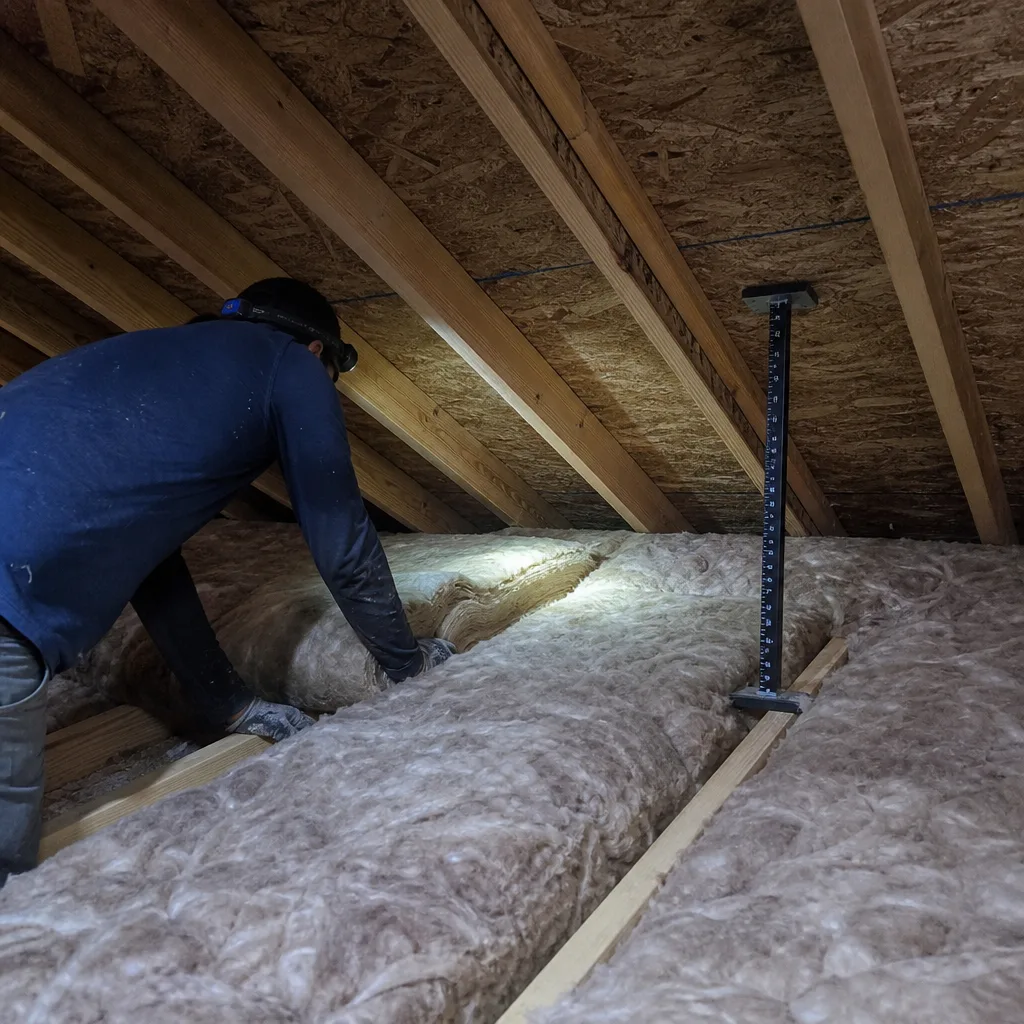
Leander sits in one of the fastest-growing corridors in Texas. From Crystal Falls to Travisso to the older neighborhoods near Bagdad Road, homes built between 2015 and 2025 dominate the market. Many were constructed during labor shortages when insulation was treated as a check-box item, not a performance specification. The result: attics that meet code on paper but leak conditioned air through top plates, can lights, and duct chases.
Here’s the problem. Texas registers insulation work under general contractor licenses, not a dedicated trade exam. No state inspector verifies that your attic was sealed before it was insulated. No third party checks that the blown-in fiberglass reached the depth printed on the proposal. The contractor who shows up, writes a number on a piece of paper, and starts blowing material has no external accountability beyond that document.
We’ve been in Leander homes where the previous contractor’s “R-38” attic measured 8 inches deep at the center, not the 12 inches required for the density spec they claimed. We’ve found can lights buried under new insulation, still leaking 30 CFM each into the attic. These aren’t corner-cutting scams. They’re omissions that happen when a proposal doesn’t specify what “done” looks like.
The proposal is your only protection because it’s the only place where you and the contractor agree, in writing, on what will be delivered. Everything else - the sales pitch, the verbal promise, the reference from a neighbor - is non-binding. Under Topside Attic Insulation Leander home, we operate under The Haven Standard: every job begins with a written price and a written scope, and no work starts until both are signed. Not because we’re cautious, but because we’ve seen what happens when there is no record.
The Five Line Items Every Written Proposal Must Contain
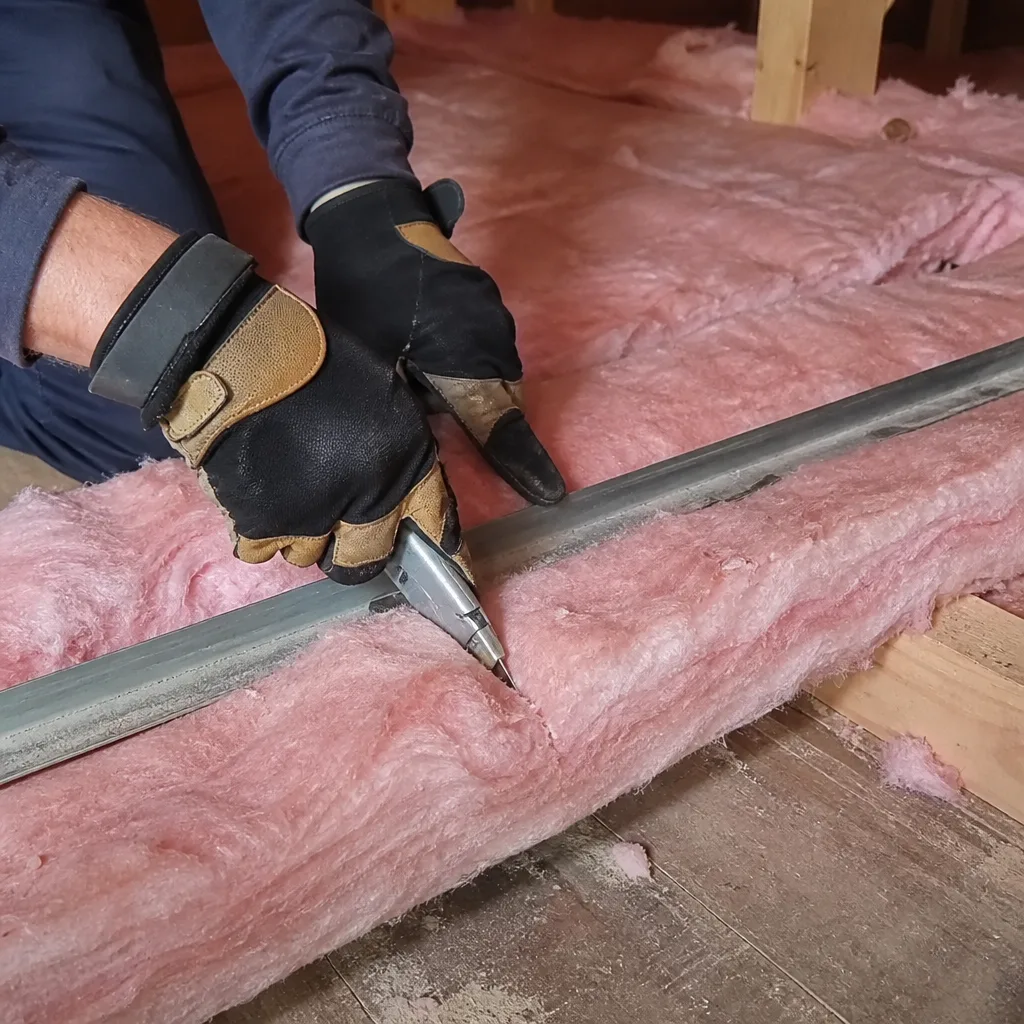
A legitimate insulation proposal in Leander should read like a materials list and work order combined, not a marketing flyer. Here are the five line items we require before any job starts, and what each one protects you from.
1. Installed R-Value
This is the thermal resistance rating - the number most homeowners recognize. But R-value alone is meaningless without the next four items. A contractor can promise R-38 and deliver it at half the required depth if the material density is wrong. Insist on the specific R-value for each assembly: attic floor, walls if included, crawl space if included.
2. Installed Depth at Center of Bay
Blown-in insulation settles. The depth at installation must exceed the settled depth to achieve the target R-value. A proper proposal states the installed depth at the center of the bay, not the average or the “as specified” depth. For fiberglass loose-fill at R-38, this typically means 14 to 16 inches installed to settle to 12 inches, depending on the product density. If the proposal doesn’t specify depth, you have no way to verify the work.
3. Material Brand and Density Specification
Not all fiberglass performs the same. Owens Corning AttiCat, Johns Manville Climate Pro, and CertainTeed InsulSafe have different coverage charts per bag. A proposal that says “blown fiberglass” without a brand and density spec lets the contractor substitute the cheapest material at the time of install. We source from Owens Corning, Johns Manville, Knauf, Rockwool, CertainTeed, Icynene, Demilec, and GreenFiber - and we name the specific product on every proposal so the homeowner knows what was agreed to.
4. Air-Sealing Scope (Not Just “Air Sealing Included”)
This is where most proposals fail. “Air sealing included” is a phrase with no enforceable meaning. A proper scope itemizes: top plates and partition walls sealed with caulk or foam, can lights and electrical penetrations sealed with appropriate rated materials, duct chases and plumbing stacks sealed, attic access hatch weatherstripped and insulated. At Attic Insulation in Leander, we complete all air sealing before any insulation is added. Blowing insulation over an unsealed attic floor traps air leaks under the new material, making them harder and more expensive to fix later.
5. Blower-Door Test Commitment
The proposal must commit to a blower-door test - a pressurization reading that shows, in one number, how much air your building envelope is losing - with before-and-after numbers provided under the same house pressure conditions. Not “we’ll test if needed.” Not “post-test included.” A specific commitment: pre-test at -50 Pascals, post-test at -50 Pascals, with both numbers reported in CFM50 (cubic feet per minute at 50 Pascals pressure difference). This is the only way to verify that the air sealing actually worked.
Under Haven Standard Clause 1, every job at Envelope Insulation Co. starts with a flat price, written scope, and written warranty before anyone lifts a tool. The five line items above are the minimum that makes those documents enforceable.
How to Verify a Contractor’s Blower-Door Equipment Is Calibrated
A blower-door test is only as good as the equipment performing it. An uncalibrated fan can read 15% high or low, which means your “improvement” might be measurement error, not actual performance gain. Here’s how to verify a contractor’s equipment in under two minutes.
- Ask for the equipment manufacturer and model. The two dominant brands are Retrotec and The Energy Conservatory (TEC). Both are legitimate. If the contractor names a brand you’ve never heard of, or says “we use a homemade setup,” that’s a stop signal.
- Ask for the serial number. A legitimate operator knows where the serial number is on their equipment and can read it in under 60 seconds. If they hesitate, if they say “it’s in the truck,” or if they change the subject, they don’t know their own equipment.
- Ask for the last calibration date. Retrotec and TEC both recommend annual calibration. The contractor should have a certificate or a dated sticker on the fan housing. Ask to see it. A photo on a phone is fine. What you’re looking for is a date within the last 12 months.
- Ask how they verify calibration in the field. Proper operators run a baseline check with the fan sealed - the “zero flow plate” test - before every job. If they don’t know what you’re talking about, their numbers are unreliable.
We’ve had homeowners in Leander’s Cedar Park-adjacent neighborhoods tell us their previous contractor’s “blower-door test” consisted of a handheld anemometer waved at the attic hatch. That’s not a blower-door test. That’s theater. The equipment verification steps above filter out operators who are borrowing or renting gear they don’t understand.
On every applicable job, we publish before-and-after blower-door numbers so the homeowner can see the performance change they paid for. The pre-test establishes the baseline. The post-test proves the work. Both are taken with the same calibrated equipment, under the same -50 Pascal condition, by the same technician who performed the air sealing.
What ‘Before-and-After’ Documentation Actually Means
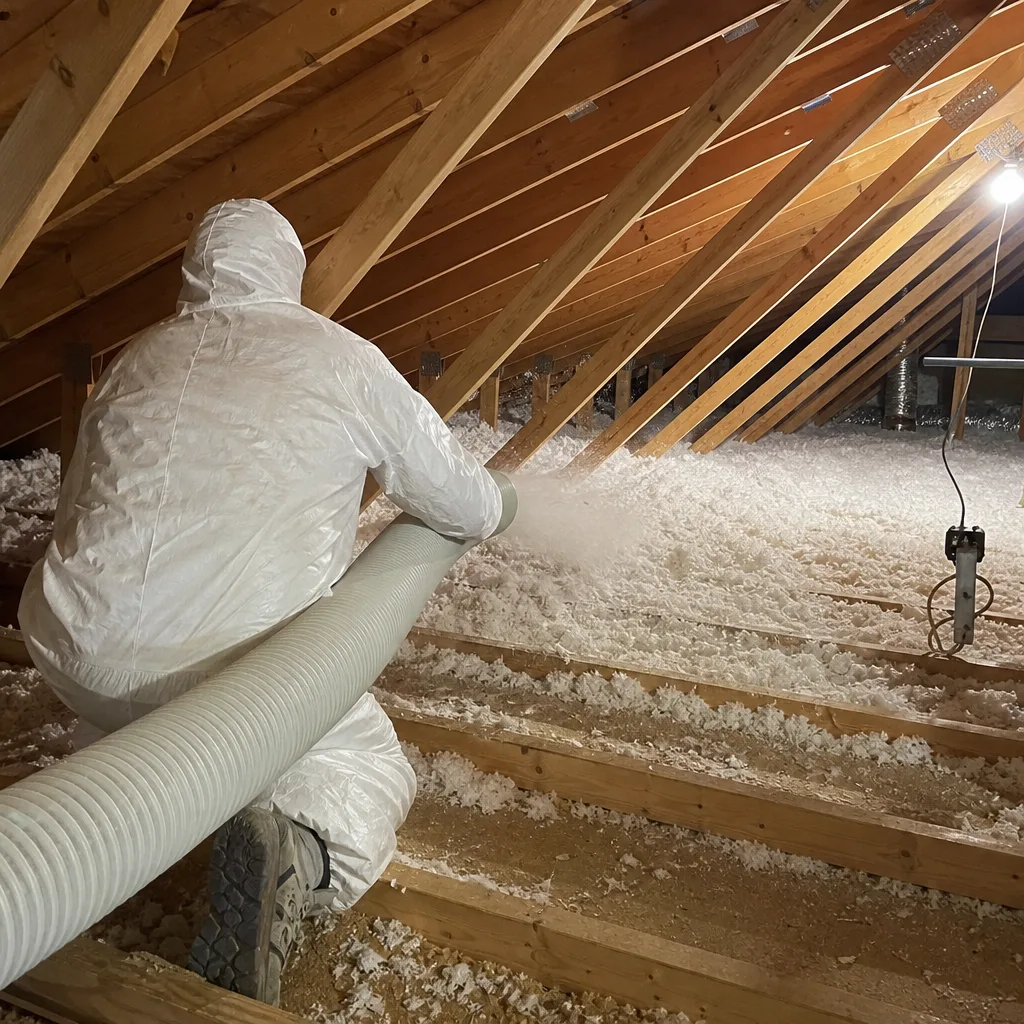
The phrase “before-and-after” gets used loosely in contractor marketing. A photo of dusty joists followed by a photo of fluffy insulation is visual documentation, but it proves nothing about performance. Here’s what legitimate before-and-after documentation looks like for an insulation and air-sealing job in Leander.
Before: A blower-door test reading of 4,200 CFM50, taken at -50 Pascals with all exterior doors and windows closed, interior doors open, and HVAC systems off. A thermal imaging scan showing air leakage at top plates, can lights, and the attic access hatch. A written scope identifying each leakage point and the sealing method to be used. Photos of each condition.
After: A blower-door test reading of 2,100 CFM50, taken under identical house pressure conditions - same door configuration, same HVAC state, same exterior wind speed limit (typically under 15 mph). The 50% reduction is the documented performance change. Thermal imaging verification of sealed points. Photos of completed work. Written warranty.
A single post-job number proves nothing without the pre-job baseline. If a contractor shows you “2,100 CFM50” without the “4,200 CFM50” that came before, you don’t know if they improved the house or if the house was already tight. The delta between the two numbers is the only figure that matters.
We deliver a Documented Photo Record on every visit, included on every job, not available on request. For applicable jobs, the blower-door readings are part of that record. The homeowner receives the numbers, the photos, and the written warranty before the crew leaves the property. Under Haven Standard, you know what leaving looks like before we arrive.
Red Flags Specific to Leander’s Fast-Growth Market
Leander’s growth rate creates conditions that favor certain contractor behaviors. Here are the red flags we’ve observed most often in this market, and the direct questions that expose them.
Subcontracting Without Disclosure
Many contractors in fast-growth markets bid jobs they can’t staff, then subcontract the install to a day crew they’ve never worked with before. The homeowner meets a polished salesperson, then sees a different crew with different uniforms and no direct line to the company that sold them the job.
Ask directly: “Will your employees perform the work, or will any portion be subcontracted?” If the answer involves “our installation partners” or “we use crews as needed,” ask for the name and contact of the specific crew leader who will be on site. A legitimate operator knows this answer without checking.
Vague Material Specifications
In a market where crews are rushed, material substitution is common. The proposal says “spray foam” and the crew shows up with a low-density open-cell product that was never discussed. For Spray Foam Insulation in Leander, this matters especially: Icynene and Demilec products have different density, R-value per inch, and vapor permeance characteristics. A proposal that doesn’t name the product and density leaves you unprotected.
No Permit Discussion
Leander requires permits for certain insulation work, particularly spray foam and any work involving structural modification or electrical penetration. See our guide to Insulation Permits, Codes & Inspections in TX: What You Need to Know for details on local requirements. A contractor who says “permits aren’t needed for this” without checking the scope is either uninformed or avoiding accountability. Ask: “Will you pull the permit, or do I need to?” The answer should be specific to your job, not a general dismissal.
Pressure to Sign Same-Day
Legitimate contractors in busy markets don’t need same-day commitments. They need accurate scopes and scheduled work. A “today only” discount is a sales tactic, not a business necessity. Under Haven Standard, we provide a written price that remains valid for 14 days. No countdown, no manufactured scarcity.
Missing Written Warranty
The 365-Day Done Right Promise - if it’s not done right, we make it right - is backed by a written scope and written warranty delivered before anyone starts. If a contractor’s “warranty” is verbal, or refers you to the manufacturer’s product warranty as their own workmanship guarantee, you have no recourse for installation errors.
How to Compare Bids With the Same R-Value
This is where most homeowners in Leander get stuck. Two proposals both say “R-38 attic insulation.” One is $2,400. One is $3,600. The instinct is to choose the lower number. Here’s how to put both bids on the same footing so you’re comparing actual value, not just price. For a deeper look at pricing factors, see our Insulation Cost Breakdown: The Leander Homeowner’s Reference for 2026.
Step 1: Normalize for Air Sealing
Air sealing is not an upsell. It’s a prerequisite. If Bid A includes air sealing and Bid B does not, add the market rate for standalone air sealing to Bid B to create an equivalent scope. In the Leander market, professional attic air sealing typically runs $800-$1,500 for a 2,000-square-foot home, depending on access and complexity. If Bid B doesn’t include it, the corrected comparison is $2,400 versus $4,400-$5,100.
Step 2: Calculate Unit Cost per Square Foot at the Stated R-Value
Divide each bid by the attic square footage and the installed R-value. This gives you dollars per square foot per R-value, a number you can compare directly.
Bid A example: $3,600 ÷ 1,500 sq ft ÷ R-38 = $0.063 per sq ft per R-value
Bid B example: $2,400 ÷ 1,500 sq ft ÷ R-38 = $0.042 per sq ft per R-value
The gap usually explains itself. The lower unit cost often reflects lower material density, omitted air sealing, or uncalibrated test equipment that lets the contractor skip the verification step.
Step 3: Verify the Depth Spec
Ask both contractors for the installed depth at center of bay required to achieve their stated R-value with their specified material. Look up the coverage chart for that specific product. If the math doesn’t match - if the stated depth would produce a lower R-value at that product’s density - one bid is based on incorrect specifications.
Step 4: Compare Documentation Deliverables
What does each homeowner receive when the crew leaves? A written invoice is not documentation. The comparison should include: before-and-after blower-door numbers, thermal imaging, photos of completed work, written warranty, and a final scope showing what was actually installed versus what was proposed. At Envelope Insulation Co., the Documented Photo Record on every visit includes all of the above. If Bid B delivers only an invoice, the price difference is partly a documentation gap.
We offer a Free Second Opinion on Any Written Estimate - bring us a competing quote and we will read it with you, line by line, to identify where the scopes diverge. No obligation, no pressure. The goal is a homeowner who understands what they’re buying, not a homeowner who chooses us by default.
How Leander’s Climate and Building Stock Affect Your Decision
Leander’s climate zone - hot-humid, with summer temperatures regularly exceeding 100°F and winter lows occasionally dropping below freezing - creates specific demands on insulation performance that differ from cooler, drier regions.
Summer attic temperatures in Leander can reach 140°F. An unsealed attic floor lets that heat radiate into conditioned space through conduction and lets hot air infiltrate through leaks. R-value addresses conduction. Air sealing addresses infiltration. A high-R attic with unsealed top plates performs worse in summer than a lower-R attic that was properly sealed, because the infiltration load overwhelms the conductive resistance.
The building stock matters too. Homes in Crystal Falls and Travisso, built 2018-2023, often have better initial insulation but rushed air-sealing details - spray foam at the roofline with gaps at wall intersections, or blown fiberglass that never reached the eaves. Older homes near downtown Leander, built 1980-2005, may have degraded fiberglass, inadequate attic ventilation, and significant thermal bypasses at chimneys and duct chases.
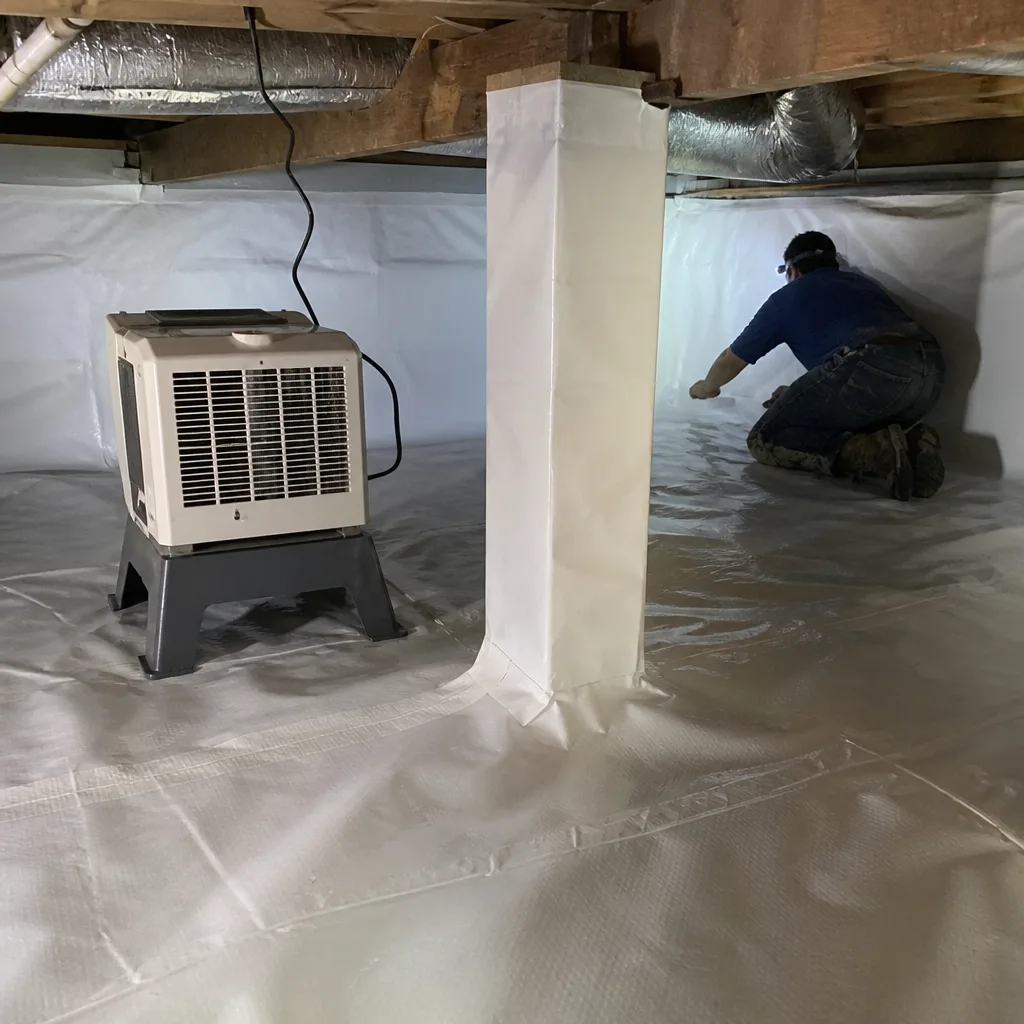
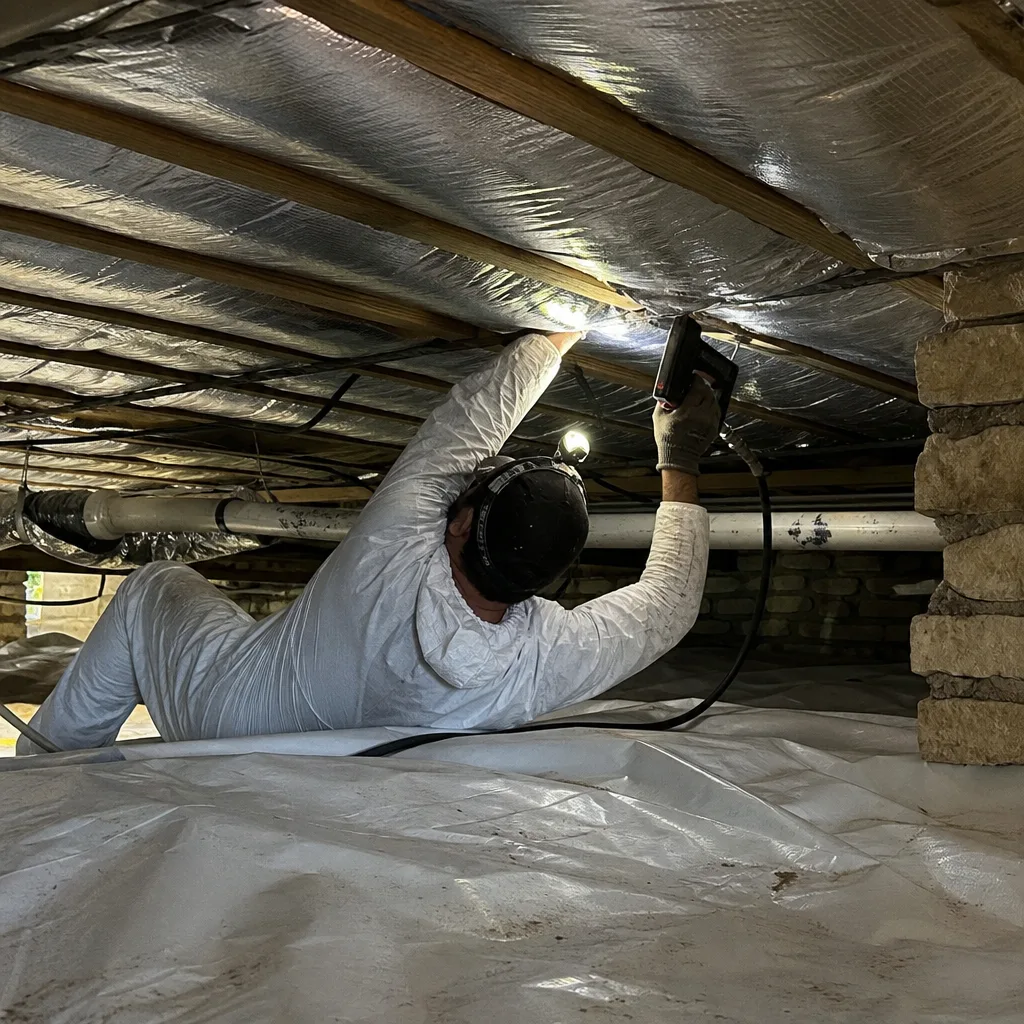
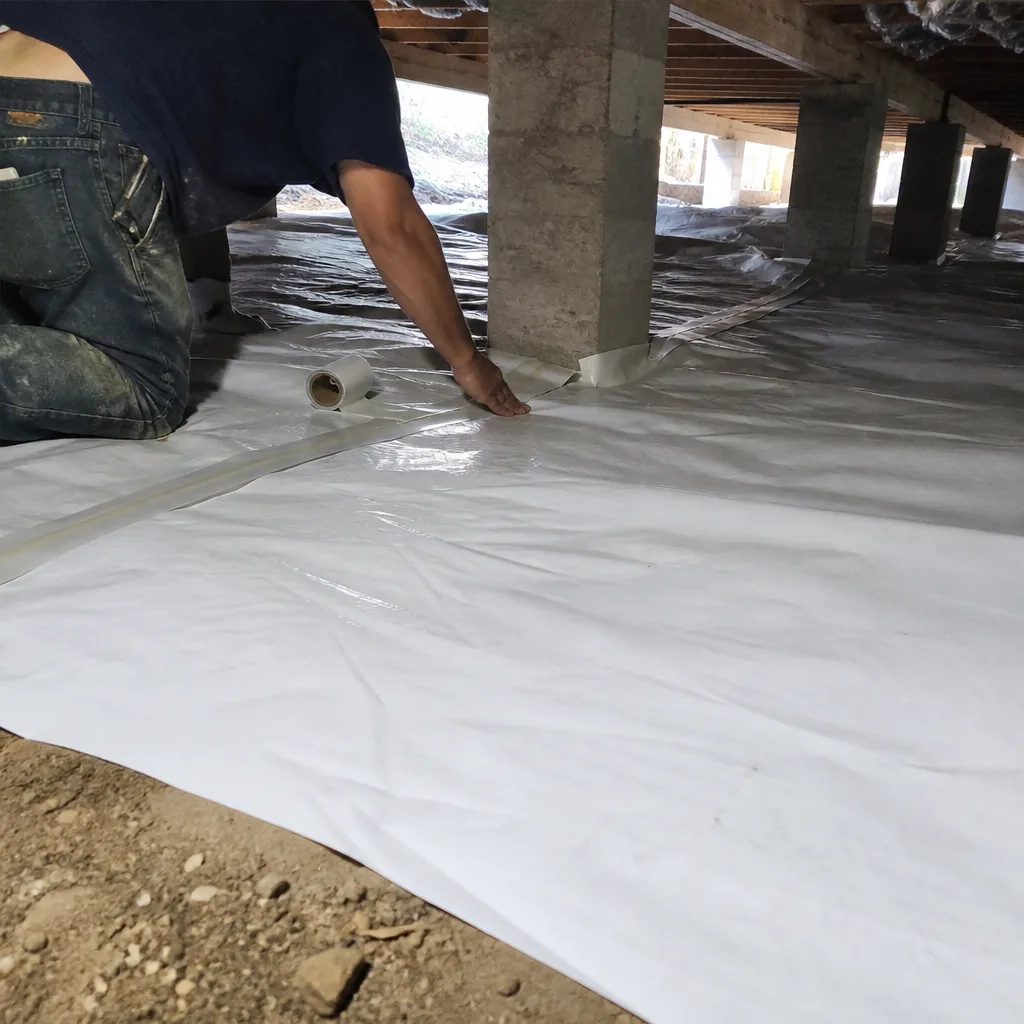
For Crawl Space Encapsulation & Vapor Barrier in Leander, the humidity factor is even more critical. A vented crawl space in this climate imports moisture year-round. Encapsulation without proper vapor barrier thickness and dehumidification sizing can trap moisture against floor joists. The proposal must specify vapor barrier mil thickness, seam sealing method, and whether conditioned air supply or dehumidification is included.
We’ve sealed and insulated over 9,000 homes since 2016. Every one started with a written price and ended with a documented record. The patterns in Leander are consistent: the homes that perform best are the ones where air sealing preceded insulation, and where the documentation proved it.
Common Mistakes to Avoid
- Accepting R-value as the only metric. A proposal that lists R-38 without installed depth, material density, or air-sealing scope lets the contractor deliver a technically compliant job that performs 30% below expectation. The R-value is one of five required line items, not the whole specification.
- Hiring based on the lowest price per square foot. Unit cost comparisons only work after normalizing for scope. The lowest bid often omits air sealing, uses lower-density material, or skips blower-door verification. Calculate the normalized unit cost, not the headline price.
- Assuming all spray foam is the same. Open-cell and closed-cell spray foam have different R-values per inch, vapor permeance, and structural characteristics. A proposal that says “2 inches of spray foam” without specifying product and cell type is unenforceable. Icynene open-cell at 3.5 inches achieves a different result than Demilec closed-cell at 2 inches.
- Neglecting to ask about the crew. In Leander’s fast-growth market, subcontracting is common and often undisclosed. Ask directly who will perform the work. Background-checked, uniformed technicians who are actual employees are accountable to the company that wrote your proposal.
- Skipping the pre-test. A post-job blower-door number without a pre-job baseline is meaningless. The delta between the two readings is the only proof of improvement. Any contractor who resists the pre-test is avoiding accountability.
- Ignoring permit requirements. Leander requires permits for spray foam installation and certain other insulation work. A contractor who avoids permits avoids inspection, which means no third-party verification of code compliance. Verify permit status before work begins.
- Signing without a written warranty. Verbal promises of “we’ll make it right” are not enforceable. The written warranty should specify duration, coverage scope, and the process for claiming it. Under Haven Standard, the 365-Day Done Right Promise is delivered in writing before work starts.
When to Call a Professional
Call a professional when your energy bills are rising without rate increases, when rooms have persistent temperature differences of more than 3°F from the thermostat setting, when you find insulation disturbed by rodents or moisture, or when you’re considering any attic work that involves electrical penetrations, can lights, or HVAC modifications. Not sure if your insulation is failing? Review our Insulation Warning Signs: A Leander Homeowner’s Reference Guide. These are not DIY projects in Leander’s climate; the combination of high attic temperatures, humidity, and electrical hazards creates genuine safety risks.
Topside Attic Insulation Leander offers free estimates in Leander. We’ll review your existing conditions, provide a written scope with the five required line items, and explain the documentation you’ll receive when the job is complete. Call (737) 252-7159 to schedule. A live person answers 24/7 - no voicemail loops, no callback windows measured in business days.
Frequently Asked Questions
Most attic insulation jobs in a 2,000-square-foot Leander home run between $2,800 and $5,500, depending on whether air sealing, existing insulation removal, or spray foam is included. A basic blown-in fiberglass addition over existing material falls at the lower end; complete removal, air sealing, and new insulation with blower-door verification falls at the higher end. Call (737) 252-7159 for an exact quote - estimates are free, and we provide a written price before any work starts.
Partial DIY is possible for simple material addition in accessible attics, but we don’t recommend it for air sealing or any work involving electrical penetrations, can lights, or steep roof pitches. Leander’s summer attic temperatures create heat-stress and fall hazards, and improperly sealed electrical penetrations create fire risks. A professional crew with calibrated test equipment can verify performance; a homeowner without a blower door cannot. For safety-critical components, hire a trained professional.
Check for three indicators: uneven depth across the attic floor, visible gaps or compressed areas, and temperature stratification in your living space. But the only definitive measurement is a blower-door test combined with thermal imaging. We’ve tested Leander homes where the insulation looked adequate but the blower-door reading revealed 3,500 CFM50 of leakage - equivalent to a 3-square-foot hole in the building envelope. Visual inspection misses what pressurization testing finds.
Spray foam - particularly closed-cell at 2 inches or open-cell at 3.5 inches - provides both insulation and air sealing in one application, which can be cost-effective in Leander’s hot-humid climate where infiltration loads are high. But it’s not automatically superior. The value depends on your existing conditions: a well-sealed attic with blown fiberglass can outperform a poorly installed spray foam job. Compare bids on normalized unit cost and documentation, not just product type. We specify Icynene or Demilec products by name when spray foam is the right solution.
A typical attic insulation job in Leander - including air sealing, material installation, and blower-door verification - takes one to two days for a 2,000-square-foot home. Removal of existing material adds a day. Spray foam applications require cure time and typically extend to two or three days. We provide a specific schedule in the written scope, with arrival windows and named technicians, under Haven Standard: Arrive on schedule, you get a named technician and a text when they are on the way.
Decline the proposal. A contractor who resists written specifications - installed depth, material brand, air-sealing scope, blower-door commitment - is avoiding accountability. The written document is your only protection in Texas’s unlicensed insulation market. At Envelope Insulation Co., no work starts without a signed written scope and written warranty. This isn’t bureaucracy; it’s the foundation of every job we’ve completed since 2016.
The Bottom Line
Hiring an insulation contractor in Leander comes down to one principle: the proposal is your only protection. Texas doesn’t license this trade separately, the fast-growth market attracts operators who subcontract without disclosure, and a technically compliant R-value can still deliver 30% below expectation if depth, density, and air sealing aren’t specified. Demand the five line items: installed R-value, installed depth at center of bay, material brand and density, detailed air-sealing scope, and blower-door test commitment with before-and-after numbers. Verify the equipment is calibrated. Compare bids on normalized unit cost, not headline price. And never sign without a written warranty delivered before work starts.
We’ve sealed and insulated over 9,000 homes since 2016. Every one began with a written price and ended with a documented record. In Leander’s climate, that’s not just good practice. It’s the difference between insulation that exists and insulation that performs.
Written by Wes Okafor, Owner at Topside Attic Insulation Leander, serving Leander since 2016.