
Last updated September 24, 2026
Insulation Cost Breakdown: The Leander Homeowner’s Reference for 2026
The lowest attic insulation quote you’ll receive in Leander in 2026 probably prices blown fiberglass at $0.85-$1.10 per square foot. The number that quote leaves out is the installed density, and at the minimum blower density, that material will settle to R-30 within five years on a job scoped to deliver R-49. We’ve pulled apart over 9,000 proposals since 2016, and the pattern is consistent: Leander insulation quotes vary by 40-60% for nominally identical scopes because contractors are not quoting the same scope. This guide deconstructs every cost line so you can convert any quote into a true cost-per-performance-unit and know what you’re actually paying for.
Quick Answer
Most complete attic insulation jobs for a 2,000 square foot home in Leander run between $2,800 and $5,400 in 2026, depending on whether air sealing, blower-door testing, and proper material density are included in scope. A legitimate quote itemizes material, labor, air-sealing prep, testing, and permit as separate lines. The bundled price that seems cheapest often omits the 2-4 hours of labor required to seal top plates, can lights, and penetrations before insulation goes in, which means you’re paying for labeled R-value that the home will never actually achieve.
Table of Contents
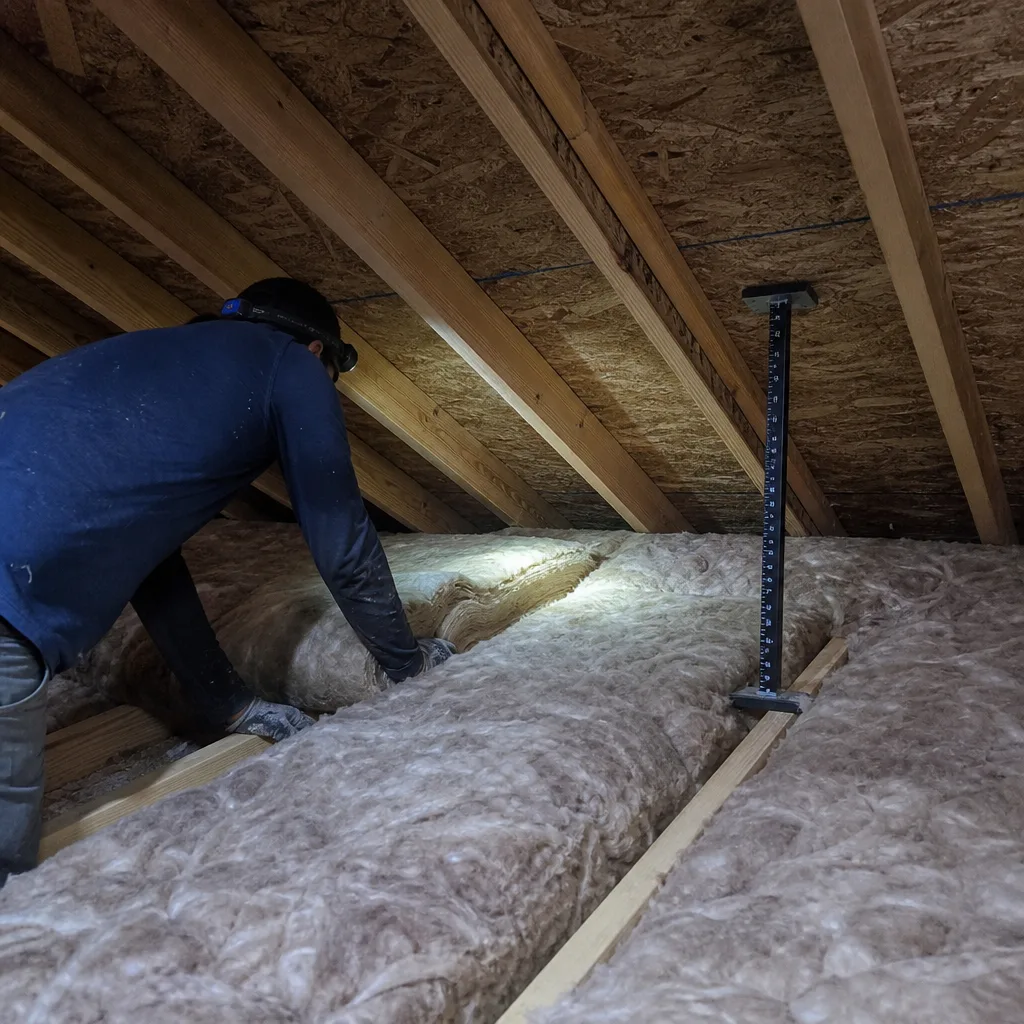
- Why Leander Insulation Quotes Vary by 40-60% for the Same R-Value
- Line-Item Cost Anatomy: A 2,000 Sq Ft Leander Attic
- Why Air Sealing Is Correctly Priced as a Separate Line Item
- Spray Foam vs. Blown Insulation: Performance Equivalence, Not R-Value Equivalence
- How to Calculate Cost Per Verified R-Unit
- What the 25C Tax Credit Covers for Leander Homeowners in 2026
- Material Brands and What They Cost in the Leander Market
- Leander Permits, Codes, and Climate Considerations
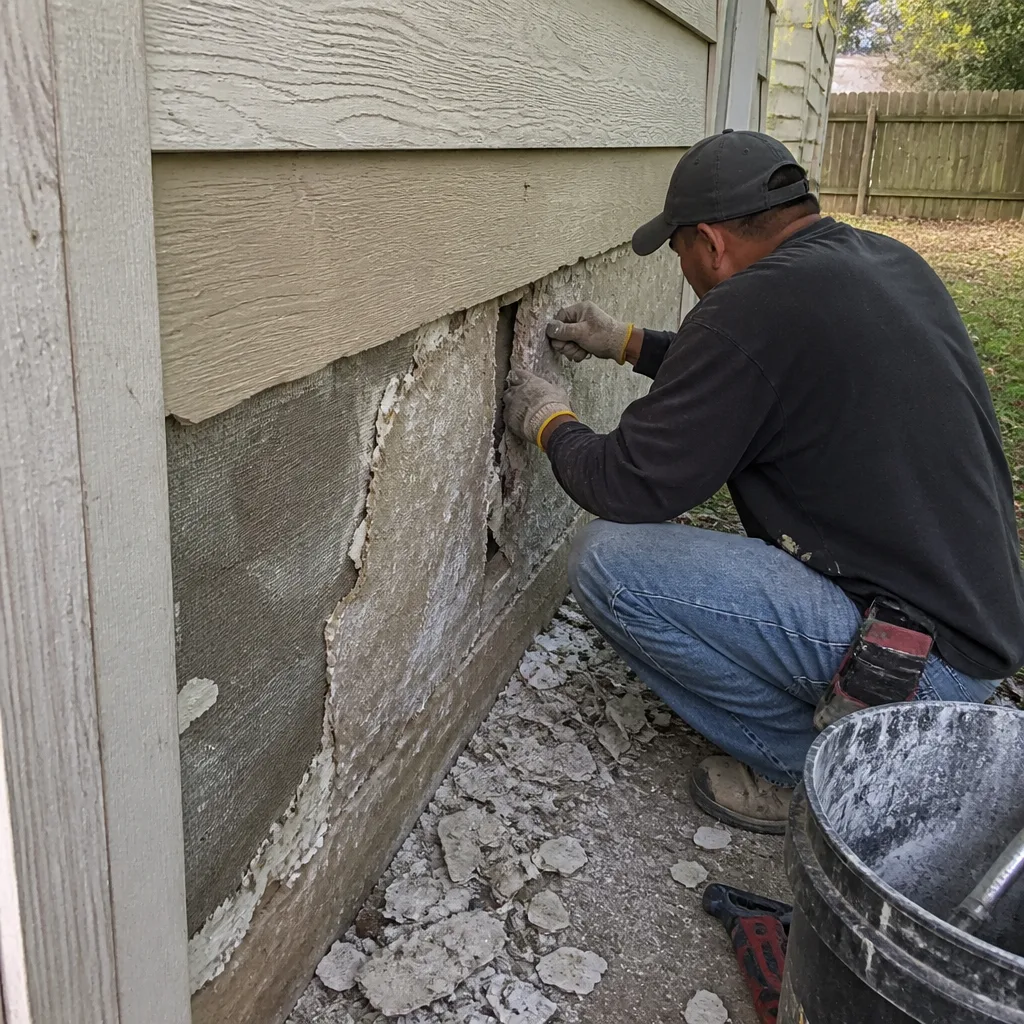 Before
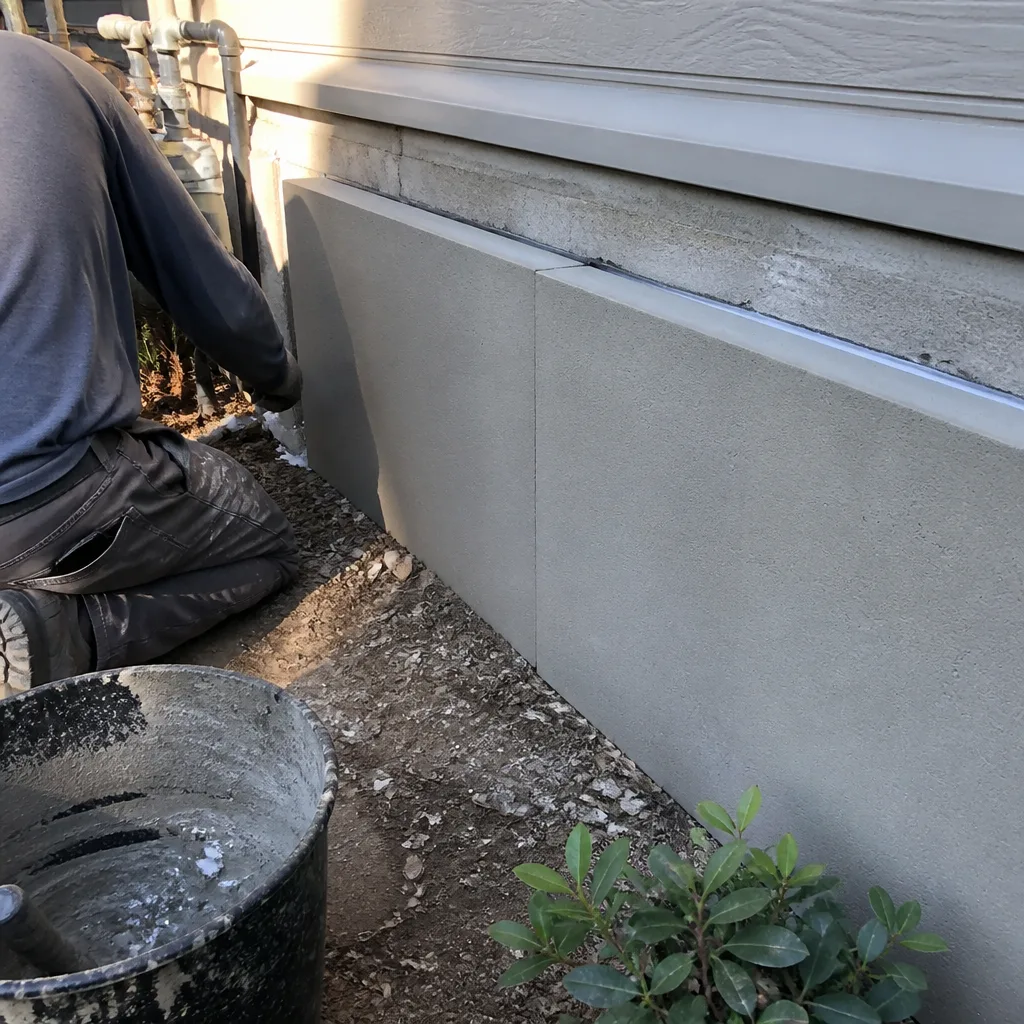 After
AfterWhy Leander Insulation Quotes Vary by 40-60% for the Same R-Value
We see it every February and March when the first heat waves hit the Texas Hill Country: homeowners in Leander collect three quotes for “R-49 attic insulation” and wonder why one contractor bids $2,200, another $3,800, and a third $5,100. The short answer is that none of them are bidding the same job, even when the paperwork uses identical language.
Here is what changes inside that variance:
- Air sealing inclusion. The $2,200 quote almost never includes sealing top plates, can lights, plumbing penetrations, or the chase around the flue. The $5,100 quote does, plus it includes a blower-door test to prove the result. In Leander’s 2026 market, thorough attic air sealing on a 2,000 square foot home runs 2-4 hours of skilled labor at $75-$95 per hour.
- Installed density versus labeled R-value. Blown fiberglass at 0.5 pounds per cubic foot fills the bay and meets the label. At 1.0 pounds per cubic foot, it resists settling and maintains R-value for the life of the job. The labor and material cost to double the density is real, and many low quotes simply don’t pay for it.
- Eave coverage versus center-of-bay coverage. R-49 at the center of the attic bay is easy to achieve. R-49 at the eave, where the roof meets the wall and insulation depth is constrained by vent baffles, requires careful installation and often more material. Some crews blow deep in the center and thin at the edges. You won’t know unless you inspect or the contract specifies uniform depth.
- Blower-door testing. A blower-door test, a pressurization reading that shows in one number how much air your building envelope is losing, costs $250-$400 as a standalone service. Quotes that include before-and-after readings are pricing real verification. Quotes that don’t are asking you to trust the installer’s judgment.
- Material brand and specification. Owens Corning AttiCat blown fiberglass, Johns Manville Climate Pro, and GreenFiber stabilized cellulose carry different material costs and perform differently in Leander’s hot-humid climate. A quote that says “blown insulation” without naming the product is a black box.
In Crystal Falls, we’ve found original 2006-2012 construction with attic floors so leaky that R-49 insulation performed like R-19 until the air sealing was done. In Travisso, newer builds often have better initial sealing but still show 3,500+ CFM50 on the blower door from missed penetrations during production framing. The quote that ignores this reality is not cheaper. It just postpones the cost to your utility bill.
Line-Item Cost Anatomy: A 2,000 Sq Ft Leander Attic
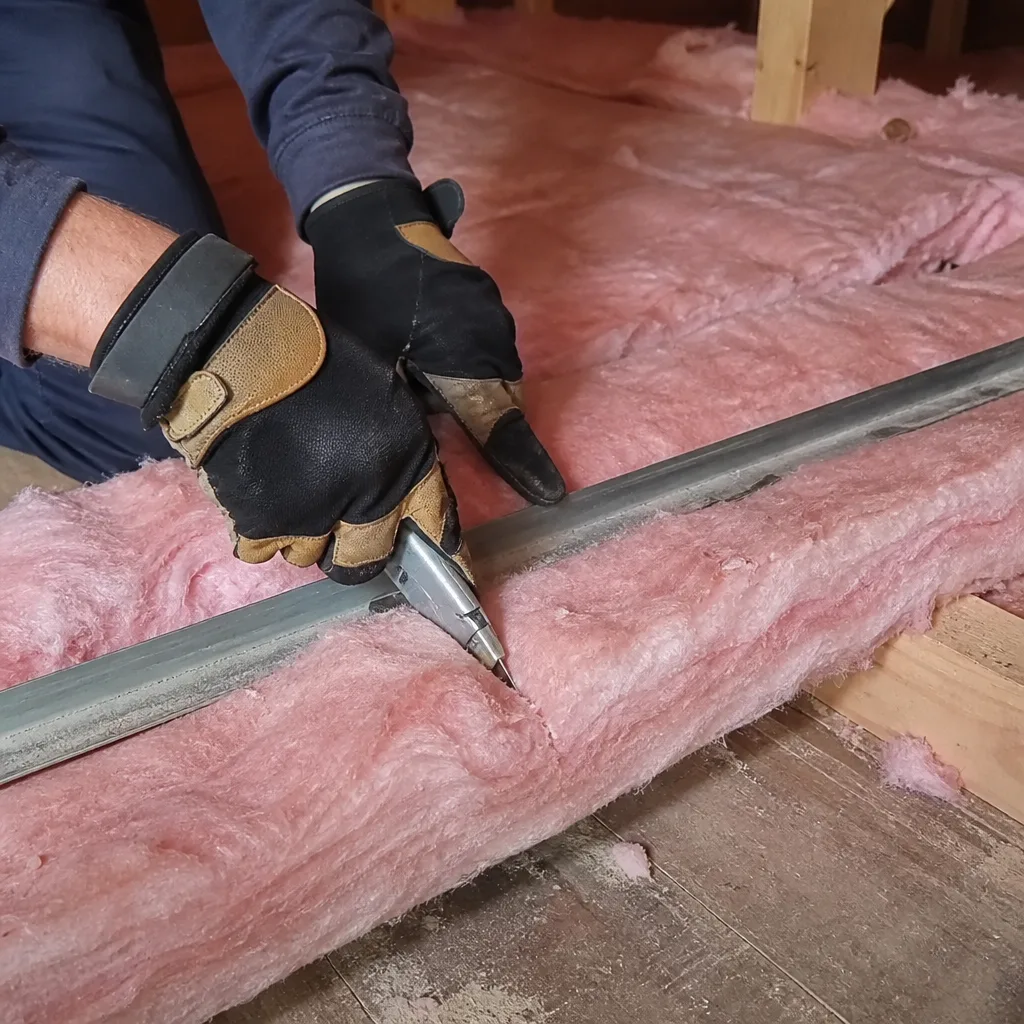
We publish a written price before any work starts on every job, and we itemize it. Below is what that itemization looks like for a typical 2,000 square foot attic in Leander in 2026, with market ranges based on what we’ve seen from suppliers and competitors across Williamson County.
| Line Item | Description | 2026 Leander Market Range |
|---|---|---|
| Material: Blown fiberglass (R-49, proper density) | Owens Corning or Johns Manville, 1.0 lb/cu ft installed, settled density spec | $1,100 - $1,600 |
| Material: Stabilized cellulose (R-49, proper density) | GreenFiber or equivalent, 3.0-3.5 lb/cu ft installed | $1,000 - $1,400 |
| Labor: Insulation installation | 2 technicians, 4-6 hours, including uniform depth at eaves | $800 - $1,200 |
| Labor: Air sealing prep | Seal top plates, can lights, penetrations, flue chase, damper boxes | $600 - $950 |
| Testing: Blower-door (before and after) | Pressurization reading, documented report with CFM50 figures | $250 - $400 |
| Permit: Williamson County / Leander | Building permit for insulation upgrade, if required by scope | $150 - $300 |
| Equipment / overhead | Blower machine, hoses, PPE, vehicle, insurance, documentation | $300 - $500 |
| Total: Blown fiberglass with full air seal and test | Complete scope, documented performance | $3,200 - $4,950 |
| Total: Stabilized cellulose with full air seal and test | Complete scope, documented performance | $3,100 - $4,750 |
The bundled quote at $2,200-$2,600 is missing one or more of these lines. Most commonly it omits air sealing labor and blower-door testing. In some cases it uses minimum blower density that will not maintain R-49 after settling. When we review competing quotes under our Free Second Opinion on Any Written Estimate, we convert them to this same line-item format so homeowners can see what’s actually included.
One note on permits: Leander falls under Williamson County jurisdiction for most residential building permits, and a standalone insulation upgrade typically does not trigger a full permit unless the job involves structural modification, electrical relocation, or spray foam in an unvented assembly. However, any contractor who tells you permits are “never needed” is oversimplifying. We pull permits when the scope requires it, and we include that cost in the written price.
Why Air Sealing Is Correctly Priced as a Separate Line Item
We don’t blow insulation over an unsealed attic floor. That’s not a marketing position; it’s physics. Air that moves through insulation strips it of effective R-value. A 20 mph wind through fiberglass reduces its performance by 40% or more. In Leander, where summer attic temperatures reach 140°F and winter cold fronts drop below freezing, that air movement happens through pressure differentials, not wind. The stack effect pulls conditioned air up through the house in winter and pushes hot attic air down in summer, and every unsealed penetration is a pathway.
The work of sealing a 2,000 square foot attic properly includes:
- Top plate sealing. The wall framing meets the ceiling drywall at the top plate, and in most Leander homes built 2000-2020, that joint is unsealed. We run a bead of acoustical sealant or fire-rated caulk along every top plate line. On a typical rectangular footprint, that’s 180-220 linear feet.
- Can light sealing. Recessed can lights are the largest single leak category in most attics. IC-rated cans get sealed covers or pre-formed boxes. Non-IC cans require fire-rated enclosures. A 2,000 square foot home with open-concept living often has 12-20 cans.
- Plumbing and electrical penetrations. Every pipe, wire, and duct chase that enters the attic from below is a hole in the pressure boundary. We seal with fire-rated caulk, expanding foam where appropriate, and sheet metal collars around flues.
- Bathroom fan and duct terminations. Fans that vent into the attic instead of through the roof are a code violation and a moisture source. We verify termination and seal the fan housing to the drywall.
- Flue chase and chimney. The framed chase around a gas flue is often a 2-square-foot hole in the attic floor, sealed with nothing more than a sheet metal collar that doesn’t contact the framing. We build a proper fire-stop and seal.
This work takes 2-4 hours for two technicians on a typical Leander home. At loaded labor rates, that’s $600-$950 of real cost. A quote that bundles “insulation and air sealing” for $200 more than insulation alone is not doing this work. We’ve inspected attics in Leander’s Paloma Lake and Mason Hills subdivisions where the “air sealing” consisted of a single can of spray foam around the attic hatch. The homeowner paid for a promise and received a gesture.
Under Haven Standard Clause 1, our written price separates air sealing so you can see it, verify it was done through our Documented Photo Record, and confirm the result through before-and-after blower-door numbers. If a contractor won’t itemize this line, ask why.
Spray Foam vs. Blown Insulation: Performance Equivalence, Not R-Value Equivalence
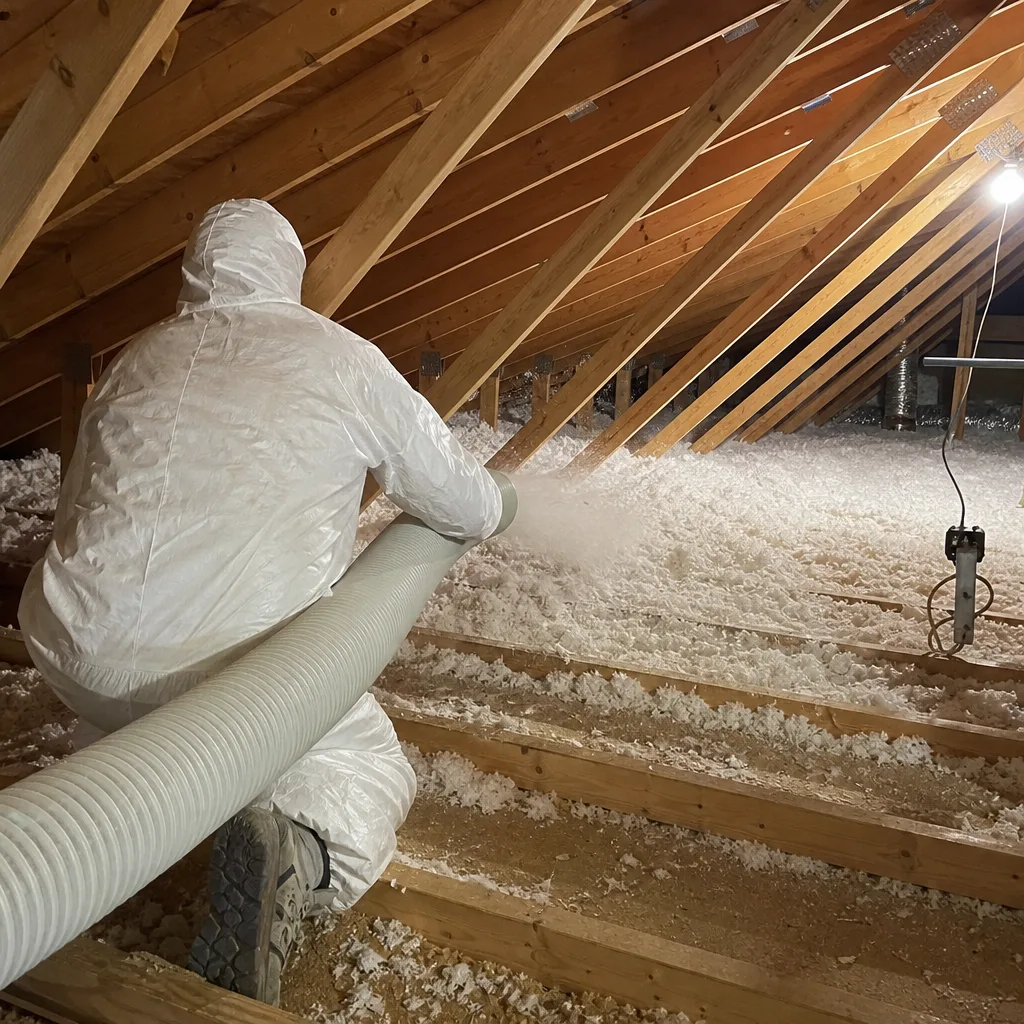
The same R-value in spray foam and blown fiberglass does not deliver the same energy performance in an air-leaky assembly. This is the central fact that makes simple R-value comparison misleading, and it’s why we frame cost comparison around performance equivalence instead.
Here’s how the math works for a Leander home:
Open-cell spray foam at R-38 creates an air-impermeable layer at the roof deck or attic floor. It stops air movement through the assembly. Blown fiberglass at R-49, even at proper density, does not stop air movement; it only slows conductive heat flow. In a home with 3,500 CFM50 of leakage, the R-49 fiberglass assembly performs closer to R-30 in practice because air is moving through it. After proper air sealing drops leakage to 1,800 CFM50, the R-49 fiberglass performs much closer to its labeled value.
So the performance-equivalence question becomes: what does it cost to achieve a given result, not what does it cost to achieve a given R-value?
| Approach | Installed Cost (2,000 sq ft attic) | Air Leakage Addressed? | Effective Performance |
|---|---|---|---|
| Open-cell spray foam, R-38 at roof deck | $6,500 - $9,500 | Yes, inherently | High; creates conditioned attic |
| Closed-cell spray foam, R-21 at roof deck + R-30 blown | $8,000 - $12,000 | Yes, inherently | Very high; vapor barrier + air seal |
| Blown fiberglass R-49 + thorough air seal + blower-door test | $3,200 - $4,950 | Yes, as separate scope | High when air seal is verified |
| Blown fiberglass R-49, no air seal, no test | $2,200 - $2,800 | No | Moderate to low; labeled R-value not achieved |
In Leander’s climate zone 2A, hot-humid with significant cooling load, conditioned attics via open-cell spray foam are increasingly common in new construction and deep retrofits. The cost premium is substantial, but for homeowners with complex HVAC ductwork in the attic or plans to finish attic space, it can be the right tool. For most existing homes, blown insulation with verified air sealing delivers the best return on investment.
We install both. Spray foam insulation in Leander is part of our service line, and we specify it when the building science supports it. We don’t specify it when a less expensive approach achieves the same performance result.
How to Calculate Cost Per Verified R-Unit
This is the tool we wish every Leander homeowner had when comparing quotes. It converts any proposal into a comparable figure by accounting for what actually happened, not what was promised.
The formula is simple:
Total contract price ÷ (post-job blower-door-confirmed R-value × conditioned floor area)
But since blower-door confirmation verifies air leakage reduction, not R-value directly, we modify this for practical use:
Total contract price ÷ (labeled R-value × air leakage reduction factor × conditioned floor area)
The air leakage reduction factor is the ratio of post-job CFM50 to pre-job CFM50. A home that started at 4,000 CFM50 and finished at 2,000 CFM50 has a reduction factor of 0.50, meaning the insulation performs at roughly half the theoretical loss rate.
Example from a Leander job we completed in January 2026:
- Home in Leander’s Bryson subdivision, 2,100 sq ft conditioned
- Quote: $4,200 for R-49 blown fiberglass + full air seal + blower-door test
- Pre-job blower door: 4,200 CFM50
- Post-job blower door: 1,950 CFM50
- Air leakage reduction factor: 0.46
- Cost per verified performance unit: $4,200 ÷ (49 × 0.46 × 2,100) = $4,200 ÷ 47,334 = $0.089 per performance unit
Compare to a competing quote at $2,600 for R-49 blown fiberglass, no air seal, no test:
- Assumed pre-job leakage: 4,200 CFM50 (similar vintage home)
- Assumed post-job leakage: 4,200 CFM50 (no sealing done)
- Air leakage reduction factor: 1.00
- Cost per verified performance unit: $2,600 ÷ (49 × 1.00 × 2,100) = $2,600 ÷ 102,900 = $0.025 per performance unit
But this second calculation is wrong, because R-49 fiberglass in an unsealed attic does not perform at R-49. Research from the Building Science Corporation and our own field data suggest effective R-value drops 30-50% in leaky assemblies. Apply a conservative 35% reduction, and the effective R-value becomes 31.85:
- Revised cost per verified performance unit: $2,600 ÷ (31.85 × 1.00 × 2,100) = $2,600 ÷ 66,885 = $0.039 per performance unit
The “cheaper” quote costs more per unit of actual performance. And without a blower-door test, you have no verification at all. You’re buying labeled R-value and hoping the physics cooperate.
We publish before-and-after blower-door numbers on every applicable job so homeowners can run this calculation themselves. It’s part of the documented record you receive when the crew leaves.
What the 25C Tax Credit Covers for Leander Homeowners in 2026
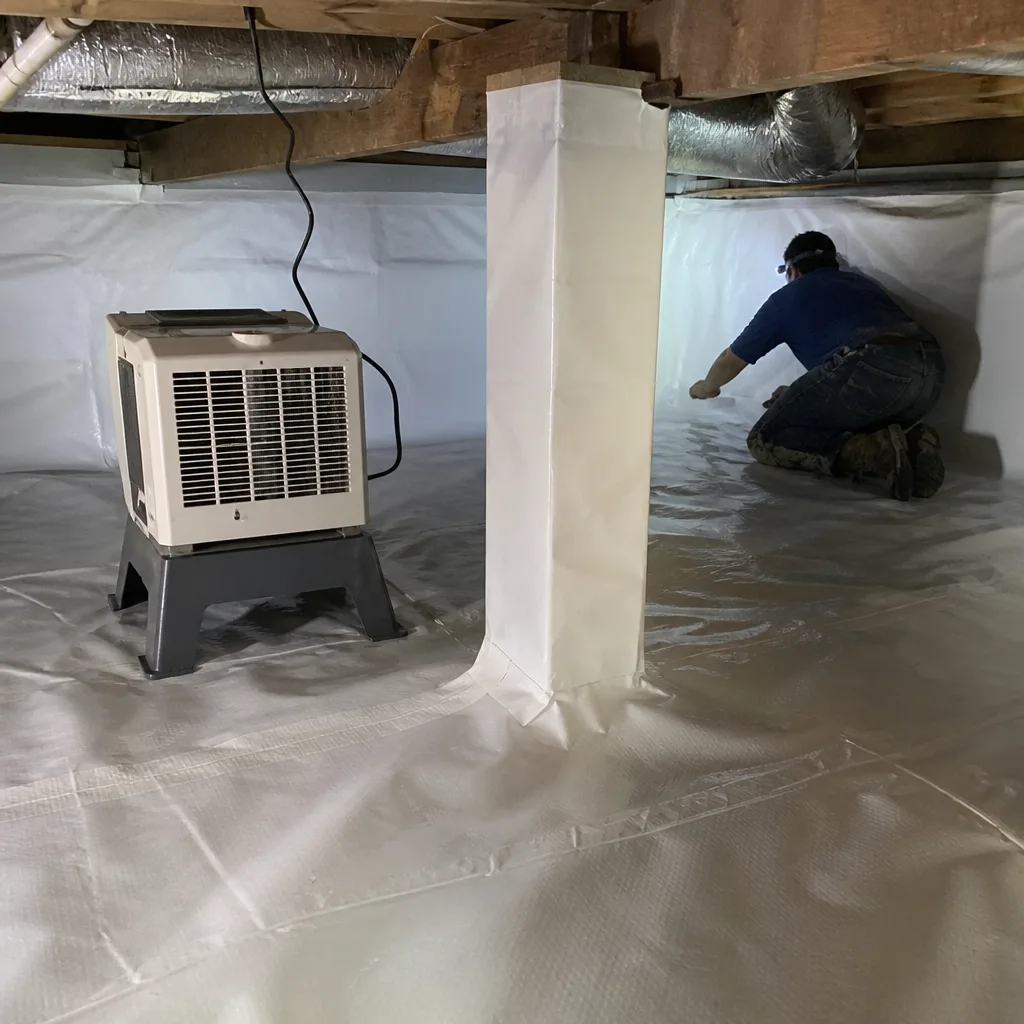
The federal Energy Efficient Home Improvement Credit, commonly called 25C, was modified by the Inflation Reduction Act and remains available in 2026. For Leander homeowners, this credit can offset 30% of qualifying insulation and air-sealing costs, with an annual cap of $1,200 for the combined category.
What qualifies in 2026:
- Insulation materials. Batts, rolls, blown-in, spray foam, and rigid board that meet applicable IECC standards. The material must be expected to last at least five years. We use Owens Corning, Johns Manville, Knauf, and GreenFiber products that meet this standard, and we document the product specification in your written scope.
- Air-sealing materials. Caulk, weatherstripping, spray foam used for sealing (not insulation), and similar building envelope tightening products. The critical distinction: air sealing qualifies as a separate line item when it is material cost for sealing products, not labor cost for the work of sealing.
- Energy audits. A home energy audit qualifies for a separate $150 credit if it includes a written report and is performed by a qualified auditor. Our Topside Attic Insulation Leander home energy audits meet this standard and include blower-door testing, thermal imaging, and a prioritized scope with cost estimates.
What does not qualify:
- Labor costs for installation (the credit applies to materials only, though many contractors structure pricing so the qualifying portion is clear)
- Insulation or air sealing that does not meet IECC standards
- Work performed by a contractor who cannot provide product certification documentation
Documentation required to claim the credit:
- Manufacturer certification statement for each insulation product installed, stating it meets applicable standards. We provide this with your job documentation.
- Itemized invoice showing material costs separately from labor costs. Our written price does this by default.
- IRS Form 5695, filed with your tax return.
The $1,200 annual cap is per household, not per project. If you’re planning multiple energy improvements, sequence them across tax years to maximize the benefit. A $4,500 insulation and air-sealing job with $2,800 in qualifying material costs generates a $840 credit in 2026. The same job with additional windows or HVAC work in the same year may hit the cap and leave money unclaimed.
We are not tax professionals, and this is not tax advice. We provide the documentation; you confirm the claim with your preparer.
Material Brands and What They Cost in the Leander Market
We source materials from Owens Corning, Johns Manville, Knauf, Rockwool, CertainTeed, Icynene, Demilec, and GreenFiber. We don’t have exclusive or preferred status with any of them, which means we specify based on what the job requires, not what a supplier contract pushes.
For Leander’s climate and typical attic conditions, here is how we think about the main options:
Owens Corning AttiCat blown fiberglass: The pink stuff, widely available, consistent quality. We specify it when we need predictable R-value per inch and the attic has no history of moisture issues. In Leander’s humid summers, fiberglass performs well if the attic is vented and air-sealed. Cost to us runs 15-20% above commodity fiberglass, and we pass that through transparently.
Johns Manville Climate Pro: Similar performance to Owens Corning, slightly different binder chemistry. We use it when a homeowner has specific material sensitivities or when supply chain timing favors it. The installed cost to the homeowner is typically within $100 of Owens Corning for a standard attic.
GreenFiber stabilized cellulose: Made from recycled paper with borate fire retardant and pest resistance. Higher installed density than fiberglass, which reduces settling and improves sound attenuation. In Leander, we specify GreenFiber when the attic has a history of rodent activity (the borate deters) or when the homeowner wants the recycled-content story. Material cost is 10-15% below fiberglass, but labor cost is slightly higher because the material is heavier to handle and requires more precise blower calibration.
Knauf EcoSeal: A hybrid system that combines air-sealing latex with blown fiberglass. We evaluate it for complex attic geometries where conventional sealing is difficult. It’s not our default, but it’s in the toolkit.
We do not specify by brand alone. We specify by building science, and we document what we used in your photo record.
Leander Permits, Codes, and Climate Considerations
Leander sits at the edge of the Texas Hill Country, and its building stock reflects rapid growth from 2000-2020 plus ongoing infill and expansion in neighborhoods like Travisso, Bryson, and Palmera Ridge; learn what to watch for in our Insulation Warning Signs: A Leander Homeowner’s Reference Guide. The climate is hot-humid, IECC zone 2A, with more cooling degree days than heating degree days. This shapes every insulation decision we make.
Code requirements: The 2021 IECC, adopted with amendments by Williamson County, requires R-49 in ceilings for new construction and substantial renovations. For retrofit insulation upgrades without structural modification, the trigger for full code compliance is less clear, and we evaluate each job. Our standard is to meet or exceed current code on every job, regardless of whether a permit requires it, because the cost difference is small and the performance difference is real.
Ventilation requirements: Leander attics need proper ventilation to manage summer heat and humidity. We verify soffit venting, ridge venting, and baffle installation before adding insulation. Blowing insulation over blocked soffit vents creates a moisture trap. We’ve found this in homes across Leander’s older neighborhoods near Bagdad Road and in newer construction where landscapers buried vents with mulch.
Radiant barrier considerations: In Leander’s climate, radiant barriers can reduce cooling loads by 5-10% when properly installed at the roof deck. They are not a substitute for insulation, but they complement it. We install attic insulation in Leander with or without radiant barrier depending on roof color, orientation, and whether the attic is used for storage. A dark shingle roof facing west gets more benefit than a light roof with northern exposure.
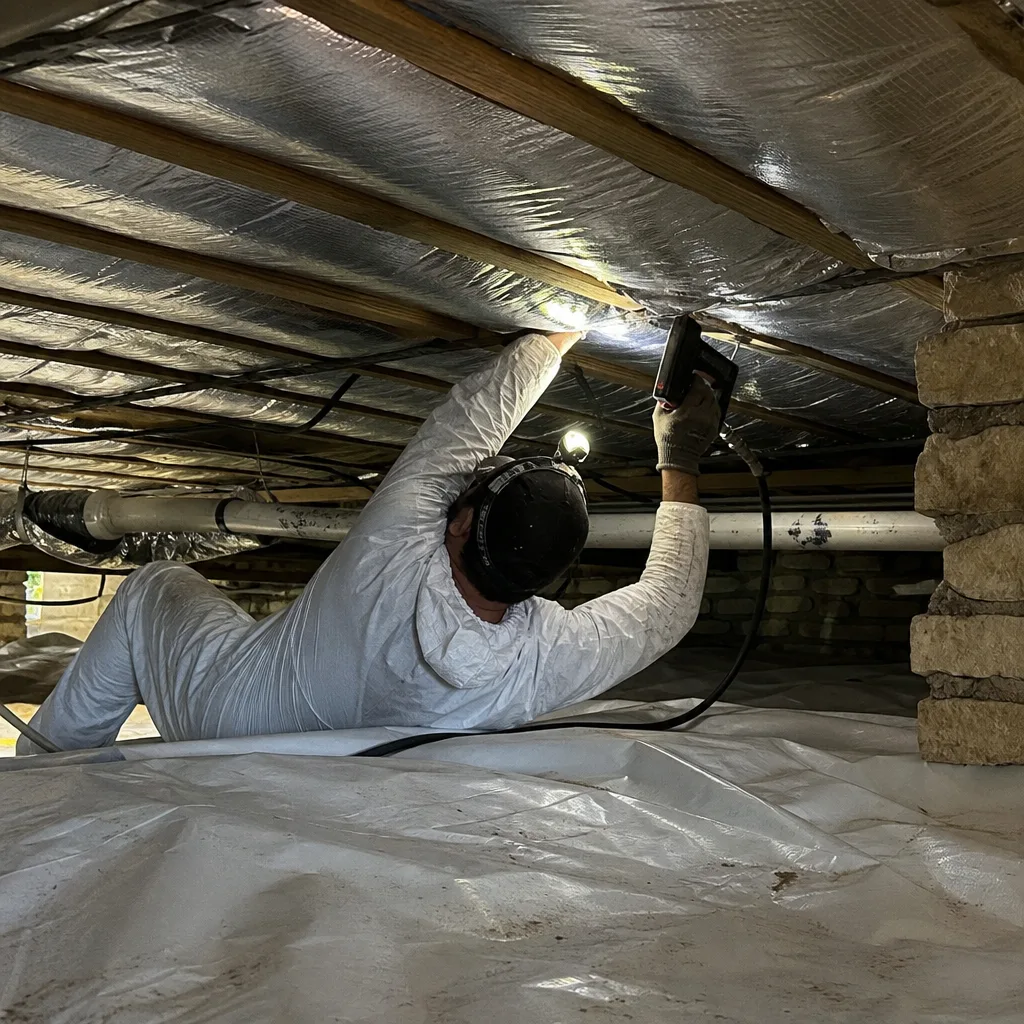
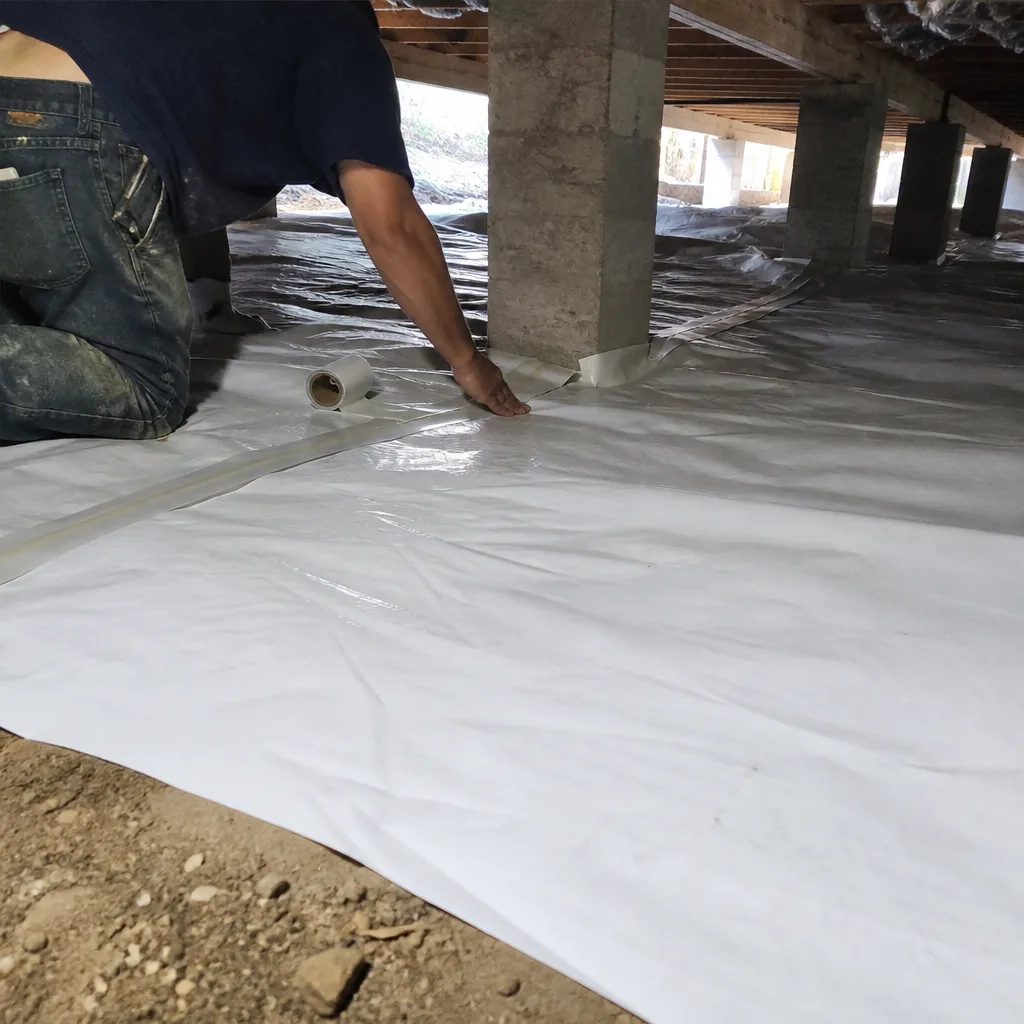
Crawl space implications: Many Leander homes built on sloped lots have conditioned space over vented crawl spaces. The thermal boundary is fragmented, and insulation at the attic alone won’t solve floor comfort issues. We evaluate the whole envelope, and when crawl space work is indicated, we specify crawl space encapsulation and vapor barrier in Leander as part of the scope.
Seasonal timing: We work year-round, but blower-door testing is most informative when the indoor-outdoor temperature difference is at least 20°F; see our Seasonal Insulation Care for Leander: Year-Round Homeowner’s Guide for timing strategies. In Leander, that means November through March for heating-season testing, or June through September for cooling-season testing. We can test in shoulder seasons, but the diagnostic value is reduced.
Common Mistakes to Avoid
- Comparing bundled quotes without line-item breakdown. A single number tells you nothing about what’s included. Demand itemization, and if a contractor refuses, that’s information too.
- Ignoring the eaves. R-49 at the center of the attic with R-25 at the eaves means your thermal boundary has a weak perimeter. Heat flows through the path of least resistance. We specify uniform depth or note where geometry prevents it.
- Assuming new construction is well-sealed. Production builders in Leander’s 2015-2022 boom often prioritized speed over sealing detail. We’ve tested homes in Mason Hills and Palmera Ridge at 5,000+ CFM50 in their third year of occupancy. Age does not equal tightness.
- Skipping the blower-door test to save $300. The test is not a luxury add-on; it’s the only verification that the work performed actually changed the building’s performance. Without it, you’re buying a promise, not a result.
- Choosing spray foam for R-value alone. Open-cell spray foam at R-38 costs more than blown fiberglass at R-49 with air sealing. If you don’t need the air-impermeable assembly for duct location or finished space, you’re paying for performance you could achieve more economically another way.
- Neglecting to sequence tax credits across years. The $1,200 annual cap means a large project combined with other improvements can leave money on the table. Plan your energy upgrades with a multi-year view.
When to Call a Professional
Call a professional when your energy bills are rising without rate increases, when second-floor rooms stay uncomfortably warm in summer despite the AC running continuously, or when you can see floor joists above the insulation in your attic. These are symptoms of underperformance, and the cause is usually discoverable with a blower-door test and thermal imaging; explore more guides & resources on our blog.
Call a professional before finishing attic space or adding storage platforms, because these projects permanently limit access to the thermal boundary. Retrofitting insulation around finished surfaces costs 3-5x more than doing it right the first time.
Call a professional if you’ve received multiple quotes that vary by more than 30% and you cannot explain the difference. We offer a Free Second Opinion on Any Written Estimate. Bring us a competing quote and we will read it with you, line by line, and show you what each line means for performance.
Topside Attic Insulation Leander offers free estimates in Leander. A live person answers calls 24/7 at (737) 252-7159, and every estimate includes a written price before any work starts, a Documented Photo Record, and on applicable jobs, before-and-after blower-door numbers.
Frequently Asked Questions
Most complete attic insulation jobs for a 2,000 square foot home in Leander cost between $2,800 and $5,400 in 2026, with the lower end representing blown fiberglass at minimum density without air sealing or testing, and the higher end representing proper density, thorough air sealing, and blower-door verification. The $2,200-$2,600 quote that seems like a bargain often omits 2-4 hours of air-sealing labor and performs like R-30 within five years despite being labeled R-49. Call (737) 252-7159 for an exact written price on your home, estimates are free.
Partial repair is rarely cost-effective if the existing insulation is more than 15 years old, has been disturbed by rodents, or shows moisture staining. In Leander’s climate, rodent activity in attics is common, and contaminated insulation cannot be safely supplemented. Removal and replacement with a fresh air seal typically runs $3,500-$5,500 for a 2,000 square foot attic, while patching over compromised material leaves the underlying problem in place. We document contamination with photos and show you what we found, not what we think about it. Call (737) 252-7159 for an assessment.
No, spray foam requires a clean substrate to adhere properly, and the hybrid assembly creates diagnostic problems. If you want spray foam, the existing insulation must be removed first, which adds $1.00-$1.50 per square foot to the job. In most Leander attics, we recommend either removing and replacing with spray foam, or keeping the existing fiberglass and adding a proper air seal plus additional blown insulation to achieve performance equivalence at lower cost. We evaluate each attic and specify accordingly, with the reasoning in writing.
Fiberglass and cellulose insulation last 20-30 years when properly installed and protected from moisture. The failure mode in Leander is not age; it’s settling, compression from foot traffic or storage, and moisture degradation from roof leaks or condensation. We’ve inspected 12-year-old attics in Crystal Falls that still performed at specification because they were well-sealed and dry, and 5-year-old attics in newer subdivisions that had settled 30% due to minimum blower density. The material lasts; the installation quality determines whether it performs.
Standalone blown or batt insulation upgrades in existing Leander homes typically do not require a building permit from Williamson County unless the scope includes structural modification, electrical relocation, or spray foam in an unvented assembly. We pull permits when required and include the cost in your written price. Any contractor who tells you permits are “never needed” is oversimplifying, and any contractor who asks you to pull the permit yourself is shifting liability. We handle permitting as part of our scope when it applies.
A blower-door test is a pressurization reading that shows, in one number, how much air your building envelope is losing. The test depressurizes the house to 50 Pascals and measures airflow in cubic feet per minute (CFM50). A 2,000 square foot Leander home built 2000-2015 typically tests at 3,500-5,500 CFM50 before air sealing. After proper sealing, 1,500-2,500 CFM50 is achievable. Without this number, you cannot verify that air sealing was done or compare performance across quotes. We provide before-and-after readings on every applicable job as part of our documented record.
The Bottom Line
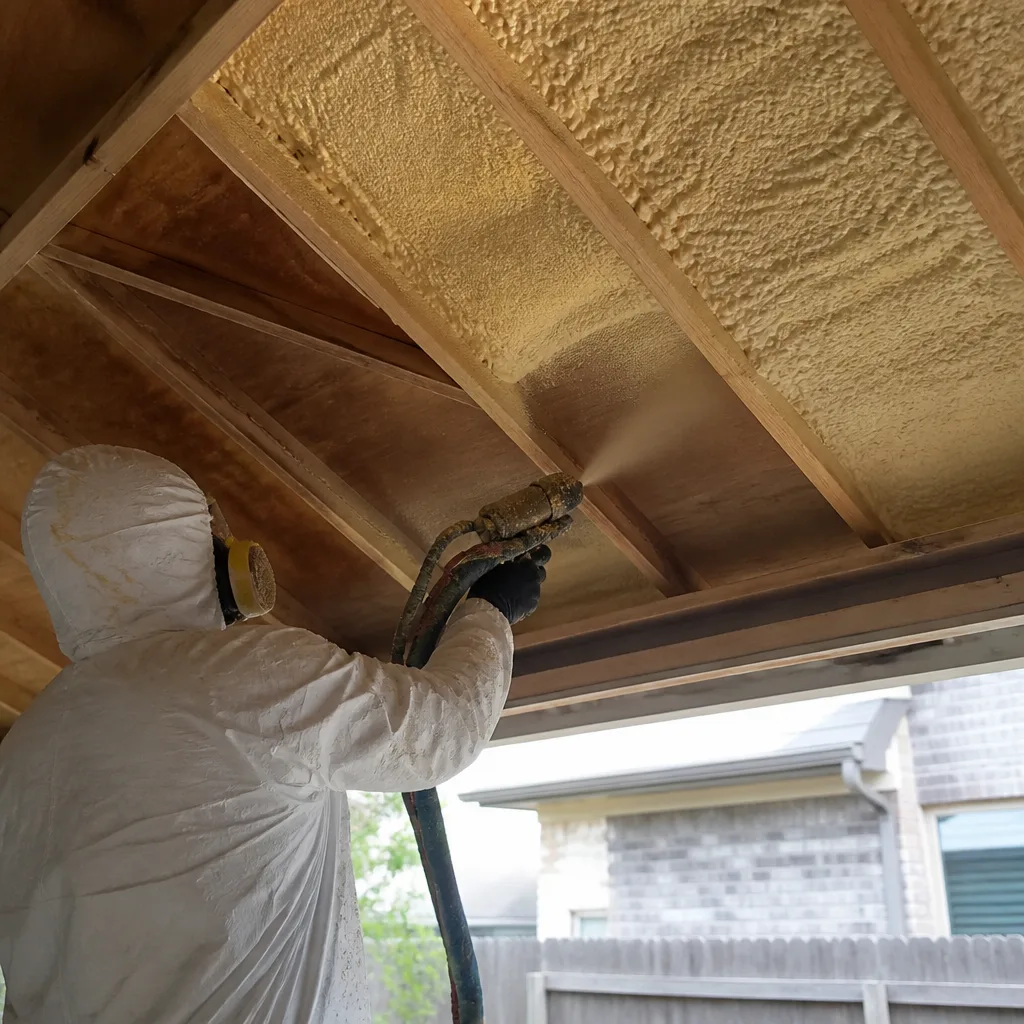
Leander insulation costs in 2026 are not mysterious; they’re just poorly disclosed. The 40-60% variance between quotes reflects real differences in scope, not market inefficiency. To compare proposals fairly, demand line-item pricing, verify that air sealing is included as separate labor with a time estimate, and require blower-door documentation that proves the result. Calculate cost per verified performance unit, not cost per labeled R-value. And claim the 25C tax credit with proper documentation, but don’t let the credit drive scope decisions that compromise long-term performance. The cheapest quote is rarely the least expensive choice over the life of the home.
Written by Wes Okafor, Owner at Topside Attic Insulation Leander, serving Leander since 2016.